0
0
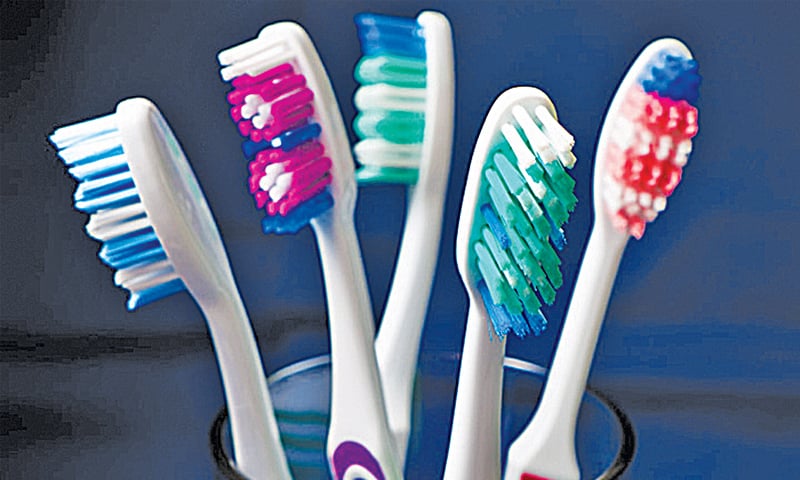
Brushing your teeth at least twice a day is important for good oral health and preventing plaque, decay, infection and disease. But do you know that your innocent looking toothbrush can contain as many as 10 million bacteria? Before you panic, it is yet to be scientifically proven that bacteria on toothbrushes can lead to ill health, but the very thought that your toothbrush can harbour germs is yucky and makes you look for ways to protect your brush.
Here are a few precautions that should be taken in order to keep your toothbrush as clean as possible, whether you’re at home or travelling.
Clean your brush: Even when you clean it properly your mouth harbours a number of bacteria and other microorganisms and while brushing they get transferred to your brush. Every time after brushing rinse your toothbrush under tap water to remove any remaining toothpaste or food particles that may have got stuck between bristles; it is recommended that you occasionally soak your brush in antibacterial mouthwash or hydrogen peroxide, especially if you’ve dropped it on the floor.
An important tool of your personal hygiene, your toothbrush needs to be taken proper care of
Store your toothbrush right: Your toothbrush can attract bacteria from several sources, hence you have to be careful how and where you keep it. Many people keep their brush near the bathroom sink; this is not a good idea as splashing soap water along with whatever you are washing off your hands contaminates your brush.
It’s best to store the brush in an upright position in a cup or a holder; it will allow the water to drain away. It’s also advisable to allow the brush to air-dry before the next use. While it may appear a good idea to completely cover or store it in a closed container it is better to no to do that. In fact keeping your brush encased in a plastic container is one of the most dangerous methods of storage. Kept this way the brush never dries out completely and more likely to develop microorganisms than in the open air.
If more than one brush is stored in the same holder or area, do not let the brushes touch each other; bacteria on one brush can cross-contaminate another.
It seems logical to keep your toothbrush in the bathroom but if you are doing that. Then keep it as far away from the toilet as possible. Because when you flush with the toilet lid open, bacteria and viruses from the toilet spray settle on surfaces throughout the bathroom. It’s best to always flush your toilet with the lid down, and keep the brush at least three feet from the toilet.
 |
Replace toothbrushes frequently: For healthy gums and teeth it is extremely important to replace your toothbrush frequently, as the bristles become frayed and wear out with use. It not only decreases cleaning efficacy but can also cause inflammation or irritation. Whenever the brush appears worn out or damaged dispose it off and buy a new one. Dentists recommend that toothbrushes be replaced at least every three to four months, while children’s toothbrushes may need replacing more frequently than an adult’s brushes.
Once you have recovered from an illness, even a severe cold, there’s a possibility that some virus or bacteria may be lingering on your toothbrush and later re-infect you. To avoid the risk of re-infection it is better to change the brush.
Once you have recovered from an illness, even a severe cold, there’s a possibility that some virus or bacteria may be lingering on your toothbrush and later re-infect you with the same illness that you already had. To avoid the risk of re-infection it is better to change the brush.
Don’t Share: The very idea of sharing a toothbrush is repulsive, yet it needs to be pointed out that sharing toothbrushes can increase the chances of infection due to exchange of body fluids and / or microorganisms, especially for persons with compromised immune systems or existing infectious diseases. All family members should have their own toothbrush and an additional one or two should be kept as backup in case someone needs to replace. Offer a separate one in case a guest stays over.
When travelling: While travelling, always take your own toothbrush. While packing your travel case, make sure that your toothbrush has a cover on it so the bristles
do not get in contact with anything else in the travel case. Dry the brush thoroughly before packing, and take it out of the case and store properly as soon as you get to your accommodation.
Published in Dawn, Sunday Magazine, May 17th, 2015
On a mobile phone? Get the Dawn Mobile App: Apple Store | Google Play