1
1
THE power deficit in the national network is currently recorded at 6,000MW, and the power supply-demand gap is likely to widen in the coming months due to fast-growing demand for electricity.
The masses — already over-burdened with highly inflated electricity bills — have to brace with 12-hour load-shedding on a daily basis in major cities, including Islamabad and Lahore, while small towns and rural areas face up to 20-hour-long outages.
The large-scale load-shedding has crippled civic life as well as industrial, trade and commercial activities. The industrial sector is subjected to record 10-hour outages, with a multiplier effect on the national economy.
The existing installed power generation capacity from all sources is 21,838MW, of which the net or dependable capacity is estimated to be at least 18,000MW — much more than demand during peak hours these days. While the government no more shares statistics of daily power generation and demand with the public, present generation is around only 9,000MW, disproportionate to installed capacity. The suppressed demand is said to be 14,800MW.
Existing installed power generation capacity from all sources is 21,838MW, of which the net or dependable capacity is estimated to be at least 18,000MW. Yet, daily generation is around only 9,000MW
In comparison, the average daily electricity shortfall in Pepco’s system in 2008 was 1,850MW. In spite of addition of power generation capacity in the last one year or so — particularly that of hydropower and other renewable sources — total generation, instead of improving, has remained stagnant at best, with existing capacity being grossly under-utililsed.
The power situation has worsened primarily due to inadequate generation capacity, flawed strategy, imprudent use of available resources and transmission and distribution losses. The circular debt has swelled again to Rs300bn and independent power producers (IPPs) are facing difficulties in servicing their dues and have cut down generation to about 4,000MW, despite reliable existing capacity of over 6,000MW.
Due to financial constraints, Pakistan State Oil (PSO) is unable to provide adequate oil supplies to powerhouses.
Floods have partially affected operations of the Muzaffargarh power station. Power plants are not getting natural gas as per their requirement. Practically, total reliance is on hydropower generation capacity of 6,690MW.
Obviously, the government has failed to address energy crisis effectively. It has paid no serious attention to the mismanagement, inefficiencies and a host of other institutional issues of the power sector. And all senior positions in the sector are now occupied by bureaucrats instead of professionals.
Most importantly, laxity on the part of the government has resulted in increased technical and collection losses, or electricity theft. Energy conservation measures, such as restricted timing for commercial activities in the evening, and free distribution of 10m energy savers to domestic consumers were either not implemented or did not yield positive results.
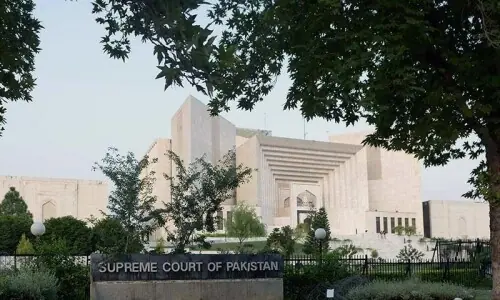
The Supreme Court of Pakistan had observed in June last year that there was a need to impose an energy emergency to fulfill the power demands of the people. Somehow, it went unheeded. The World Bank had recently highlighted that the electricity cost is higher by 60pc higher against that of India and 40pc when compared with Bangladesh.
The recent overbilling and estimated bills of 45 days instead of 30 was a deliberate action on the part of distribution companies to mobilise Rs52bn in additional revenue.
The discos have been unable to improve their recoveries from the private sector, that have now swelled to some Rs400bn.
Adequate electricity at affordable prices remains a distant dream for the country’s consumers.
The writer is a former chairman of the State Engineering Corporation
Published in Dawn, Economic & Business, October 20th, 2014