8
8
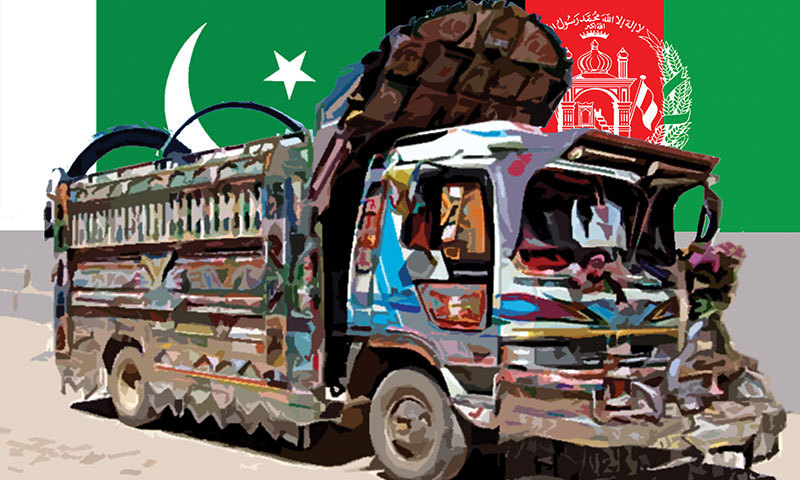
PAKISTAN has not been able to forge economic ties with Afghanistan deep enough to weather changes on the political scene in that country.
Stakeholders concede that the future of this relationship will depend on the nature of the next government in Kabul. While opinions diverge on most trade-related issues, many will like to see Ashraf Ghani Ahmadzai, an economist, lead Afghanistan out of the dark patches and onto the path of growth and development.
Thus far, Abdullah Abdullah is ahead of all other candidates, with Ghani trailing behind. There is a possibility of a runoff vote if results are not decisive in the first round.
According to optimists, the right set of policies can push our bilateral trade with Afghanistan to cross $5bn from the current $2.3bn in two years. If Kabul allows transit facility for Pakistan to access Central Asian states, new trade vistas can open up for the country.
The stakeholders, however, believe that the potential for closer trade ties can’t be realised fully as long as the thrust of economic relations is clouded by political developments.
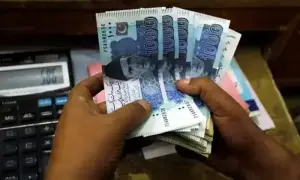
The business communities in the two countries blame corruption and ineffective trade policy for the low volume of bilateral trade, besides security and logistic problems. The switch from rupee to dollar as a medium of transactions from the current month for all trade, including low-value consignments, has also been identified as an irritant hampering two-way flow of merchandise.
Officials in the federal ministry of commerce, foreign affairs and the Federal Board of Revenue (FBR) were reluctant to offer formal comments at a stage they described ‘too sensitive’. They discussed different post-election scenarios and concluded that much would depend on the ability of the next government to deal with governance and security challenges, and on the international support it can muster.
“It is not enough to announce that we support a stable, strong Afghanistan, irrespective of who governs that country after elections. We should have had an effective trade framework geared to assist and facilitate businesses. That could have initiated a process on either side for making reversal difficult,” says a trade technocrat not too happy with the current state of Islamabad’s economic diplomacy in the region.
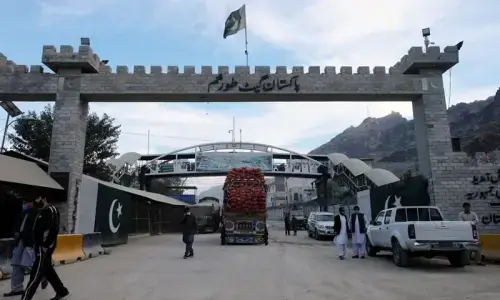
A meeting of finance ministers of the two countries, Ishaq Dar and Dr Hazrat Omar Zakhailwal, was held in Kabul in February to warm up economic relations. It was, however, perceived to be a routine affair, despite the inauguration of the work on dualisation of the 75km Torkham–Jalalabad road.
Commenting on the meeting, a business leader from Peshawar said, “There was not much besides handshakes. No major headway was made in improving the framework or terms of trade that currently favour India more than Pakistan”.
“The ball is in their court. There is resistance in Afghanistan despite the $500 million worth of support in cash and kind from our side. We have gone out of our way to accommodate them,” a frustrated officer of the commerce ministry told Dawn from Islamabad over phone.
He added that “the Joint Economic Commission to remove trade irritants has also been active for the past many years, but efforts from Pakistan’s side have not been reciprocated from the other side”.
However, businessmen in Peshawar, Quetta and Kabul contested the official view.
“Pakistan can’t dictate to Afghanistan. Being a Pashtoon, I understand their resentment,” a businessman commented.
Businessmen in Kabul reached over phone were not comfortable talking to a Pakistani journalist, and declined to formally comment.
“The high participation in elections is a vote for peace in Afghanistan. Let the peace return; stability and development will follow,” an importer responded quickly before hanging up.
Usman Bilour, President KP Chamber of Commerce and Industry, feels anxiety about future of trade with Afghanistan is misplaced.
“The future of the two countries, and not just trade, is in the hands of their leaders. It is, however, premature to comment, as the next government has yet to emerge. I am hopeful. Today, businesses on the two sides have direct contacts, and we intend to build on mutually beneficial relationships,” Bilour told Dawn over phone.
Zubair Motiwala, co-president of the Pakistan Afghanistan Joint Chamber of Commerce and Industry, believes much will depend on the post-election scenario in terms of law and order situation in Afghanistan.
“Uncertainty is killing business. Two-way trade is already down by 50pc. People are in waiting mode. We wish and hope that Afghanistan holds itself after the withdrawal of foreign forces, and that out trade ties grow deeper,” he says.
Commenting on landlocked Afghanistan’s dependence on Pakistan for trade, he says we should stop living in a fool’s paradise.
“They have developed alternatives. Today, no more than 32pc of its imports pass through Pakistan. According to numbers at the top of my head, they are importing as much as 25pc through Iran and 19pc through Central Asian states.”