0
0
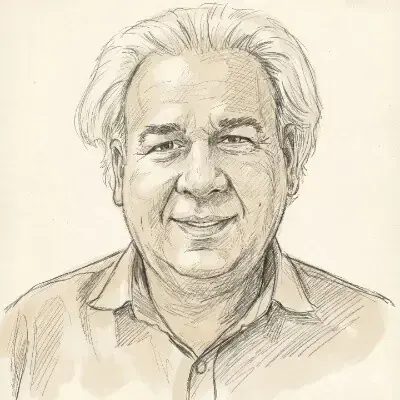
KARACHI: Literature buffs who packed the rather incommodious room in the Progressive Writers Association’s Nazimabad office were treated to some fine poetry on Monday evening when Indian poet Rukhsar Zehra Imrohvi, daughter of eminent filmmaker Kamal Imrovhi, read out not only her ghazals and nazms but also of her uncle Jaun Elia’s who she claimed encouraged her to become a versifier.
Ms Imrohvi thanked the Progressive Writers Association for giving the reception in her honour because literary giants such as Munshi Premchand, Sajjad Zaheer, Ali Sardar Jaffery, Kaifi Azmi and Faiz Ahmed had been some of the important members of the association. She said her presence was testimony to the fact that writers and poets could not be confined to geographical boundaries; they actually belonged to one fraternity.
She told the audience that her book ‘Dard-i-Dil Likhun Kab Tak’ was well received in India and was now being appreciated in Pakistan. She remarked that her poetry was a spontaneous representation of her thoughts and feelings.
Ms Imrohvi said it was Jaun Elia who insisted and encouraged her to write poetry. He had expressed his wish even in verse that she had included in her book. The first couplet of that poem is:
Apni mata-i-rooh ke liyey, dildar ke liyey
Jaun apne khun ke liyey, Rukshar ke liyey
(For my sweetheart, my soul’s solace
For my own blood, my Rukhsar)
Another couplet:
Yeh qalam hee to bus hamara hai
Apna is per hee to ajara hai
(It’s the pen which is ours It’s the only thing we own)
Ms Imrohvi said when she heard the news of Jaun Elia’s death, she didn’t know how to react to it (for she was in India and he in Pakistan). She went to a lake (Baan), which Jaun loved and had written a lot about, and also wrote a poem there as a tribute to her uncle.
Speaking about her book ‘Dard-i-Dil Likhun Kab Tak’ Ms Imrohvi said one of its parts is to do with her father Kamal Imrohvi and his letters in which she had tried to bring to light that he was not just a celebrity filmmaker; he was like every other common man who was aware of his social obligations. She thanked critic the late Mohammad Ali Siddiqui for writing a short foreword to her book. After that Ms Imrohvi recited her poems. The first piece was a ghazal whose initial two lines were:
Waqt lagta hai sawalaat ke hul honey tak
Yani ik umr guzarti hai ghazal honey tak
(It takes time for issues to be resolved
And ages to compose a ghazal)
Another couplet:
Nazar aya hai jo darya, nahin hai
Jo ik qatra hai wo qatra nahin hai
(What you see isn’t a river The droplet too isn’t a droplet)
Then she presented a few nazms, one of which was dedicated to her mother and another to her father.
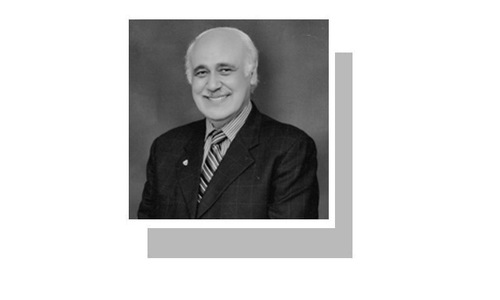
PWA President Muslim Shamim, who presided over the programme, said the day was important on quite a few counts. Firstly, poetry lovers got to hear good poems. Secondly, Rukhsar Zehra was the daughter of a ‘legendary’ filmmaker whose creativity was marked by perceptiveness and then the fact that Jaun Elia persuaded his niece to carry on with her creative endeavours. Mr Shamim, however, commented that the dominant factor in her poetry was the gham-i-zaat (the self) and the gham-i-hayat (life’s social aspects) played second fiddle to it. She should think about it.
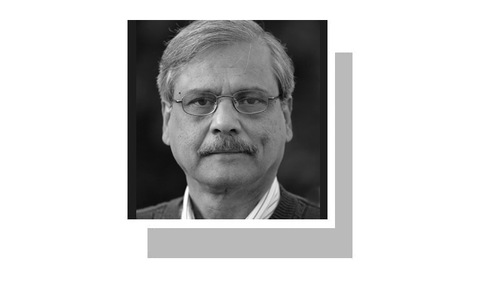
Dr Jaffer Ahmed said when he was young he used to think that Imroha was a country, because so many people (writer and poets) he came across were from Imroha. He praised Rukshar’s poetry saying her diction was plain but effective.
Sultan Naqvi read out his and Hamid Syed read out a paper by Dr Mohammad Ali Siddiqui, on Ms Imrohvi’s poetry. Dr Badar Ujjan gave the vote of thanks.