“You are free; you are free to go to your temples. You are free to go to your mosques or to any other places of worship in this State of Pakistan. You may belong to any religion, caste or creed — that has nothing to do with the business of the State.”
This excerpt from Quaid-i-Azam’s famous speech to the country’s first constituent assembly on August 11, 1947 is often quoted as a forceful espousal by the Quaid of a secular state and the principle of religious tolerance.
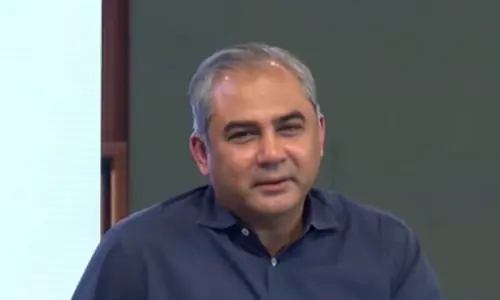
Unfortunately, while it is oft quoted, the recording of the speech is not available in Pakistan as it was aired live and a team had come from Delhi to record it, there having been no such facility in the territory that would, in a few days time, become Pakistan. Decades later Murtaza Solangi, who until recently was the Director General of Radio Pakistan tried to obtain a copy from All India Radio, but met with little success. First he was told that the copy existed, a revelation that created considerable excitement, but then that claim was retracted and a disappointed Solangi was told that, in fact, no copy existed.
But the quest itself led to another discovery; that of two previously little known speeches by Jinnah, dating back to June 3, 1947 and August 14, 1947.
Solangi then tried to get possession of these tapes, approaching anyone who could help, including Pakistan’s High Commissioner in New Delhi and the Speaker of the Lok Sabha, Meira Kumar, who in turn asked the Indian High Commissioner to do his part.
By this time the story of the missing Jinnah tape was already doing the rounds in both India and Pakistan. This is how the Right to Information activist Subhash Chandra Agrawal picked it up and helped Pakistan to acquire the recordings, says Solangi.
For Solangi, who has 3.5 million minutes of recording dating back to the pre-partition years, including recordings of Gandhi and Nehru, it was not just about acquiring something that he thought rightly belonged to Pakistan. As a student of history, as he likes to call himself, he wanted other students and researchers to have access to this piece of our shared history.
But the main motivation behind this labour of love, according to Solangi, was that he believes that Jinnah truly wanted a pluralist democratic state, and that this sentiment is crystal clear from his speeches. For him this piece of history was also a piece of the puzzle of what Jinnah’s vision for this country was.
These speeches are important because here Jinnah clearly expressed his vision of a peace-loving, pluralistic, democratic Muslim majority Pakistan as opposed to the increasing intolerance we see these days.
His idea of Muslim nationalism was secular in the sense that it did not deal with theological and religious questions but rather the issues of a multicultural and democratic society.
Jinnah’s reference to the tolerance and goodwill shown by Emperor Akbar, a tradition he links to that of the Holy Prophet (PBUH), makes it very clear that he wanted the new state to be based on the principles of tolerance and equality.
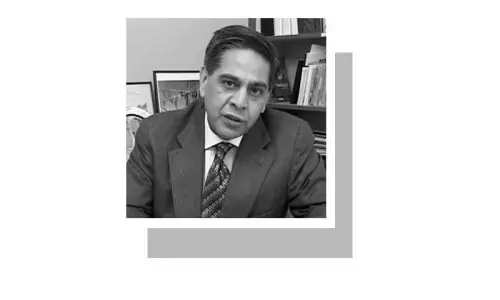
Yasser Hamdani, author of Jinnah: Myth and Reality put it: “Jinnah the statesman was arguing that Akbar — who suspended jizya and kept religion separate from matters of state — was perfectly in consonance with Islam.”
In his speeches Jinnah repeatedly spoke of the rights of non-Muslims and their equality within the new state of Pakistan. It is for this reason that Jinnah got a Hindu Jogindranath Mandal to be Pakistan’s first law minister and a Hindu poet to write Pakistan’s first national anthem, says Hamdani.
Jinnah’s speeches cannot be brushed aside as a footnote from history, as they are equally, if not more, relevant today. “Had we followed his crystal-clear vision for an inclusive, democratic and egalitarian state, call it secular or Islamic or whatever, perhaps we would have left Jinnah behind and he would be irrelevant, but so long as Pakistan struggles and so long as people who opposed Jinnah in his lifetime claimed to be the uncles of the ideology of Pakistan, Jinnah’s words remain relevant as a mirror,” says Hamdani.
It later transpired that these tapes had in fact been in the possession of radio Pakistan for some time now, but few people had ever studied them. Such was the level of bureaucratic archiving that a vital part of Jinnah’s legacy was effectively lost. Meanwhile, the search for the all-important August 11 speech continues.