0
0

MEHDI Hasan’s voice was encompassing, overwhelming and penetrating: something out of this world. With this technique, a voice becomes deep and resonating, involving less movement of tongue and lips, termed as the ‘chest voice’. This is why his singing voice was quite different from his speaking voice. This combination rendered his voice softer than silk and extremely flexible, unmatched by any other singer either past or contemporary.
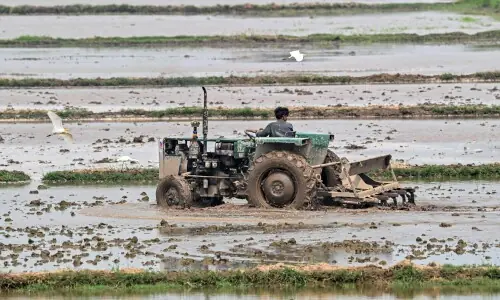
However, what made him so exceptionally outstanding was his quest for excellence in whatever task he had at hand. Maybe few people know that he had a diploma in agriculture from Faisalabad and a diploma in mechanical engineering from the UK. This he said in an interview with Radio Pakistan. He excelled in diesel engine mechanics. Music being the love of his life, he said he used to feel music in the sound of a running engine of a tractor as well. That is, music was inseparable from his personality.
His basic education was in Hindi and Sanskrit, and Urdu was not his mother tongue; but his selection of ghazals was exquisite from a cross-section of classical Urdu poets as well as of contemporaries like Faiz, Faraz, Sufi Tabassum, Qateel Shifai and Perveen Shakir. He took pains to learn correct pronunciations of words and correct rendering of verses from those ho knew it: Saleem Gilani and Z.A. Bukhari of Radio Pakistan in particular. Language was no hindrance for him.
Besides Urdu, he sang equally well in Punjabi, Sindhi, and Seraiki. Once in Kabul, he sang Farsi ghazals and received great accolades from the audience, including the king. Those masterpiece ghazals are occasionally broadcast from Radio Kabul.
When he died, everyone said two things: his death is a great loss and that he would always live in our hearts. Okay, but what were we doing when he was around? He suffered from debilitating illnesses plus financial problems for more than a decade. Only a few months back the president of Pakistan directed the Sindh overnor to bear the cost of his treatment and only then the provincial government woke up to recognie his contributions and named a park after him. He did not live to see the park completed.
And in whose hearts would he be living? Maybe a few per cent of people of my generation and my seniors. The electronic media, particularly the private ones, hardly ever played his songs or ghazals over the past several years.
Nowadays private channels are so heavily infested with Indian music that it is a rarity to hear any Pakistani voice except that of the anchor. This is how we devalue and forget our national identities. Certain mediapersons, at the death of Jagjit Singh, regarded him as the king of ghazal and credited him with popularising ghazal in films.
I hope now they would have corrected themselves as to where this title and credit correctly belong.
PROF (Dr) SURAYYA KHATOON Karachi