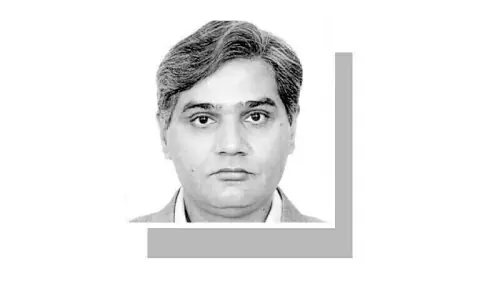
ISLAMABAD, Aug 3: Pakistan’s top literary Kamal-i-Fann Award for life achievement in literature for 2004 has gone to veteren Sindhi short story writer and political activist Subhraj Gyan Chandani. Pakistan Academy of Letters (PAL) Chairman Iftikhar Arif announced this at a press conference here on Wednesday.
It was for the first time that the award has gone to a non- Urdu writer since it was instituted in 1997. Previous recipients of the award, which carries a cash prize of Rs500,000, are Ahmad Nadeem Qasmi, Intizar Hussain, Mushtaq Ahmad Yusufi, Ahmad Faraz, Shaukat Siddiqui, Munir Niazi and Ada Jafferey.
From this year’s panel of judges, Dr Farman Fatehpuri, Mazharul Haq Siddiqui, Shafqat Tanveer Mirza, Dr Anwar Ahmad, Dr Shah Mohammad Marri, Dr Salma Shaheen, Prof Khalida Hussain and Dr Alamgir were present at the news conference.
Mazharul Haque Siddiqui gave an update of Subhraj Gyan Chandani, best known among the Left wing political circles as ‘Subho sahab’, who was born in village Bindi in Larkana district of Sindh. India is said to have tempted him to migrate to that country but he spurned all such invitations.
Subho Gyan Chandani is a master at writing compelling short stories and the characters in his books carry on a struggle against injustices and inequality. His best-known work is titled Sobho Thindo (The day shall dawn) that portrays his tilt for social reforms that should reach the depressed Sindhi classes.
He also writes poetry in which genre he is both a mystic and philosopher, said Mazharul Haque. Iftikhar Arif said the Kamal-i-Fann Award was akin to Booker Prize for English fiction writers and suggested that a similar kind of award should be established for research works.
 The PAL chairman also announced the National Literary Award for outstanding literary books published in the past two years. Three-member juries for each category of award decided the winners who get a cash prize of Rs50,000 also.
The Allama Iqbal Award for the best book of Urdu poetry was awarded posthumously to the iconoclast poet Jon Elia for his collection Gumaan. (Judges Aslam Farrukhi, Dr Riaz Majeed, and Javed Shaheen). The Moulvi Abdul Haq Award for the best Urdu prose work went to Syed Mazhar Jameel for his Jadeed Sindhi Adab. (Judges Jamil Jalibi, Prof Fateh Muhammad Malik, and Dr Anwar Ahmad).
The Waris Shah Award was given to Lokan Kamlian Noon Qisa Hushiar, written by Najam Hussain Syed (Judges: Shafqat Tanvir Mirza, Afzal Tauseef and Rashid Hassan Rana).
The Shah Abdul Latif Award was won by the book Khiyal Khushbu-e-Sittara, written by Manzoor Jokhiyo. (Judges: Imdad Hussain, Ibrahim Joyo, and Abdul Qadir Junejo).
The Balochi language Mast Tawakkali Award went to Burtap, written by Dr Ali Dost Baloch. (Judges: Wahid Buzdar, Munir Ahmad Badini, and Dr Fazal Khaliq).
The Khushal Khan Award was won by the Pushto language book Karkhai, written by Qamar Rahi. (Judges: Muhammad Nawaz Tahir, Muhammad Azam Azam and Sarwar Sodai).
The Khwaja Farid Award went to the Seraiki language book Sanjh da Seena, written by Sarwar Karabali. (Judges: Musarrat Kalanchvi, Shoukat Mughal and Dr Tahir Taunsvi).
The Taj Muhammad Jamali Award went to the Brahvi book Herof, authored by Sosan Brahvi. (Judges: Salahuddin Mengal, Nadir Qambarani, and Abdul Rahman Brahvi).
The Pitras Bukhari Award for best literature written by a Pakistani in the English language went to the book Maps for Lost Lovers, written by Nadeem Aslam. (Judges: Moneeza Shamsee, Prof Alamgir Hashmi and Shaista Siraj).
Prizes for 2003: Muhammad Izharul Huq’s poetical collection Pani be Bichha Takht received the Allama Muhammad Iqbal Award. (Judges: Prof Mohsin Ehsan, Prof Sahar Ansari and Dr Saleem Akhtar).
Baba-i-Urdu Moulvi Abdul Haq award for the best work of Urdu prose was given to Asad Muhammad Khan’s book Nirbada. (Judges: Zahida Hina, Masood Ashar, and Moeenuddin Aqeel).
The Waris Shah Award for the best book in the Punjabi language went to Afzal Tauseef’s book Aman Velay Millan Gey. (Judges: Farkhanda Lodhi, Shafi Aqeel, and Mansha Yad).
The Shah Abdul Latif Bhitai Award was given to Ayub Khoso’s book Deuran Ji Duniya Payan. (Jury: Agha Khakis Saleem, Dr Hyder Sindhi and Dr Ghulam Ali Allana).
The Khushal Khan Khattak Award for the best Pushto book was given to Prof Rab Nawaz Maeel’s book Adab Tanqeed-o- Fikr. (Judges: Abdul Karim Barely, Tahir Afridi and Saleem Raza)
The Balochi language Mast Tawakkali Award went to the book Dare Asap, written by Naguman. (Judges Shah Muhammad Marri, Abdul Hakeem Baloch and Ghani Parwaz).
Khwaja Farid Award for the best Saraiki publication went to Musarrat Klanchvi for her poetry collection Makki Madani (Judges: Iqbal Sokari, Ahsan Wagha and Hafez Khan)
The English language Pitras Bokhari Award was made posthumously to Maj-Gen A.O.Mitha for his critical book of military memoirs Unlikely Beginnings, selected by judges Yasmeen Hameed, Adrian Hussain and Khwaja Masud.—Jonaid Iqbal