165
165

DHAKA: Bangladesh on Tuesday executed the leader of the country's largest Islamist party for war crimes, officials said, a move set to exacerbate tensions in the volatile Muslim-majority nation.
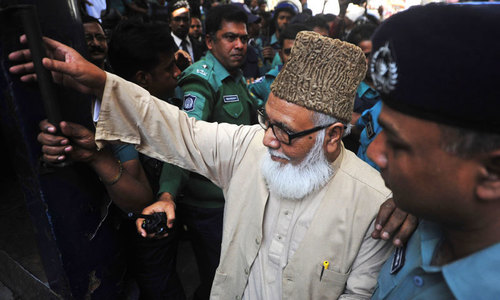
Motiur Rahman Nizami, leader of the Jamaat-e-Islami party, was hanged at a prison in the capital Dhaka, just days after the nation's highest court dismissed his final appeal to overturn the death sentence for atrocities committed during the country's 1971 war.
Law and Justice minister Anisul Huq told AFP the 73-year-old leader was hanged just before midnight (1800 GMT) after he refused to seek mercy from the country's president.
“He was executed between 11:50 pm and 12:00 am midnight,” Huq said.
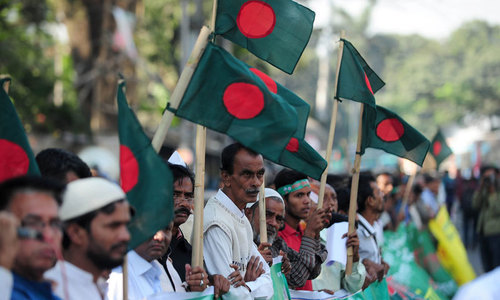
In 2013 the convictions of Jamaat officials for war crimes triggered the country's deadliest violence in decades. Around 500 people were killed, mainly in clashes between Islamists and police, and thousands were arrested.
Nizami is the fifth and highest-ranked opposition leader -- and the fourth from Jamaat -- to have been executed since December 2013 for war crimes despite global criticism of their trials.
“We've been waiting for this day,” Home Minister Asaduzzaman Khan told reporters, adding that people “will remember this day forever”.
Security stepped up
Hours before the hanging, family members of Nizami met him for the last time at the Dhaka Central Jail, as hundreds of police and elite security forces cordoned off the British colonial-era prison.
Security has been stepped up in the capital and in Nizami's home district of Pabna in the country's west, with magistrates being deployed to hand down instant prison terms to any law-breakers.
“If anyone tries to commit sabotage, our security forces are ready to identify them and take proper measures,” Khan told reporters.
Jamaat has said the charges against Nizami, a former government minister, are false and aimed at eliminating the leadership of the party.
Nizami took over as party leader in 2000 and played a key role in the victory of an Islamist-allied government in the 2001 general election. He was made a key minister in the cabinet of 2001-6.
The 1971 conflict, one of the bloodiest in world history, led to the creation of an independent Bangladesh from what was then East Pakistan.