3
3
FOR the first time, the province of Balochistan has seen a power-sharing formula successfully implemented, but it appears to have snagged on an old problem.
The formula itself was worked out in the Murree Accord soon after the May 2013 election, when two contenders for the post of chief minister were both assured that they would get a chance to serve in the highest executive office of the province, but one after the other.
As a result, Dr Abdul Malik Baloch of the nationalist NP occupied the post till December 2015, then tendered his resignation and stepped down to vacate the post for Nawab Sanaullah Zehri of the PML-N. Such a voluntary power-sharing formula was last tried in 1996 in Balochistan, but could not be successfully seen through. This time, matters have worked out more or less smoothly thus far.
Now comes the hard part. The new chief minister is to decide his cabinet team, and Balochistan has a long history of highly contested politics surrounding the allocations of portfolios, with the result that almost all MPAs end up getting some sort of a ministerial position.
Mr Zehri has now run into this old problem, and despite the passage of almost two weeks now, and while knowing for a long time that he would be the next chief minister, has been unable to name a new cabinet.
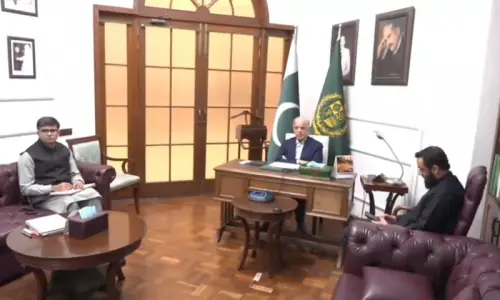
Instead, in the wrangling for cabinet posts that has ensued in the wake of his becoming chief minister, Mr Zehri has been making trips to Islamabad to seek guidance on the matter rather than working the political mill at home to start his important tenure on a strong note. The chief minister needs to play a stronger hand than this.
He has been brought to power under a formula that had many details worked out for him. Rather than looking to Islamabad for guidance, he needs to show that he has the mettle to rule his province and rise above the squabbling at this early time.
Published in Dawn, January 6th, 2016