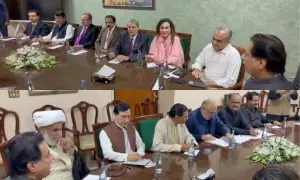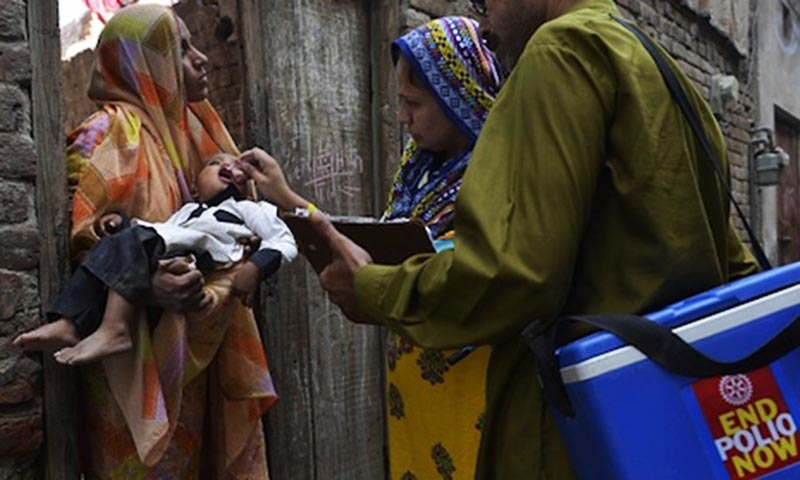
ISLAMABAD: The women’s parliamentary caucus is meeting on Tuesday to devise a strategy to eradicate poliovirus, which has become a matter of embarrassment for Pakistan at the international level.
At the meeting, the women parliamentarians will be requested to suggest solutions for the issue and play their role in eradicating the crippling disease in their native areas.
It may be mentioned that 220 cases of polio have been reported in Pakistan so far this year, which is a record since the year 2000 when the figure stood at 199. Because of the failure to eradicate the virus, Pakistanis have been facing travelling restrictions and every person intending to go abroad has to get a vaccination certificate.
Moreover, the Independent Monitoring Board (IMB), which works on behalf of the international donor agencies and issues reports on the performance of the countries in combating poliovirus after every six months, also issued its report last week. In the report, it labelled Pakistan’s efforts to combat the disease as a ‘disaster’ and recommended that the polio programme in the country should be handed over to the National Disaster Management Authority (NDMA).
An official of the Ministry of National Health Services (NHS) requesting not to be identified said it seemed the ministry and other stakeholders in the polio programme were willing to take steps for the eradication of the disease but they were not ready to hand over the programme to the NDMA.
Women senators, MNAs will be requested to play their role in anti-polio drives in their areas
“The ministry and other stakeholders have a major job to deal with the polio programme. Moreover, by working on the polio programme, the top officers of the ministry get world exposure as polio has become a matter of concerns for the international community,” he said.
“If the recommendations of the IMB are not implemented, it might not react strongly but in the next meeting it will come up with recommendations about more restrictions on Pakistan,” he said.
“We might not listen to the IMB but the international community will defiantly take the recommendations of the IMB seriously,” he said.
“Today, we were informed that a meeting of the women’s parliamentary caucus will be held in Parliament House on Tuesday. In the meeting, the senators and MNAs will be requested to give their suggestions to tackle the issue.”
He added: “It seems that the issue will become complicated in the near future because there is no system of accountability and even there is no leadership in the polio programmes. These factors have also been pointed out in the IMB report,” he said.
When contacted, Prime Minister’s Focal Person on Polio Ayesha Raza Farooq, MNA, told Dawn that the cell and the ministry of NHS were working together.
“At the start of the year, a resolution was passed suggesting that parliamentarians should play their role to curb the refusal cases. We have decided to involve the women parliamentary caucus which has representation of all political parties,” she said.
“I believe that women can play a very important role in the decision making process at the local level. It has been decided to convince women through the parliamentarians to vaccinate their children. There are over 90 women parliamentarians but the representatives of the PTI may not participate in the meeting,” she said.
In reply to a question, Ms Farooq said the polio cell and the ministry had been trying their best to resolve the issue and the prime minister was also taking interest to control the disease.
“The IMB is a recommending body and we respect its recommendations but we have much better ideas about the challenges in the country and can take better steps as per our requirements. There are security problems in the country. Polio cases have been reported from Karachi because many people from Fata have shifted to that city and are not ready to vaccinate their children,” she said.
“There can be weaknesses in the system but we have been trying to resolve them. We will devise a strategy to improve the situation,” she said.
Published in Dawn, October 28th, 2014