6
6
IT is among the many wonders of this land of the pure that charlatans renowned for their closeness to state institutions can spout rhetoric about the use of ‘state terrorism’ against innocents. So it was earlier this week when Tahirul Qadri — and his various spokesmen — reacted to the government’s use of force against his supporters.
Qadri is not wrong in noting that such incidents can trigger a chain of events that shake up the entire political order; it is another matter that what he suggested was the start of his long-prophesied ‘revolution’ seems much more like a shift in the wrong direction for Pakistani democracy.
This is not to suggest that the Sharif brothers are proving to be adept defenders of our extremely weak democratic foundations. To the contrary, they are giving their detractors, and, more crucially, the establishment and its lackeys, every opportunity to not just snap at their heels, but potentially cut them off entirely.
The use of such excessive force in an upscale neighbourhood of Lahore defies logic. Indeed, one cannot help but wonder whether or not the whole incident was engineered precisely so that the already under pressure government is pushed further into a corner.
Progressive ideas do not find space to breathe.
But this is just mere speculation; our fixation on the intrigue of Pakistani politics actually reinforces the power of the ‘agencies’, who thrive on our discussions about their ability to manipulate political processes at will.
Yet it is hard not to feel suspicious when Qadri decries state terrorism in one breath and in the next claims that the PML-N is targeting his organisation because it supports the armed forces in all of the latter’s noble causes.
Lest we forget, Allama Sahib profusely praised the army (and judiciary) during his last ‘revolution’ in Islamabad’s Blue Area when the PPP was in government. In other words, some things do not change (read: establishment touts blackmailing sitting governments) even if the characters and paraphernalia do.
Of course, Qadri has a mobilised mass of supporters which will now be chomping at the bit to give the PML-N some payback for the violence it meted out in Model Town. And with the sympathetic media coverage that the Allama Sahib is now guaranteed, there is a chance that the already thinning popularity of the government will take yet more of a beating.
It is telling, though, that this battle between Qadri/Imran Khan and the Sharifs remains largely limited to Punjab. In some ways it is a battle for control over Punjab, and this confirms that the establishment which was until not so long ago able to hold down Punjab without very much fuss is now struggling to forge a favourable balance of power.
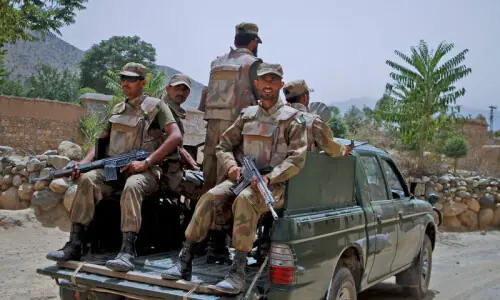
Meanwhile jets pound North Waziristan, the security apparatus continues to target nationalists in Balochistan, and polarisation in Sindh shows no sign of abating. So while the ruling clique is fighting within itself for the right to rule Punjab, the rest of the country is marginalised as only peripheral regions can be.
In a related vein, it is necessary to think critically about the ‘consensus’ that has been developed in Punjab (along with major urban centres outside it) on the ‘decisive’ military operation in North Waziristan. Has anyone bothered to consult the people who live in the ‘terrorist haven’ being bombed? How is it possible to reconcile the labelling of the state’s peripheries ‘backward’ and ‘fundamentalist’ with the fact that in the Punjabi heartland the ideology of the state continues to remain virtually unchallenged?
This is the umpteenth time that the entire civilian population of a Pakhtun or Baloch region has been evicted from its home without any guarantee of when return will be possible. Those who die are automatically branded ‘terrorists’ and many of those who survive probably feel they would have been better off dead.
What will make this operation different? Will it be any less opaque than those that have preceded it? Is destroying every standing building in North Waziristan equivalent to destroying the ideological foundations of millenarianism, which is, after all, what really matters?
We are where we are because right-wing ideas and politics exercise monopoly control over the public realm. Progressive ideas and politics may not have been eliminated from the body politic but do not find space to breathe in a way that they can shape ‘public opinion’. Punjab in particular is increasingly barren inasmuch as the Sharifs, Imran Khan and flash-in-the-pan demagogues such as Tahirul Qadri compete for political control.
As operations, target killings, suicide bombs and enforced disappearances continue to rear their ugly head outside Punjab, progressives within must decide whether they will continue to play second fiddle to establishment-friendly populists or revive an anti-establishment politics that can unite them with people on the peripheries, where state terrorism rears its head, day in and day out.
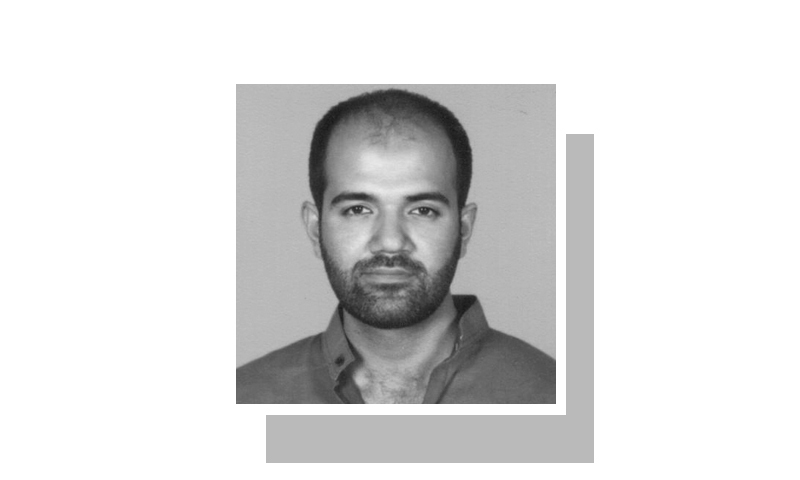
The writer teaches at Quaid-i-Azam University, Islamabad.
Published in Dawn, June 20th, 2014