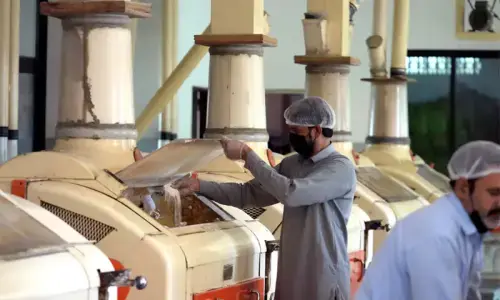
LAHORE: Battered by gas shortages, rising exchange rate and high cost of electricity, Punjab’s textile industry is verging on closure. A good number of factories, small and large, are claimed to have already closed down or cutting production to avoid financial losses.
“Punjab’s textile industry is being deprived of gas supplies despite being third on the priority list. We are getting just one quarter of our allocated gas supply though domestic demand has dipped significantly on rising temperatures,” S M Tanveer, Chairman Aptma-Punjab, told Dawn on Friday.
On the other hand, other sectors of the economy that fall below on the priority list of gas companies are getting more gas than what is being supplied to the textile industry.
“This is increasing our cost of production and forcing factories to close down,” he said.
The manufacturers from Sialkot to Lahore to Faisalabad are crying hoarse over the government’s failure to increase the gas supplies to them.
“The shortage of gas for Punjab’s industries means we are being denied a level playing field even within our own country,” Mian Mohammad Adrees, a leading manufacturer of caustic soda in Faisalabad, had recently told Dawn. Two-thirds of his installed capacity is lying idle because of gas shortages. “I cannot operate my idle capacity on electricity because it makes me unviable,” he said.
Tanveer said insufficient energy supplies, rising cost of doing business, appreciating rupee and government support being provided by the regional competitors like India to their industry were the major causes for the erosion in the industry’s viability and the recent closures and production cuts.
Aptma had called a meeting of its members from Punjab on Monday to formulate the industry strategy against discriminatory gas supplies. Around 70 per cent of Pakistan’s textile industry is located in Punjab, which is extremely exposed to energy shortage and affordability compared with the mills in other provinces operating on uninterrupted gas supplies.
The industry is being supplied gas only six hours a day and facing power cuts of eight hours a day, causing disruptions to production.
Rough estimates suggest that $3 billion production capacity of textile industry in the province has been either fully or partially closed down due to suspension of one shift operations, Tanveer added, anticipating more closures, job losses and bankruptcies.
On top of energy shortages, the textile exporters contend that the appreciating exchange rate and rising cost of production was wiping out their liquidity. Punjab’s industry is paying Rs7 billion per month more than their counterparts in Karachi and Khyber Pakhtunkhwa on account of partial gas supplies and power cuts and lost about Rs12bn owing to the rupee revaluation against their exports and committed future orders.
“The government must provide us compensatory rebate on our exports to make up for the losses on account of the rupee revaluation. We had contracted orders at an exchange rate of Rs105-108 a dollar. What we have got against our export remittances is Rs98-99 a dollar,” said Syed Zia Alamadar Hussain, a knitwear exporter from Faisalabad.