4
4
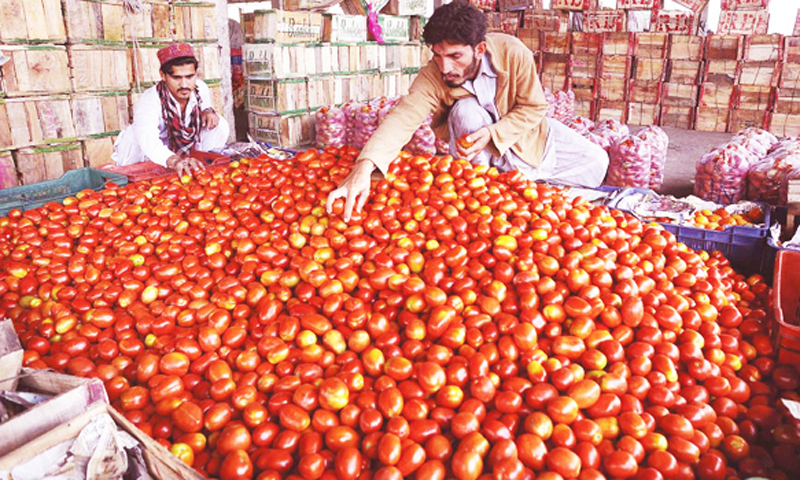
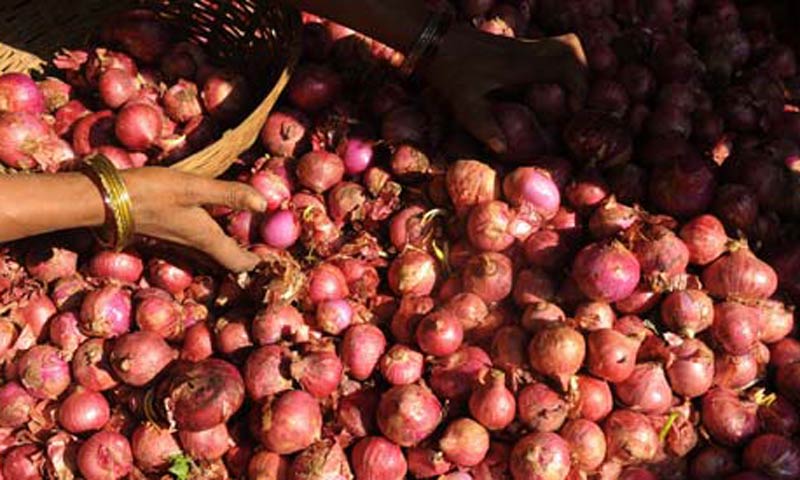

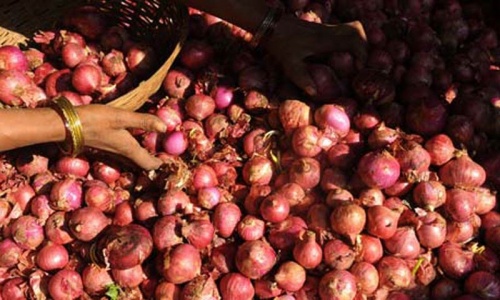
ISLAMABAD: Although the Economic Coordination Committee of the cabinet expressed concern over sharp increases in prices of kitchen items on Wednesday, political considerations did not let it decide to ban exports of onion and tomato.
A senior government official told Dawn that the Ministry of National Food Security and Research had proposed an immediate ban on exports of the two perishable items in view of a sharp increase in their prices.
The ECP meeting presided over by Finance Minister Ishaq Dar was informed that shortage was the main reason for the increase in prices of tomato and onion which would come down soon with the arrival of fresh stocks in the market.
Some participants representing the interests of farmers claimed that only a negligible quantity of tomato was finding its way out of the country and opposed the ban on export of onion.
According to the official, National Food Security Secretary Seerat Asghar strongly proposed the ban on exports of the two items in view of their short supplies and rising prices, but his arguments met with a staunch opposition from some ministers.
The ministers argued that onion crop in Punjab had been harvested and farmers there had drawn benefit and it would be unfair if the government banned the export at a time when Sindh’s crop was about to be brought to the market. It will be a disadvantage for farmers in Sindh and also Khyber Pakhtunkhwa to some extent. “Let farmers in Sindh and KP also make some money for a few days,” one of them was quoted as saying.
An official said the finance minister was of the opinion that the government should watch the situation for some more days before reconsidering the matter.
The meeting was told that a three-day survey of local markets suggested that prices of onion and tomato were going down and the situation would improve by the end of the month.
According to an official statement, Finance Minister Dar advised officials of the Ministry of Food Security to come up with a practical suggestion to curb the rising prices on a long-term basis. He directed the ministry to keep a watch on prices and deferred the matter till the next meeting.
The statement said the minister had expressed concern over inflation and price hike in the country and said it was mainly because of an increase in international oil prices.
ENERGY AUDIT: The ECC decided to form a committee on energy efficiency audit of captive power plants. It will be headed by the water and power secretary and comprise representatives from the ministries of industries and production, petroleum and natural resources and commerce, Nepra and Ogra. The committee will prepare a plan for capacity building for energy efficiency audits and introduce transparency in the system.
The finance minister said: “We shall start the process of conducting energy efficiency assessment from the public sector and will initiate awareness campaigns for the private sector to use methods that can save energy and help in ending the energy crisis”.
The meeting was informed that large-scale manufacturing grew by 12.8 per cent in September. Foreign remittances reached $5.2 billion in the first quarter of the fiscal year 2013-14 — 6.3 per cent more than in the corresponding period last year. Foreign direct investment increased by 85pc.
The ECC decided to appoint the Asian Development Bank as transaction adviser for the Turkmenistan-Afghanistan-Pakistan-India gas pipeline project.