0
0
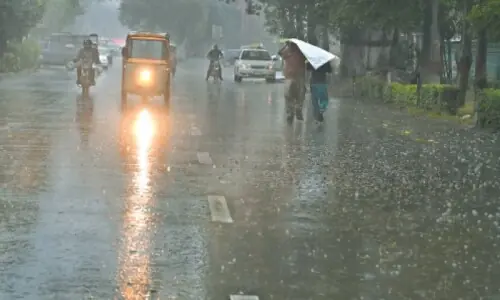
ISLAMABAD, May 16: The National Disaster Management Authority (NDMA) warned on Wednesday that upcoming monsoon season between mid-July and mid-September might trigger floods and affect some 29 million people across the country.
Briefing reporters, NDMA chairman Dr Zafar Iqbal Qadir asked provinces to redouble their efforts to meet the threat and advised them to invest in disaster preparedness well in time to minimise losses.
He said 29 districts had been identified to be prone to the impact of flooding. Badin, Thatta, Tando Muhammad Khan, Tando Allah Yar, Mirpurkhas, Sanghar, Umar Kot, Tharparkar and Dadu in Sindh; Dera Ghazi Khan, Muzaffargarh, Rajanpur, Layyah, Bahawalpur, Rahim Yar Khan, Bhakkar, Mianwali and Faisalabad in Punjab; Musa Khel, Loralai, Barkhan, Kalat and Lasbella in Balochistan, and Nowshera, Charsadda, Swat, Mardan, Peshawar and Dera Ismael Khan in Khyber Pakhtunkhwa were likely to be hit by heavy rains and floods directly linked to climate change, he said.
Mr Qadir said provinces had been sensitised to brace up for the worst case scenario, pointing out that implementation of the disaster management measures was the job of provinces after the adoption of the 18th Amendment.
He said provinces had prepared disaster management plans which would be shortly submitted to the NDMA. The plans will be shared with relevant ministries and stakeholders and the draft national disaster management policy will be sent to the cabinet for approval next month.
The NDMA chief pointed out that Sindh and Punjab had been asked to allocate Rs5 billion each for disaster preparedness and Balochistan and Khyber Pakhtunkhwa had been advised to set aside Rs3 billion each. Similarly, Azad Kashmir has been asked to earmark Rs2 billion and Gilgit-Baltistan and Fata Rs1 million each.
He said the federal government had also been advised to keep Rs5 billion for emergency situation.
He said a draft policy on disaster risk reduction was ready to be sent to the cabinet, adding this policy proposed that climate change and disasters should be seen as something inter-linked as it was the climate change which had caused major disasters.
The policy also proposes introduction of disaster risk insurance for the poverty-stricken vulnerable to natural disasters.
Mr Qadir said the contract to the commercial insurance industry would be awarded through international bidding and the scheme would cover life insurance of the bread earner, food security, shelter and crop and livestock compensation.
He said the NDMA had also proposed a risk financing fund to be established with seed money from the government.