0
0
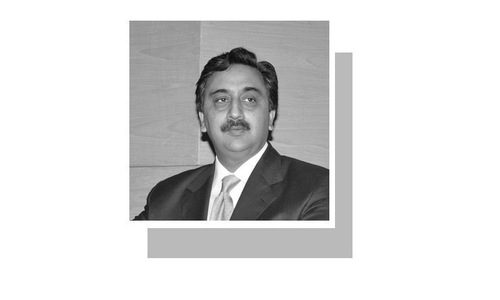
HYDERABAD, Sept 3: The former chairman of the Provincial Disaster Management Authority Pir Bux Jamali has called for revisiting disaster management plan in its entirety to make it more efficient.
Mr Jamali told Dawn on Saturday that the authority's needed to be formed at union council and taluka levels to speed up its response to disasters.
He said that Sindh government had allocated only Rs140.3 million for running the authority. “It's a very meagre amount, but I have now learnt that Rs300 million will be released and of it Rs148 million has already been released,” he said.
The performance of the National Disaster Management Authority (NDMA) had been under a cloud in Sindh, he said, adding the authority failed to respond to disaster-related needs during last year's floods in the province, which devastated seven districts and displaced 7.5 million people.
Therefore, the PDMA which works under provincial ministry of rehabilitation worked out a contingency plan, which had been approved by the chief minister, he said.
Mr Jamali said that a DCO heads District Disaster Management Authority in districts but there was still need to organise the authority at union council and taluka levels to make its service delivery more efficient.
“There will be no overlapping of service if the PDMA intervenes directly in relief and rescue efforts. And that's why DDMA should be reinforced,” he said.
According to Mr Jamali, PDMA is an advisory body that coordinates with different departments and issues forewarnings to departments so that they can prepare themselves accordingly.
“We issued weather advisory before recent rains that wreaked havoc in Badin, Tando Mohammad Khan, Mirpurkhas and other districts,” he said.
He denied the PDMA faced any bottlenecks that marred relied efforts during last year's floods and said the contingency plan categorised monsoon, floods, cyclones and earthquakes as disasters.
“Navy is with us in coastal areas where boats and life jackets are provided to rain victims and Army is working with us in riverine area,” he said.
He claimed that many villagers preferred to stay in their flooded abodes and villages and refused to leave because of poor conditions in relief camps.
He agreed that conditions in relief camps were pathetic but added that the PDMA had tried to fumigate the camps to ensure sanitation. “Having said that I agree that a room crammed with 20 to 40 people leads to serious issues,” he said.
He said that conditions in Badin camps were poor and unhygienic. Army had also sent there a team of doctors to examine patients including expecting mothers and newborns, he said.
The LBOD and the disasters it had caused were a new phenomenon. “The disaster in rain-hit areas was quite different from last year's floods. That's why we feel that disaster management plan should be replicated at UC and taluka level,” he said.
He confirmed that PDMA did not have an early warning system. “The irrigation department must have one at its barrages but PDMA doesn't have any,” he said.