Provincial Management Service officers see ‘structural bottlenecks’ blocking their career prospects in Punjab


 0
0
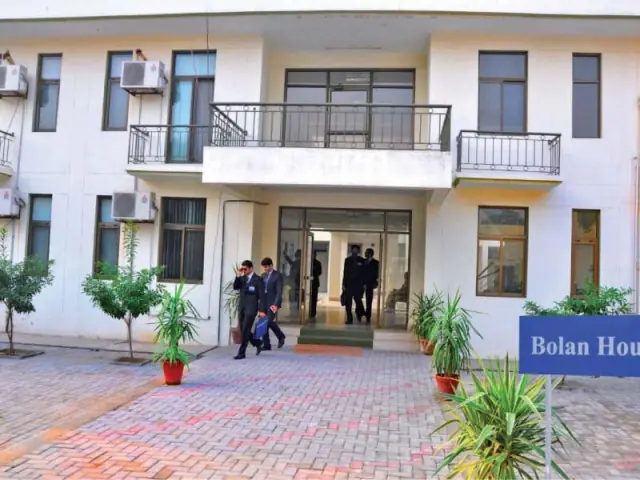

LAHORE: The Provincial Management Service (PMS) officers have alleged systemic discrimination in Punjab, saying the province’s largest administrative cadre comprising over 1,200 officers remains “structurally locked out” of key decision-making posts despite making 80 per cent of the administrative setup in the province.
In a briefing, the PMS Association (PMSA) stated that because of a “structural bottleneck”, despite forming the bulk of the provincial bureaucracy, its representation collapsed at the decision-making level, creating a top-heavy imbalance that the cadre says undermines both morale of officers and governance.
The briefing titled “Discrimination against PMS Officers: Facts, Evidence & the Way Forward – PMS vs PAS” was given at a cadre officers get-together by the association president, Qamar Zaman Qaiserani.
He said the provincial cadre officers were facing a disparity that was not limited to postings alone. He argued that the gap extended across the entire career cycle; from slower promotions compared to other provinces, to unequal access to housing, loans and training, “effectively capping the career growth of the province’s largest cadre.”
Explaining the imbalance at the top with actual figures, Mr Qaiserani claimed that out of 55 administrative secretaries’ posts in Punjab, 45 were held by the Pakistan Administrative Service (PAS) officers, while only 10 posts were occupied by the PMS officers. Similarly, he said, PAS holds eight of 10 commissioner posts and 35 of 41 deputy commissioner posts, while PMS gets two and six positions in these ranks, respectively. “The PAS cadre strength in the province stands at 326, while the number of PMS officers is 1,200 plus,” he said.
Flagging a promotion parity gap with other provinces, the PMSA stated that its 2008, 2010 and 2012 batches officers had reached BS-20 and BS-19 in Khyber Pakhtunkhwa (KP), Sindh and Balochistan, but in Punjab such officers were still stuck in BS-18 and BS-17.
Citing disparities in facilities, the PMSA president claimed that the PAS officers had “grabbed” over 90 percent of the DHA central house allotment, 80pc of GOR-1 house allotment, 90pc of foreign scholarships and 70pc of loan schemes. The PAS officers were occupying 80pc of the membership of the Punjab Civil Officers Mess (P-COM) located in GOR-1. “Balanced governance requires balanced representation,” the association argued.
The PMS officers alleged that the civil bureaucracy, dominated by the PAS, in Punjab had purposely kept them underrepresented in senior decision-making and key field command posts. They called for a transparent representation formula, ensuring merit-based postings and equal access to facilities and professional development.
Explaining their eligibility, the PMSA president said the induction routes of both the PAS and PMS officers were competitive, as they both have to clear 1,200 marks written examinations conducted by the Federal Public Service Commission (FPSC) and Punjab Public Service Commission (PPSC), respectively, besides passing interviews and psychological test.
He said some of the PAS officers also come from the “quota-based federal allocation system”, while all the PMS officers join the service through “open merit provincial competition”. “The issue is disparity in career structures for officers from the two cadres after induction,” lamented Mr Qaiserani.
Presenting the data of the PAS and the PMS officers posted from BS-17 to BS-22 positions in Punjab, the PMSA president explained that all the BS-22 posts were occupied by the PAS officers, while in BS-17, the PMS holds 75pc of the posts and PAS 25pc.
Also explaining the posting percentage of both groups’ officers from BS-18 to BS-21, the president said: “The PMS share rises at lower grades but narrows sharply at the highest decision-making level.”
He said the larger provincial cadre should not be “structurally locked out” of the posts, where provincial decisions were made and implemented.
Mr Qaiserani deplored that the opportunity gap for the PMS officers was even wider, affecting them adversely in obtaining housing, welfare, loans and foreign scholarship facilities. He also called for transparent representation and regular promotion boards through the PPSC.
Rai Manzoor Nasir, who is the most senior PMS officer serving in BS-21, alleged that the federal bureaucracy had created systemic bottlenecks, rendering grades, postings and promotions ‘meaningless’ for the PMS officers.
Mr Nasir, who is presently serving as managing director (MD) of the Punjab Health Foundation, said the federal bureaucracy was also posting lower cadre officers against higher grade posts, completely ignoring the senior officers. “When criticism grew, the federal bureaucracy ‘maneuvered’ and got a law enacted by the Punjab Assembly to legalise the posting of junior officers against senior positions,” he said.
“If this system is so good for governance, it should also be implemented in the ranks of the armed forces and the judiciary,” he suggested sarcastically.
Lamenting that there was no incentive left for the PMS officers in Punjab, Mr Nasir urged the chief minister to repeal the law that was “unfair and unconstitutional.”
Published in Dawn, July 20th, 2026