Oil rises on intensifying US-Iran hostilities, threat of Red Sea closure
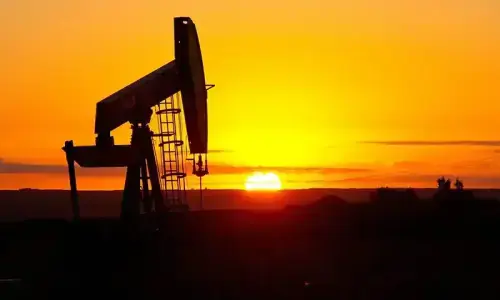
Oil prices inched up on Friday after the US and Iran stepped up attacks across the Gulf, with their broken truce limiting oil flows out of the Strait of Hormuz and with Tehran asking the Houthis to stand ready to shut the Red Sea export route.
Brent crude futures rose 7 cents, or about 0.08 per cent, to $84.30 a barrel at 0632 GMT, while US West Texas Intermediate futures gained 16 cents, or 0.2pc, to $79.11 a barrel.
Both benchmark contracts have climbed nearly 12pc this week, with Brent on track for a third consecutive weekly gain and WTI on pace for a second weekly gain.
“The potential threat of the Red Sea becoming another major supply disruption point is further complicating the global oil outlook,” said Tim Waterer, chief market analyst at KCM Trade.
He noted the “dual-risk scenario” was keeping a geopolitical premium embedded in both benchmarks.
For the first time since a memorandum of understanding paused fighting last month, the US launched two major waves of air strikes in a single day on Wednesday, mostly at targets near Iran’s southern coast. It kept firing on Thursday.
Meanwhile, Qatar’s defence ministry said its armed forces thwarted an Iranian missile attack early on Friday, while the interior ministry said a child was injured by shrapnel resulting from interception operations.
“Oil security is still a critical issue,” International Energy Agency Executive Director Fatih Birol said on Thursday at a Council on Foreign Relations event in Washington.
“We should be worried, and I am worried, if the situation does not improve in the next few weeks,” he said.
In a statement, the US Central Command said American forces began “a new wave of strikes against Iran for the sixth consecutive night to further degrade Iranian military capabilities” at 2pm EDT or 9:30pm in Tehran.
Tehran has countered with missiles and drones aimed at US military bases in neighbouring states, including a barrage at a recently expanded air base in Jordan.
Adding to oil supply concerns, Iran’s leadership has told the Houthis to be prepared to close the Red Sea oil route if the US strikes Iranian power infrastructure, three sources told Reuters.
IG analysts said technically, WTI could test the mid-$80s if it holds above key support in the mid-$70s.