0
0

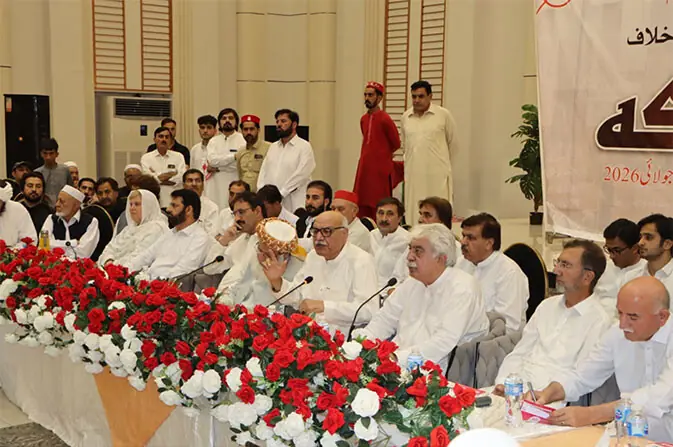
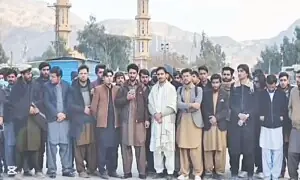
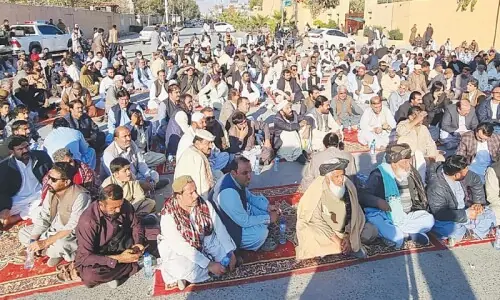
MALAKAND: The leaders of various political parties at a jirga here on Monday rejected the imposition of taxes in Malakand division and demanded restoration of peace in the region.
Organised by Awami National Party (ANP), the jirga called on federal government to withdraw its decision to impose taxes in Malakand. They said that the entire Khyber Pakhtunkhwa had become hostage to terrorism.
They said that people were already being subjected to excessive and unjust taxes through electricity and gas bills.
The jirga was addressed by ANP provincial president Mian Iftikhar Hussain, general secretary Hussain Shah Yousafzai, Jamiat Ulema-i-Islam-Fazl (JUI-F) provincial chief Maulana Ataur Rahman, Pakistan Tehreek-i-Insaf (PTI) provincial president Junaid Akbar, Provincial Minister Shakeel Khan, Pakistan Peoples Party (PPP) provincial president Mohammad Ali Shah Bacha, Malakand Division Traders Federation president Abdul Rahim, Jamaat-i-Islami provincial chief Inayatullah Khan, PML-N’s Sajjad Khan, Pakhtunkhwa Milli Awami Party’s Abdul Kamal Khan and others.
They said that the people of Malakand division had been displaced within their own country and spent many months living in tents. They said that militancy, military operations, curfews, floods and earthquakes devastated the region’s economy.
They said that reports were being emerged about the movement of suspected individuals in the mountains. Therefore, they said, the government should first restore peace in the area and provide with facilities related to healthcare, education, employment and infrastructure to people.
Speakers also demanded an end to what they described as unjust taxes in electricity and gas bills.
They said that the issue of taxation in Malakand division was not the concern of any single political party but of the entire population of the division.
Therefore, they said, all political parties, trader unions and civil society members were united in opposing the imposition of taxes.
They said that rulers should not, at the behest of International Monetary Fund, subject people to further hardships instead of providing essential services and relief to them. Otherwise, they warned, they would be compelled to launch strong protests against the decision.
Published in Dawn, July 14th, 2026