Mangoes in distress


 0
0
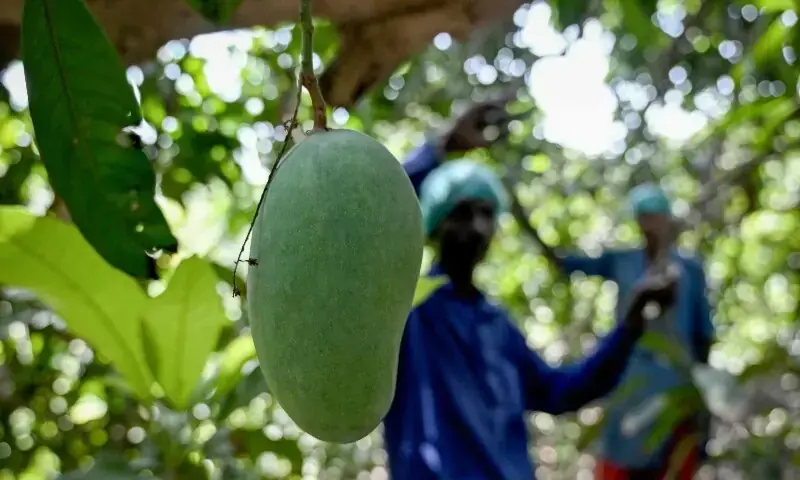

Mango — Pakistan’s national fruit and widely regarded as the king of fruits —is the latest addition to a growing list of horticultural crops that have caused financial losses for farmers over the past year, largely due to two factors.
The first is the reduction in fruit and vegetable exports caused by geopolitical developments in the region, particularly the prolonged closure of the Pakistan–Afghanistan border. With a population of around 46 million, Afghanistan has long been one of Pakistan’s key export markets for fruits, vegetables, and other agricultural produce. Unlike many international destinations, exports to Afghanistan face minimal sanitary and phytosanitary (SPS) requirements while also serving as a short, cost-effective transit corridor to the Central Asian states.
Last year, Pakistan exported around 109,600 tonnes of mangoes, of which Afghanistan accounted for nearly 22,500 tonnes — about 20.5 per cent. In the preceding season (2024 crop), exports to Afghanistan accounted for 28,700 tonnes of Pakistan’s total exports of 148,300 tonnes. This year, however, the situation has changed dramatically. Pakistan has exported hundreds of mango consignments to destinations around the world, yet exports to Afghanistan have remained zero.
The export challenges extend well beyond Afghanistan. The war in Iran has adversely affected Pakistan’s mango trade in the Gulf region due to shipping route disruptions, limited vessel availability, and higher freight rates.
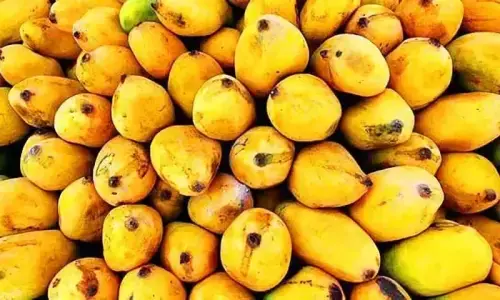
Against the background of lower exports owing to geopolitics and the climate change challenge, B- and C-grade mangoes account for a much larger share of this year’s crop than premium A-grade fruit
As a result, exports to the United Arab Emirates, Pakistan’s largest mango export destination, have decreased substantially compared with the corresponding months last year. Encouragingly, shipments to Iran and Oman have increased significantly, possibly indicating that they are serving as re-export hubs for neighbouring markets. However, these gains have been insufficient to offset losses elsewhere. By 6th July 2026, Pakistan’s mango exports stood at only 42,343 tonnes, compared with 55,684 tonnes during the corresponding period last year.
The second factor is climate change. In recent years, Pakistan has experienced increasingly erratic rainfall, prolonged summers, shorter winters, rising temperatures, and recurring heatwaves. This year, windstorms also caused extensive fruit drop during the flowering, fruit-setting, and fruit-development stages.
The changing climate has also intensified pest and disease pressure. Despite their best efforts and substantial spending on pesticides and fungicides, many farmers failed to control climate-induced pests and diseases. Mango malformation (batoor disease), in particular, caused extensive damage to orchards in Sindh. Collectively, these factors adversely affected yields, fruit quality, size, skin appearance, and colour. As a result, B- and C-grade mangoes account for a much larger share of this year’s crop than premium A-grade fruit.
Some experts estimate that climate-related stresses may have reduced mango production by 20 to 30pc this season. Farmers are facing a double burden: declining orchard productivity, inferior fruit quality, and weak market prospects on the one hand, and sharply rising expenditure on managing climate-induced pests and diseases on the other.
Growers in Sindh report that the combined effect of lower exports and a higher proportion of poor-quality fruit has pushed prices below the level required to recover even the cost of production, let alone the expenses of harvesting, packaging, transportation, and commissions paid to market intermediaries. All these factors are raising serious concerns about the long-term viability of mango orchards and the sustainability of fruit production.
These concerns are further compounded by declining domestic demand for high-value fruits, resulting from rising poverty and weakening consumer purchasing power. Even watermelon, once considered an inexpensive seasonal fruit, has become unaffordable for many lower- and middle-income households. When millions of families struggle to meet their basic food needs, purchasing mangoes — even at current prices — has inevitably become a luxury.
Across rural Pakistan, new fruit orchards are no longer being planted at a pace comparable to the rate at which existing orchards are being cut down, primarily because of uncertain domestic and export markets and diminishing returns. The area under fruit cultivation has already declined from 0.80m hectares in FY13 to 0.69m hectares in FY24, according to the Fruit, Vegetables, and Condiments Statistics of Pakistan.
This represents an alarming decline of around 11pc, despite the country’s population having increased by approximately 24pc over the same period. Notably, the cultivated area under almost all major fruit crops has contracted, with the exception of melons, grapes, and bananas.
Farmers are increasingly reluctant to wait four to six years for mango orchards to become commercially productive. Instead, except for absentee landlords, they tend to favour annual field crops that offer higher cropping intensity, quicker returns, and relatively greater profitability.
In conclusion, climate change has created new challenges for Pakistan’s horticulture sector, and its impact is already evident across almost all major fruit crops, particularly citrus and mango — the country’s two leading fruits.
The country must invest in developing climate-resilient high-yielding fruit varieties, promote modern orchard management practices, increase value addition, and diversify export markets to help farmers adapt to an increasingly uncertain climate. Without these measures, the long-term competitiveness and sustainability of Pakistan’s fruit sector will remain under increasing strain.
Dr Waqar Ahmad is a former Associate Professor at the University of Agriculture, Faisalabad. Khalid Wattoo is a development professional and a farmer.
Published in Dawn, The Business and Finance Weekly, July 13th, 2026