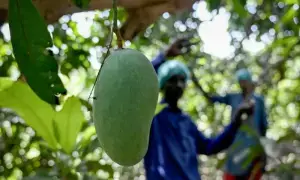
Against the background of lower exports owing to geopolitics and the climate change challenge, B- and C-grade mangoes account for a much larger share of this year’s crop than premium A-grade fruit.
Locally sourced produce often suffers from inconsistent quality, uncertain supply, and daily price fluctuations, creating significant operational uncertainty for processors.
Pakistan’s agriculture sector possesses sufficient potential to feed the country’s population with its existing resources; the core problem lies in misplaced priorities.
As prices recover and farmers begin to receive better returns, the government is resorting to measures that run counter to market economy and deregulation principles.
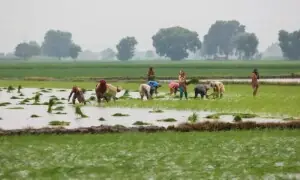
The rapid shift towards capital-intensive harvesting is transferring income from small farmers and labourers to machinery service providers, further widening the rich-poor gap.
Even if RLNG-based plants were to shut down, existing urea stocks, along with ongoing local production, are likely sufficient for the upcoming Kharif season.
In view of the evolving landscape of the agriculture sector, Pakistan is in dire need of the right technologies to enhance its agricultural resilience.