JI to form Kashmir peace jirga to facilitate dialogue between govt, JAAC
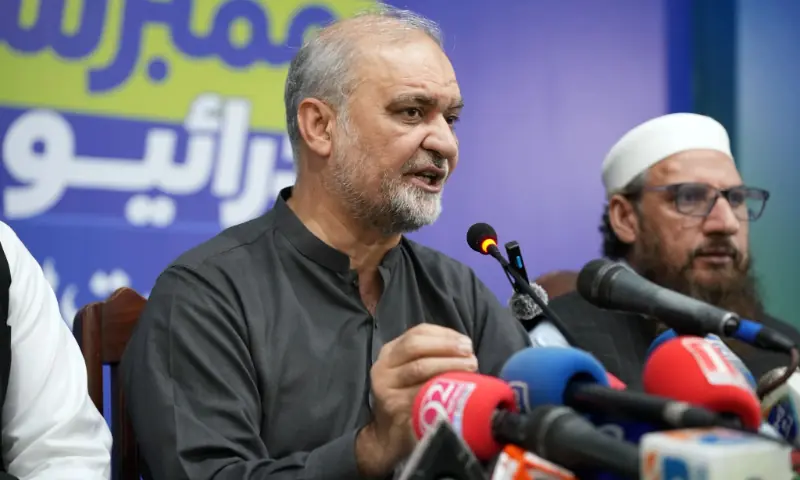
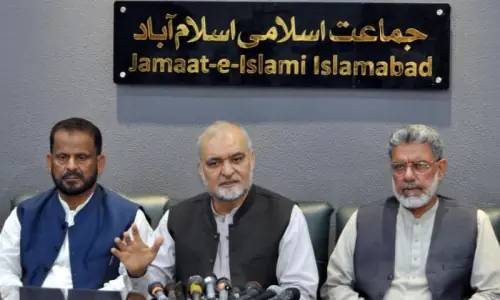
Jamaat-i-Islami (JI) on Sunday decided to establish a “grand” Kashmir peace jirga to facilitate dialogue between the Azad Jammu and Kashmir (AJK) government and the banned Joint Awami Action Committee (JAAC) in an effort to restore stability and normalcy in the region.
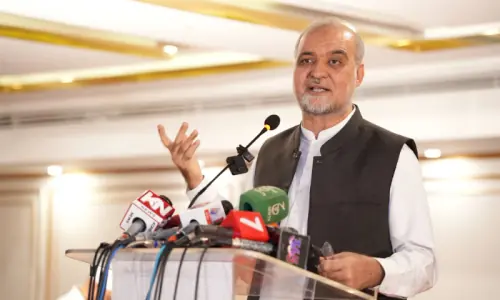
The decision was taken at a meeting of the party’s central Majlis-i-Shura chaired by JI Emir Hafiz Naeemur Rehman at Mansoorah, Lahore.
According to a press release, the jirga will engage both the government and the JAAC, with the restoration of peace and the resolution of issues in AJK identified as its top priorities.
To oversee the initiative, Rehman constituted a committee headed by JI Deputy Emir Liaqat Baloch. The committee included JI AJK Emir Dr Muhammad Mushtaq Khan and the party’s former regional chiefs Abdul Rashid Turabi and Dr Khalid Mahmood.
The JI chief also indicated that the committee would be expanded to include former civil bureaucrats, retired judges, ex-military officials and members of civil society from AJK.
The Shura expressed “deep concern” over the prevailing situation in AJK, warning that continued unrest could adversely affect the broader Kashmir cause.
“No compromise can be made on the Kashmir issue,” the statement asserted, adding that countless Pakistanis and Kashmiris had sacrificed their lives for the cause.
Addressing the meeting, the JI chief urged the federal government to initiate negotiations without delay to restore normalcy in the region.
“Dialogue is the only viable way to resolve the ongoing crisis and prevent further deterioration of the situation,” Rehman was quoted as saying.
He described Kashmir as Pakistan’s jugular vein, urging that the state should act like a “caring guardian by embracing aggrieved citizens instead of allowing tensions to escalate”.
Referring to the security challenges in Balochistan and Khyber Pakhtunkhwa, he cautioned that Pakistan could not afford another internal conflict in AJK.
He announced that the expanded committee would soon visit Rawalakot to meet JAAC leaders and make every possible effort to bring the situation under control through dialogue.
Commenting on the controversy surrounding the 12 reserved seats in the AJK Legislative Assembly, Rehman said some concerns of the protesters were legitimate. However, he stressed that the “representation of refugees from Indian Illegally Occupied Jammu and Kashmir and the occupied territory itself in the assembly could not be abolished”.
He said the issue of the reserved seats should be resolved through negotiations and expressed confidence that a workable solution could be found.
“No one is bigger or smaller. The government should set aside stubbornness and ego and engage in meaningful dialogue,” he said, adding that JI had no political interest in the dispute and was acting solely to protect peace and safeguard the Kashmir cause.
The JI chief also emphasised that further violence must be prevented at all costs.
The regional administration and the JAAC remain at odds over various issues, most notably the committee’s demand to abolish the 12 seats in the region’s Legislative Assembly that are reserved for refugees from Indian-occupied Jammu and Kashmir who settled in mainland Pakistan after 1947.
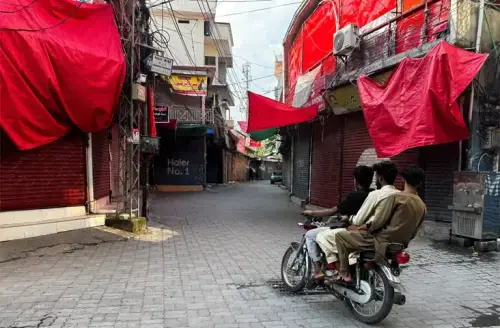
On June 5, following the announcement of the JAAC’s June 9 strike, the AJK government declared the body a proscribed organisation. A day later, authorities launched a crackdown on the JAAC, arresting scores of its leaders and activists from different areas.
On Saturday, at least one man was killed and several others were injured in clashes between protesters and law enforcement personnel along a key road linking Arja and Rawalakot district, officials said.
According to Poonch Divisional Commissioner Sardar Waheed Khan, JAAC activists had blockaded the road and were allegedly preventing people from travelling freely between the two sides.