0
0
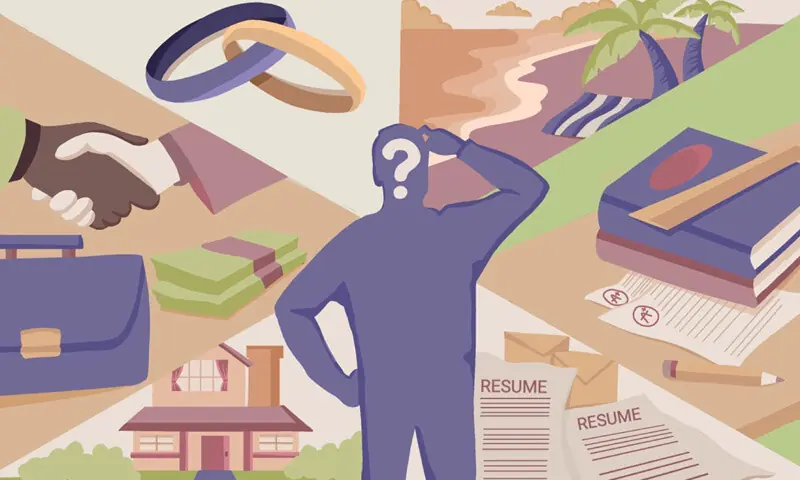

Ali* is 29, with a master’s degree, a steady job and a résumé that, on paper, checks every box he was once told mattered. But most evenings, he can’t shake the feeling that he’s fallen behind.
People around him, who are of his age, are getting married, getting promoted or moving abroad for better opportunities. Their social media seems like highlight reels — jetting off to a new country after every two months, front-row seats at sought-after concerts or dining at the city’s newest upscale spot.
Even LinkedIn has become something to avoid — every scroll brings another promotion, another “excited to share” announcement, another reminder that he is lagging behind. He is still trying to save, still living with his parents, still yearning for the life he was promised if he followed the roadmap laid out by the men before him.
His experience is not unique. It is rooted in a deeply ingrained script of being a successful man that’s been passed down through generations.
For generations, success for Pakistani men meant one thing: providing. But as economic realities shift and expectations evolve, many are left feeling like they’re falling short…
Traditionally, the path to success for men, especially in South Asian households, was pretty straightforward: study hard, build a stable career, get married and provide for your family. This path came with its own set of obstacles, but it was reliable and promised a pay-off. It also offered a clear way to navigate the expectations placed on them by family and society.
At its core was a singular idea: their primary role was to be a provider — an identity that often took precedence over being a husband, a father, a son, or even an individual in their own right. But what happens when the script you inherited no longer fits the world you live in?
“With the economic strain we are all experiencing in Pakistan, the traditional markers of stability and feeling ‘settled’ appear more and more out of reach,” acknowledges Shehroze Ahmed, a history lecturer at a university in Karachi. “Middle-class men’s identity and self-worth, to a large extent in Pakistan, are still tied deeply to their ability to be providers, and I have seen many men struggle to live up to the ideal that they have been conditioned to work towards,” he tells Eos.
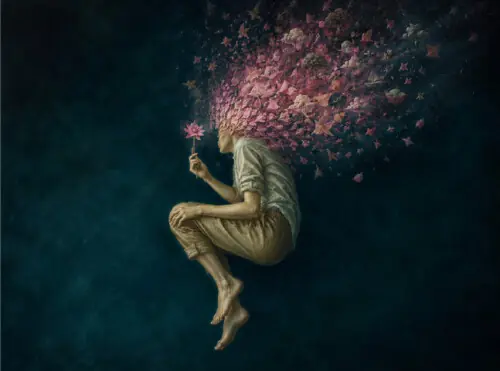
This dissatisfaction reflects a broader pattern: economic insecurity, changing social expectations and adherence to a rigid masculinity ideology have left many young men feeling unmoored.
THE WEIGHT OF PROVIDING
Australian sociologist R.W. Connell coined the term “hegemonic masculinity” to describe the culturally dominant ideal of manhood — one built around strength, competition, emotional restraint and achievement. Extensive research has shown that these conventional masculine norms prevent men from seeking mental health help. Mental health issues and help-seeking behaviors are considered incompatible with traditional masculinity.
A 2025 report published by the American Psychological Association (APA) found 86 percent of men — and 77 percent of women — view being a “provider” as defining manhood, a gender expectation challenged by growing income inequality, wage stagnation and job insecurity.
According to another article in APA’s Psychology of Men & Masculinity journal, published in 2013, men are indoctrinated with the “provider mindset” from a very young age. For them, manhood is a precarious social status that has to be constantly proven. This performative manhood can create persistent anxiety about “being man enough” in the eyes of other men and society.
Social media and constant comparisons intensify this struggle, contributing to anxiety, burnout, loneliness, “imposter syndrome” and a persistent feeling of being ‘behind’ in life. On top of that, the contemporary social landscape suggests that financial security is no longer the primary yardstick of desirability for women.
THERAPY AS THE NEW ‘GREEN FLAG’
Modern masculinity is increasingly being redefined as a more balanced and emotionally inclusive identity, where qualities like vulnerability, emotional intelligence and healthy communication are not just valued but expected. Seeking therapy, in particular, has emerged as a notable ‘green flag.’
Syed Aftab Shah, a consultant psychologist, says that going to therapy has become a signal of a healthy partner. “Women have reinforced this signal often enough that men are now working on their emotional intelligence in response — not just for themselves, but because it’s become part of what makes someone desirable,” he tells Eos.
Shah says there has been a rise in men seeking help for relationship challenges, often bringing with them years of unresolved shame, guilt and suppressed emotions rooted in childhood. This shift in help-seeking behaviour has been shaped by pop culture normalising therapy, making it appear both accessible and socially validated.
For Hasan*, a 33-year-old newly married Pakistani man, this trend tells a more complicated story. He believes that the definition of contemporary manhood has quietly expanded — but the pressure hasn’t eased. For him, men are still expected to provide, to be dependable, and to be financially secure, just as generations before them were.
At the same time, Hasan also believes that men are now expected to be emotionally present, communicative and supportive in ways they were never really prepared for. It’s not that men like him resist these changes — Hasan believes they are eager to evolve — but there’s often no clear model for how to embody them in practice.
And yet, it is still the provider role that carries the most weight, leaving many feeling like they’re always coming up short in one way or the other. Where does that leave men?
THE GENERATIONAL DIVIDE
According to Shiza Anwar, a Berlin-based psychologist, it is hard to disrupt longstanding gender norms for someone who has grown up in a strictly patriarchal society. Acts like contributing to household chores can still be perceived as a threat to masculinity, reinforcing outdated judgements.
“Caught between evolving expectations from their partners and persistent societal pressures, men may respond in different ways — some with resistance, others with growth,” says Anwar. “What becomes essential, then, is a more thoughtful navigation of these changes, grounded in education, open communication, and self-awareness,” she tells Eos.
Yet this shifting idea of masculinity exists alongside a persistent generational divide.
As a practising clinical psychologist, I would frequently encounter this disconnect when I came across parents seeking sessions for their daughters, hoping I’d convince them to stay in unfulfilling marriages, justifying it with statements like “he earns well” or “at least he doesn’t abuse her.”
Emotional neglect, incompatibility or unresolved psychological issues were dismissed as insufficient grounds for dissolution of the marriage, revealing the generation gap in who is perceived as a “good man.”
For men, this evolving cultural landscape warrants more than surface-level readjustment — it calls for reflective self-examination, the courage to dissect their relationship with their male role identity, and to honestly interrogate whether their template of masculinity connects or estranges them from themselves and their partners.
Whether through personal reflection or with the guidance of a therapist, this inner work is essential for cultivating a more grounded, emotionally aware and self-defined sense of manhood — one that not only reduces anxiety but also brings greater clarity, stability and coherence to their identity and relationships.
The need, then, is to arrive at a reconciled version of manhood that challenges inherited norms with emerging expectations, as society continues to renegotiate what it truly means to be a “good” man.
For men like Ali, still living with his parents and still scrolling past another promotion on LinkedIn, that reconciliation can’t come soon enough.
** Name changed to protect privacy*
The writer is a clinical psychologist and
freelance journalist. She can be reached
at rabeea.saleem21@gmail.com
Published in Dawn, EOS, July 12th, 2026