0
0

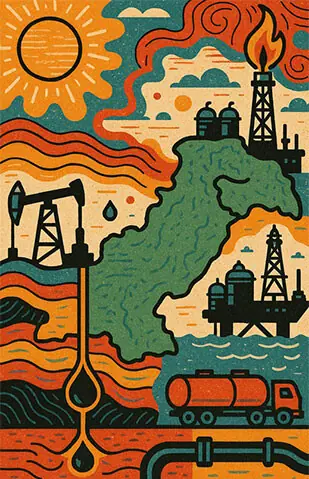
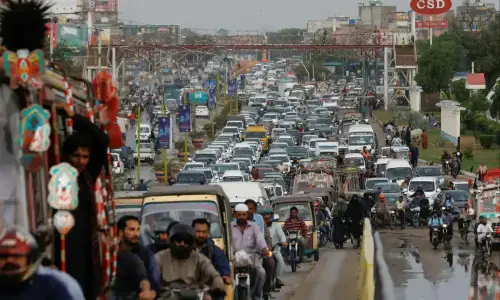
CHARLES Dickens’ famed line — “It was the best of times, it was the worst of times,” — aptly reflects Pakistan’s present energy predicament. Recent disruptions in global oil and gas supply chains once again exposed Pakistan’s vulnerability to external shocks. This situation underscores the urgent need to intensify efforts for the exploration and development of indigenous hydro-carbon resources to strengthen national energy security; this would be like converting the ‘worst of times’ into the ‘best of times’.
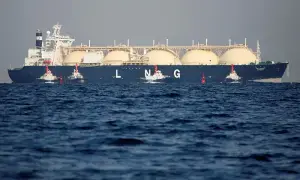
Despite repeated policy initiatives, the Petroleum Exploration and Production Policy 2012 failed to meet its core objective of significantly enhancing domestic oil and gas production. As a result, Pakistan remains heavily dependent on imports. During the first quarter of FY2024-25, the country imported approximately 2.57 million tonnes of crude oil along with substantial volumes of liquefied natural gas (LNG), highlighting the scale of external dependence.
The policy’s implementation has been uneven. While some progress has been made in refining capacity and downstream improvements, upstream exploration continues to face delays, regulatory bottlenecks and financial constraints.
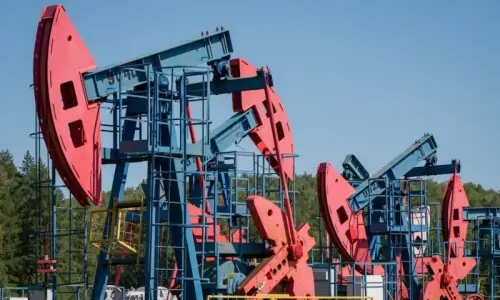
Security challenges in certain regions have further slowed investment. At present, indigenous crude oil meets only about 20 per cent — roughly 70,000 barrels per day — of refinery feedstock requirements, while the remaining 80pc is imported.
Pakistan’s proven oil reserves have also declined to around 253 million barrels by December 2025, against consumption levels of more than 400,000 barrels per day. At this rate, the reserves are insufficient to ensure long-term energy security without new discoveries. Although domestic production has recently improved slightly to around 82,000 barrels per day, pro-jections indicate a potential decline in the coming years if exploration does not accelerate.
Paradoxically, the country possesses significant geological potential. According to a study by the United States Agency for International Development, the Indus Basin alone may contain up to 14 billion barrels of technically recoverable oil. However, exploration activity remains far below the actual potential, with declining drilling intensity and limited new field development.
Efforts to reverse this trend, including the 2023 offshore and onshore rounds of block licensing, have produced some modest discoveries in certain areas, like Baragzai (Kohat), Bettani (Lakki Marwat) and Shahdadpur (Sanghar). However, these gains are not yet sufficient to meaningfully reduce import dependence.
At the same time, refinery expansion and upgrade plans — undertaken by major companies, such as the Pakistan Refinery Limited, the National Refinery Limited and the Attock Refinery Limited — remain constrained by financing and policy delays. Without adequate domestic crude avail-ability, even an upgraded refining sector will continue to rely heavily on imported feedstock.
Pakistan’s oil demand is expected to grow steadily due to population growth and urbanisation, keeping import pressure high. In this context, there is a pressing need to streamline exploration policies, improve regulatory certainty, enhance seismic data availability, and ensure a secure investment environment. Without such measures, the country really risks further erosion of its energy security base.
Hussain Ahmad Siddiqui
Islamabad
Published in Dawn, July 11th, 2026