0
0

ISLAMABAD: Pakistan needs to increase spending on education, health and other human development priorities despite fiscal constraints, speakers said at a roundtable on Friday.
They warned that reduced development spending could weaken long-term investment in the social sectors unless public expenditure is linked to measurable outcomes and better coordinated between the federation and provinces.
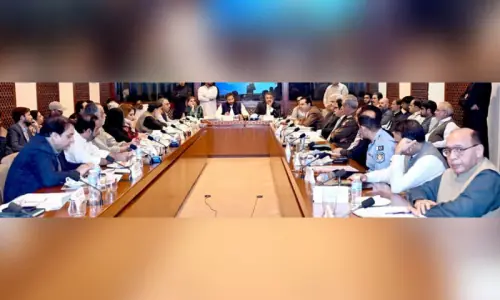
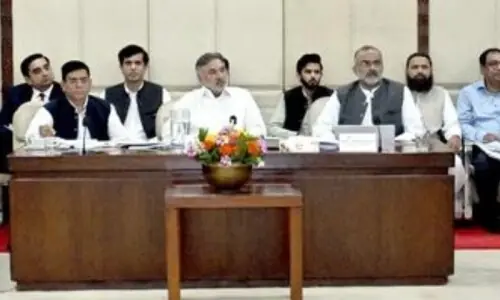
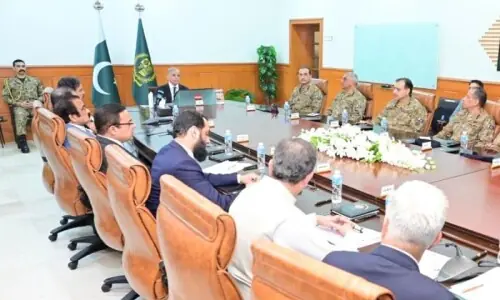
The observations were made at a closed-door policy roundtable, titled “Fiscal Choices, Human Consequences: Pakistan’s Development Budget in Focus,” hosted by Globesight, where representatives of the government, multilateral institutions, leading think tanks and the wider development community discussed the implications of the FY2026-27 federal budget.
Senior Economist at the World Bank Jaffer Askari said that when the national budget is announced, everyone focuses on allocations for their preferred sector. “What we should do instead of looking at allocations is build accountability around outcomes,” he said.
The discussion took place against the backdrop of Pakistan’s recently announced FY2026-27 budget, which prioritises strict fiscal consolidation as a path to short-term economic stability amid debt-servicing pressures. With development spending facing significant cuts under this approach, participants asked how Pakistan could meet its growing need for investment in human development while fiscal space remains constrained.
Senior Economist Dr Kaiser Bengali said Pakistan needed to adopt a growth-centred development strategy. “Now that we have devolution through the 18th Amendment, provinces must also create their own planning commissions that can manage and prepare feasibility studies for each development priority,” he said.
Participants said Pakistan’s development model should shift towards outcome-based accountability.
They examined current trends and implementation challenges across sectoral programmes, debated whether the country’s persistent development gap stemmed primarily from resource misallocation, spending inefficiency or institutional fragmentation, and discussed reforms to better align federal and provincial development budgets to strengthen human capital and long-term resilience.
Hasan Hanif of Globesight said Pakistan appeared to be caught in a “brick-and-mortar trap”, with too much development spending tied to infrastructure, legacy throw-forward liabilities and allocations that were not fully utilised.
Published in Dawn, July 11th, 2026