Landslide kills 8 at Rohingya school in Bangladesh
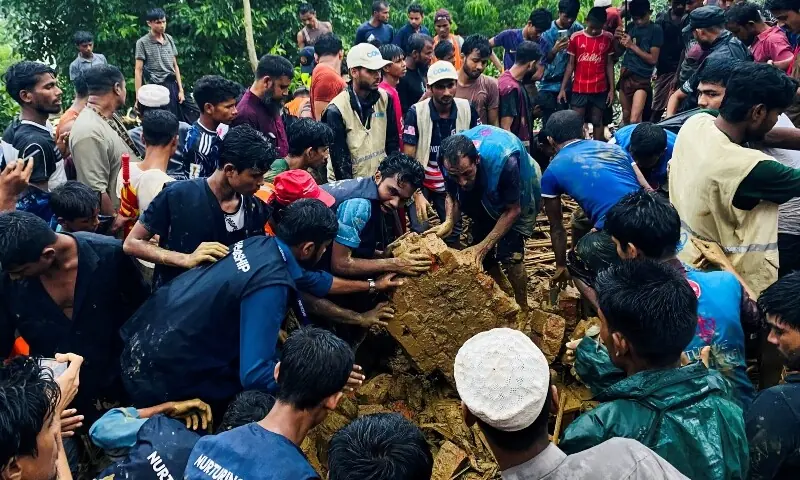
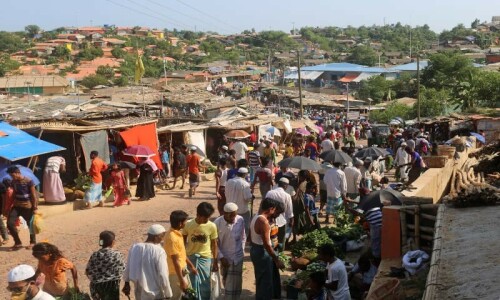
COX’S BAZAR: Heavy rain in Bangladesh triggered a landslide at the world’s largest refugee camp on Wednesday, killing seven children and a teacher during a school class and doubling the death toll from rain-related disasters this week.
Rescuers clawed through liquid earth to drag out the bodies of the children, who drowned in the mud that swamped their school hut as they studied.
More than 1.2 million Rohingya refugees, many who fled Myanmar during a brutal military crackdown in 2017, live in crowded refugee camps in Bangladesh’s Cox’s Bazar. Many refugees live in crowded, basic shelters on hillsides cleared of forests — making the land unstable when monsoon rains pour down.
Bangladesh Refugee Relief and Repatriation Commissioner Mohammed Mizanur Rahman said seven children and their teacher had died. “Unfortunately, four died at the scene, while four others died in hospital,” Rahman said.
Landslides also killed at least eight people as they slept in three different camps on Monday night. Bangladesh’s Flood Forecasting and Warning Centre said torrential rain is likely to continue for four days.
Refugee representative Sayed Ullah, president of the United Council of Rohingya, said that people needed new land in safer locations.
“We don’t see proper coordination… over the accommodation of the Rohingya, and that is reflected in these accidents,” he said. The United Nations calls it “one of the world’s largest and most protracted refugee situations”.
The 2017 Myanmar crackdown, when Rohingya villages were burned and civilians killed, is the subject of a genocide case at the UN’s top court in The Hague.
Published in Dawn, July 9th, 2026