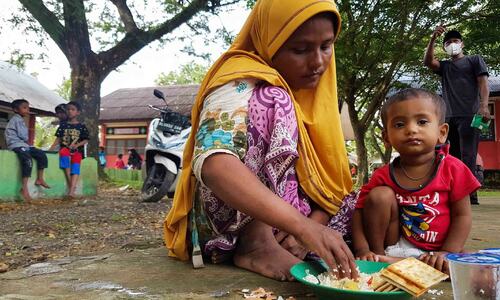
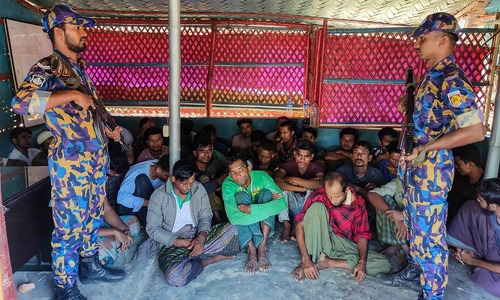
An elite Bangladesh police unit is engaged in the rampant extortion, harassment and wrongful arrests of the Rohingya refugees it has been tasked with protecting, Human Rights Watch said Tuesday.
The Armed Police Battalion (APBn) operates in camps housing nearly one million members of the stateless minority, most of whom fled neighbouring Myanmar after a military crackdown that is now the subject of a UN genocide investigation.
But refugees and humanitarian workers told the New York-based watchdog that safety had deteriorated after the unit took charge of camp security in 2020, with some Rohingya telling AFP abuses had become “a regular occurrence”.
“Abuses by police in the Cox’s Bazar camps have left Rohingya refugees suffering at the hands of the very forces who are supposed to protect them,” said HRW Asia researcher Shayna Bauchner.
The rights group said it had spoken to dozens of Rohingya refugees living in the sprawling and overcrowded camp network in the country’s southeast, documenting at least 16 cases of serious abuse by APBn officers.
Police demanded hefty bribes of refugees under threat of arrest, HRW’s report said, adding that families were often forced to sell gold jewellery or borrow money to free unjustly detained relatives.
Bauchner called on authorities to investigate the claims and hold responsible officers to account.
Battalion commander Syed Harunor Rashid said the report was “questionable”.
“Criminals are telling them false facts, and (Human Rights Watch) are reporting them. This is like giving comfort to criminals,” he told AFP, adding that the unit would investigate if it “receives specific complaints”.
Police acknowledge that violence has spiked in the camps, which are home to armed groups and are used as staging posts for regional drug trafficking networks.
At least 20 refugees, including top community leaders, were murdered by armed groups last year as part of a turf war in the settlements.
‘They threatened to take action’
Several Rohingya refugees told AFP that police abuses were “rampant”. “A few days ago I was returning to the camp with my brother’s medical report from a hospital. APBn officers stopped me at the checkpoint, interrogated me and slapped me,” said Ali Jaker, 20.
Jaker said they stole the equivalent of $50 dollars from him.
“Then they took my mobile phone. They threatened to take action against me if I shared the story with anyone,” he added.
Sitara Bibi, 45, said police extortion was “a regular occurrence”.
“I had to pay 3,000 taka ($30) to them during my son’s marriage. If we didn’t pay them, the police would file a drug smuggling case against my son,” she added.
One Rohingya civic leader, speaking on condition of anonymity, told AFP that refugees were forced to pay police to travel between camps or to gain entrance to camps late at night.
“If anyone protests these abuses, he is arrested,” they added.