$4tr annual deficit blocking global development: UN
WASHINGTON: Countries around the world must take decisive action to close a $4 trillion annual financing gap to ensure that sustainable development targets set just over a decade ago can be reached by 2030, a new United Nations report found.
While the report cites big gains toward some of the Sustainable Development Goals (SDGs), giving billions of people access to electricity, water and health care, it warns that overlapping crises and a widening financing gap pose major challenges.
Official development assistance, including from the now dismantled US aid agency USAID, fell by a record 23.1pc in 2025, returning to roughly 2015 levels. Of 139 SDG targets, only 36pc are on track or making moderate progress, while 49pc are advancing too slowly and 15pc have regressed below 2015 baselines.
About 10pc of the world’s population lives in extreme poverty, surviving on less than $3 a day, just three percentage points lower than in 2015. That metric is expected to remain around 9pc by 2030 absent new actions.
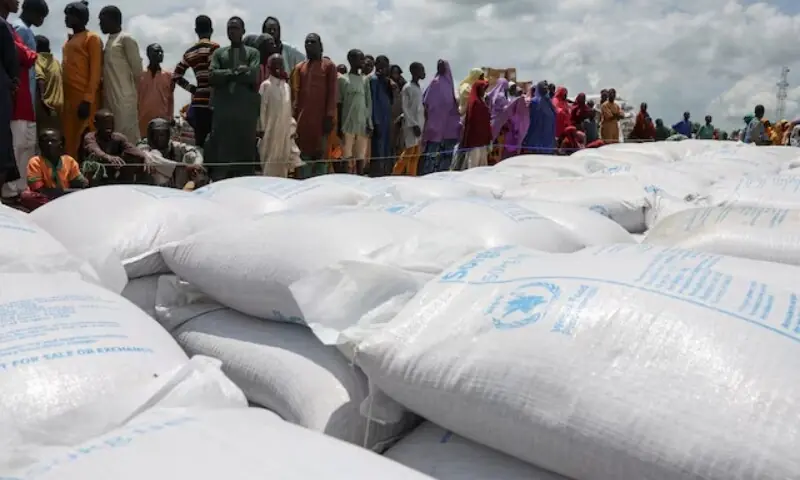
Around 2.3 billion people, or 28pc of the world’s population, face moderate or severe food insecurity, meaning they lacked regular access to adequate food at some point during the year. Another 673 million people experienced chronic hunger. Both numbers are higher than they were in 2015.
Most regions will be close to eradicating extreme poverty by 2030, except sub-Saharan Africa, the Middle East and North Africa, and Oceania (excluding Australia and New Zealand).
Child labour fell by more than 20 million between 2020 and 2024. 273 million children and young people remain out of school.
Young people are nearly four times more likely to be unemployed than adults. The global refugee population reached 440 per 100,000 people by mid-2025, more than double the 2015 level.
The external debt of low- and middle-income countries reached a record $8.9 trillion in 2024. Global temperatures in 2025 reached 1.43C above pre-industrial levels and atmospheric carbon dioxide hit its highest concentration in two million years.
Commenting on the report, UN Secretary General Antonio Guterres said it showed that progress, although possible, is often insufficient.
He cited strong headwinds such as the collapse in development assistance, growing debt burdens, rising conflicts, slowing global economic growth and climate chaos.
Published in Dawn, July 8th, 2026