Senate panel concerned over degradation of internet, fuel theft at telecom sites


 0
0
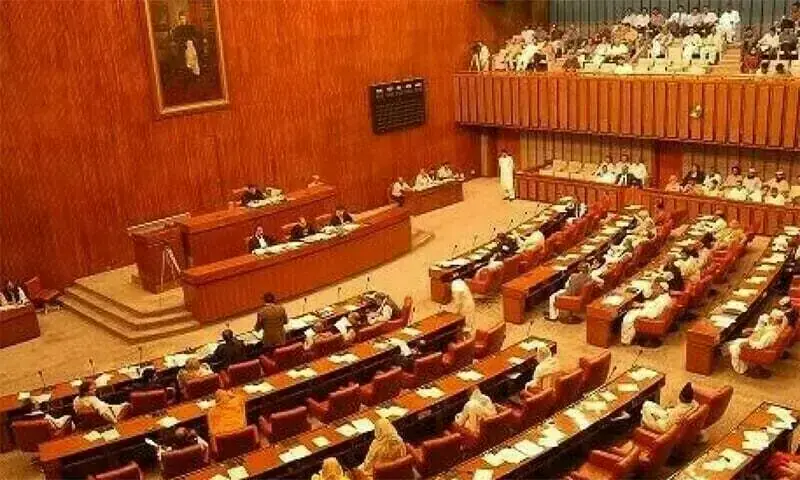

ISLAMABAD: A Senate subcommittee on Monday voiced alarm over widespread internet degradation and fuel theft from telecom sites, after being told that more than 9,200 incidents of theft and vandalism had hit about 16 per cent of the country’s cellular infrastructure in 11 months.
The subcommittee of the Senate Standing Committee on Information Technology, chaired by Senator Sadia Abbasi, reviewed challenges posed to nationwide telecom service continuity.
The committee was informed that Sindh recorded the highest number of 3,938 fuel theft cases across 31 districts, followed by Punjab with 2,827 incidents in 38 districts. Khyber Pakhtunkhwa reported 1,668 incidents across 25 districts, while Balochistan reported 716 incidents in 26 districts.
During the briefing, officials of the Pakistan Telecommunication Authority (PTA) said that persistent loadshedding had severely deteriorated service continuity by rapidly depleting backup batteries and exhausting local generators.
To build long-term resilience, the PTA has engaged Nepra and the power division to secure dedicated priority power feeders and speed up deployment of smart transformers for critical telecom nodes.
Separately, the Universal Service Fund (USF) and its quality assurance teams reported infrastructure deployments in Balochistan.
While 80pc of target areas are identified through competitive bidding, severe security vulnerabilities and systemic diesel theft continue to undermine telecom operations.
In response, the committee directed relevant departments to map high-theft hotspots and instructed district and provincial authorities to handle complaints strictly under the law.
The panel also reviewed network modernisation steps, including recent spectrum auctions that expanded bandwidth by 480 MHz and the issuance of 5G commercial licences in March 2026.
Infrastructure targets include raising average 4G speeds from 4 Mbps to 20 Mbps, mandatory rollout of 1,000 new sites annually, and introducing Voice over LTE and Voice over Wi-Fi services.
To enforce compliance, the regulator has set stringent network downtime thresholds for cellular mobile operators. CMOs must now keep downtime to 5pc or less at the UC level, 3pc or less at the tehsil level, 2pc or less at the district level, and 1pc or less nationwide.
The committee reaffirmed that internet access must be classified under essential services criteria. It directed all telecom operators to execute immediate safeguards against fuel theft to ensure national connectivity standards are met without interruption.
Published in Dawn, June 2nd, 2026