0
0

THERE are hardly any women in the prime minister’s delegation to China. This has largely gone unnoticed because gender balance is rarely an attribute of Pakistani delegations abroad. But it bears calling out as it represents a broader missed opportunity.
Sino-Pak celebrations of their 75-year partnership have focused on mutually beneficial opportunities, including CPEC 2.0. The PM’s visit is dominated by a B2B investment conference and visits to major Chinese companies, including Alibaba, in an effort to boost economic cooperation between the two countries. Future plans for the countries’ collaboration are ambitious and wide-ranging, encompassing growth, innovation, green development, livelihoods and connectivity. What remains to be seen is how inclusive this collaboration will be, particularly with regards to women.
The Belt & Road Initiative (BRI) of which CPEC is a key part has not had an explicit gender lens. That said, Chinese President Xi Jinping has since 2015 reiterated China’s commitment to gender equality, recognising the importance of women’s contribution to growth and sustainable development. As he puts it, Chinese women “support half of the sky”.
World Bank data from 2023 shows 60.5 per cent of Chinese women working, one of the highest female workforce participation rates in the world (compare, for example, to America’s 56.5pc). When the PM visits Alibaba, he may notice that the company maintains a nearly 50/50 gender split in its workforce, with around 34pc of leadership roles filled by women. But the gender inclusion in the domestic sphere is not evident in BRI projects. As Pakistan deepens its engagement with China with CPEC 2.0, perhaps it should be.
Gender inclusion should be prioritised in CPEC projects.
In a 2023 lecture on the gender dynamics of Chinese development projects, Rosaria Frada notes that women’s income rose by 14.5pc in countries with BRI projects, though the correlation, if any exists, is not evidenced. Conversely, in a 2025 piece in the International Review of Economics and Finance, Wen Yao found that Chinese investment in 16 Middle Eastern countries led to significant increases in male labour force participation rates, but not for females.
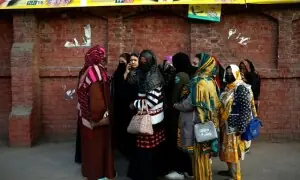
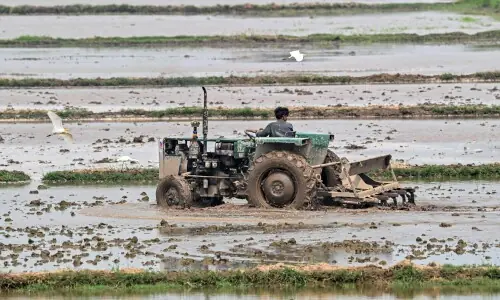
Women are particularly negatively impacted by the large infrastructure projects typical of BRI. This is because project development often leads to women losing out when land compensation is doled out (men tend to negotiate the deals and have the bank accounts), or because their traditional income-generating activities — agriculture, informal herding, water collection — are disrupted.
Consider the example of the gendered impact of the development of the Sahiwal Coal Power Plant in Qadirabad, part of CPEC. Writing in the Journal of International Women’s Studies in 2019, Komal Niazi, Guoqiang He and Shakir Ullah found women who had been agricultural workers on privately held land prior to the plant’s development lost their land and livestock, and instead had to turn to domestic service to make ends meet. The power plant did not offer these women new job opportunities. Instead, they had to take up work that they perceived as less dignified.
Special economic zones under CPEC, often billed as job generators, including for women, have the potential to be more inclusive. SDPI’s Ayesha Naeem, Sadia Satti and Ubaidur Rehman Zia in a November 2025 article have highlighted how gender inclusion remains limited: currently, it’s not mandatory to offer protections such as minimum wage or permanent contracts, which can leave female workers in an uncertain situation. They may also lack appropriate safety arrangements, or be required for night shift work during which women can feel more vulnerable. Gender governance is usually limited with no formal requirement to upskill women or set recruitment targets for them.
This is not to say that CPEC can’t be a boon for women workers. There are great case studies for how Chinese-backed economic development can be more inclusive. The Sindh Engro Coal Mining Company has trained 70 women to be heavy dump truck drivers, creating jobs and smashing gender stereotypes in one go. Over 190 female police officers form part of Sindh’s CPEC security force. And women in the Gwadar Port Free Zone are being trained in garment production and are paid to produce uniforms for port workers, in an initiative backed by the Chinese consulate.
Gender inclusion starts with intentionality, so one hopes that as our premier tours relatively gender equitable companies in China, he advocates for Pakistan’s women to be equal beneficiaries of CPEC 2.0. What’s needed is a comprehensive gender lens, ranging from compensation considerations to meaningful investment in vocational and technical training and gendered governance for SEZs. An all-weather friendship should be for all Pakistanis.
The writer is a political and integrity risk analyst.
X: @humayusuf
Published in Dawn, May 25th, 2026