WHILE not a complete failure, there was no breakthrough in the US-Iran talks that began on Saturday. The two delegations left Islamabad for their respective destinations on Sunday. At the moment, though, the two-week truce facilitated by Pakistan appears to be holding, and an immediate return to hostilities does not seem imminent.
After 40 days of war, sparked by the US-Israeli aggression against Iran, even this minimal progress must be appreciated. True, the American president once more issued threats after the negotiations wrapped up, but he may have been playing to the gallery as he did not immediately announce any military action.
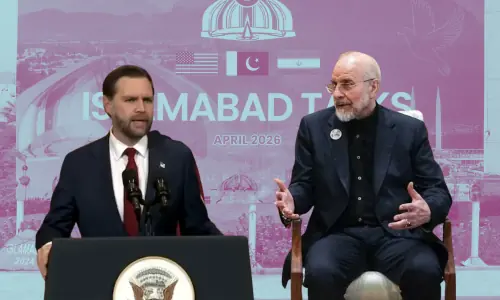
That both sides meant business was reflected in those they sent to Islamabad: the parliament speaker and foreign minister representing Iran, and the vice-president leading the American delegation. While US VP J.D. Vance rued the “bad news” that there was no deal, the Iranian foreign ministry said an agreement was not expected after one session — 21 hours in this case.
Both sides remain far apart on key matters, such as the Iranian nuclear programme, and the reopening of the Strait of Hormuz. However, both also appear to be seeking an off-ramp from this ruinous war, particularly the Americans, who have failed to subdue Iran — or else they would not have sent their top guns to Pakistan to talk peace. Therefore, while mistrust is high, a small window of diplomacy remains open. The opportunity must not be passed up, otherwise, hostilities might resume.
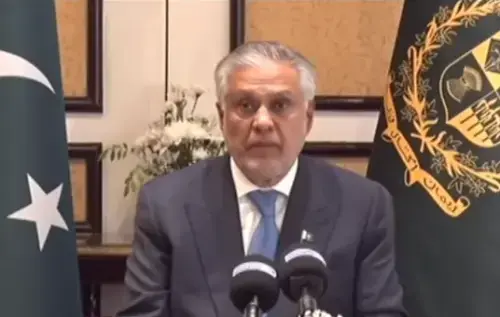
Foreign Minister Ishaq Dar has said that it is “imperative” for both parties to uphold the ceasefire, while Oman, which facilitated the last round of talks that were still ongoing when the US attacked Iran, has similarly endorsed the continuation of the diplomatic process. Regional states realise that if hostilities resume, everyone will suffer, with economic pain compounded due to the constriction of energy and trade flows through the Strait of Hormuz.
Therefore, both the US and Iran should continue the peace process. One way for Washington to earn Tehran’s trust would be to immediately lift sanctions, and unfreeze Iranian assets. Stopping Israel’s barbaric assault on Lebanon would also create conditions for a wider regional peace. Both sides will have to show flexibility, while the Americans must pledge that they and their ally Israel will no longer threaten Iran with more aggression.
If these conditions are met, negotiations may result in a meaningful, long-term peace. However, if there is rigidity in the respective positions, the alternative would be more war. That may suit Israel, which is the biggest threat to peace in the region. But the US must ask itself some tough questions, namely: does it want to entangle itself in another ‘forever war’ in the Middle East?
Published in Dawn, April 13th, 2026