2
2

THE memes leading up to the US-Iran talks in Pakistan this weekend were nearly as epic as the moment itself: Pakistanis depicted as a strutting John Travolta; our leaders recast as the heroes from Guardians of the Galaxy; Irani renditions of our national anthem, with voices soaring against aerial views of the Himalayas and Badshahi Masjid; proliferating AI-generated images of US Vice President J.D. Vance sampling Pakistani culinary delights. This was soft power at its mightiest.
The talks in Islamabad signalled a new high for Pakistan’s diplomatic relevance on the global stage — the outcome of years of diplomatic tight-rope walking, juggling relations between the US and China, Iran and Saudi Arabia, and even among the Gulf states when their alliances have frayed. More recently, Pakistan successfully shored up relations with regional heavyweights like Turkiye and Egypt.
Pakistan is not new to this role. Recall US national security adviser Henry Kissinger’s secret flight from Islamabad to Beijing in 1971 to revive US-China relations after a two-decade hiatus, or Pakistan’s seat at the table at the 1988 Geneva Accords that carved the Soviet path out of Afghanistan. On this occasion, however, Pakistan’s role was broader, the security dynamics more unpredictable, the stakeholders more numerous and erratic, and the global stakes higher.
The talks consolidated Pakistan’s role as a regional diplomatic contender, consequently boosting the country’s soft power. And this is unlikely to be a one-off gig, as today’s world lacks credible conveners and mediators.
Effective diplomacy will allow Pakistan to leverage its soft power.
For all its global ambitions, China prefers not to directly interfere in messy global matters. Beijing prioritises protecting its interests, and uses allies, proxies and backchannels to facilitate desired outcomes. For example, China’s reported backchannel efforts to bring Iran to the negotiating table and role in elevating Pakistan to facilitator is driven by an interest in Middle Eastern oil supply.
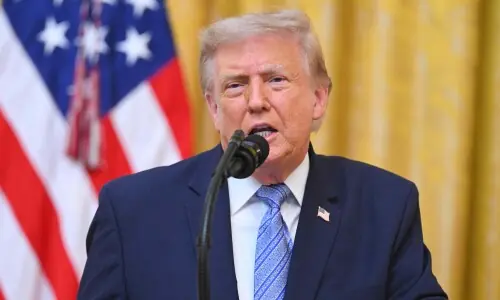
The US, meanwhile, has surrendered its mantle as global peacemaker, despite what President Donald Trump’s recent role in brokering the Israel-Gaza ceasefire may suggest. That deal was a joint effort, with Qatar, Turkiye and Egypt playing key roles to get Hamas on board. Currently, 115 out of 195 US ambassadorial posts are vacant, including in key Middle Eastern capitals. Writing in the Financial Times, Daniel Benaim describes this as “diplomatic malpractice”. In this context, global US diplomacy will narrow to influencing a few allies, primarily Israel, and that too with mixed results.
After all, effective diplomacy involves transcending self-interest alone, acknowledging the competing priorities of opposed stakeholders, and sustained engagement, all of which today’s great powers are unable or disinclined to do. This creates a meaningful opportunity for Pakistan to leverage its soft power and emerge as a regional ‘middle power’ defined by diplomatic flexibility. To do this well, we must learn from past mistakes.
One is not to underestimate the fragility of Pakistan’s role. Islamabad’s facilitation efforts carried the challenge of keeping Gulf allies engaged and empowered in the context of a bilateral engagement over which it has limited influence. The recent delicately timed visit of the Saudi finance minister indicates that Islamabad was aware of this. Any role it may play in securing the Strait of Hormuz potentially risks frustrating Gulf countries who would like to see Iran’s strategic pressure via the waters extinguished.
The other is to recognise that Pakistan’s diplomatic heft can be constrained by structural flaws of its ‘hybrid’ democracy. The establishment remains influential in the current diplomatic effort, though the face of it is civilian. This works in Pakistan’s current political dynamic. But in the longer run, Pakistan’s regional diplomatic role will depend on the quality, stability and coherence of its domestic politics, including when civilian actors are ascendant. This means forging a holistic foreign policy approach that serves the country.
The final is not to forget that external positioning draws on internal strength. The standing and relationships that Pakistan is establishing in this moment face challenges from security and economic challenges arising from domestic grievances. This vulnerability stems from a lack of inclusive, grassroots politics and rising authoritarianism, and a failure to leverage diplomatic prowess for anything more than short-term economic reprieve or benefits for elite stakeholders. Although no agreement was achieved, this weekend offered a glimpse of a future Pakistan that matters, and can make a meaningful difference. Let’s use that momentum to build from within too.
The writer is a political and integrity risk analyst.
X: @humayusuf
Published in Dawn, April 13th, 2026