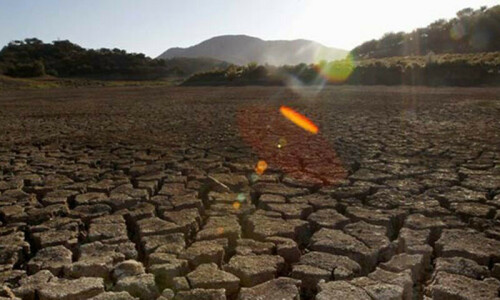
Pakistan breaching temperature thresholds set for 2030

ISLAMABAD: While the international community strives to keep global warming below 1.5 degrees Celsius by 2030, Pakistan appears to already be breaching some extreme temperature thresholds despite its minimal contribution to greenhouse gas emissions, according to a new report.
The Pakistan Meteorological Department (PMD), in a special summary of observations, reported that the nation experienced several temperature extremes during the recently concluded month of March.
The report noted that the country’s average nighttime minimum temperature was the second-highest on record.
“The country-level nighttime (minimum) temperature of 14.7 C was warmer by +2.7°C than the countrywide average of 12.0°C and ranked 2nd highest,” the PMD stated. The highest record of 15.0°C was reported in 2022.
Furthermore, the national mean temperature for the month was the fifth highest ever recorded.
“The national mean temperature of 21.6°C was warmer than the country-average of 19.3°C with an anomaly of +2.3°C and ranked 5th highest,” the report said.
Daytime temperatures were also significantly warmer. “The daytime (maximum) temperature of 28.5°C at country-level was also warmer with a positive anomaly of +2.0°C,” it said.
The PMD reported specific regional extremes, noting that the hottest day of the month was observed in Mithi and Shaheed Benazirabad in Sindh on March 10, when the temperature reached 40.5°C.
Mithi also proved to be the warmest place overall, with a mean monthly maximum temperature of 36.8°C.
In contrast, the coldest temperature of the month was recorded in Skardu, Gilgit-Baltistan, at -2.0°C on March 3.
The hill station of Kalam in Khyber Pakhtunkhwa was the coldest place on average, with a mean monthly minimum temperature of 2.5°C.
The weather patterns also included above-average rainfall.
The national area-weighted rainfall was 38.9 millimetres, a positive departure of 24 per cent for March. Malam Jabba in Khyber Pakhtunkhwa experienced the heaviest single-day rainfall of 74mm on March 31 and was also the wettest place for the month with a total of 315 mm.
The PMD added that climatic indicators showed a neutral condition, with neither a La Nina nor an El Nino weather pattern currently active.
Published in Dawn, April 6th, 2026