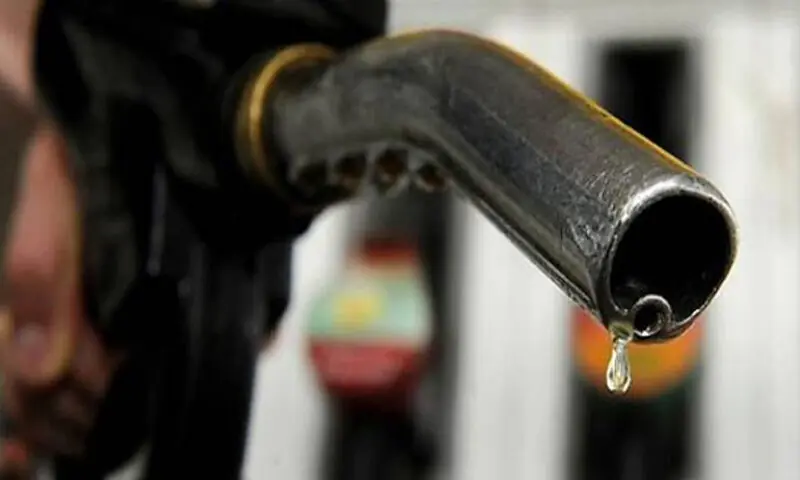
KARACHI: Amid fears of rising production costs and weakening export competitiveness following a massive rise in fuel prices, the business community has called for an economic emergency and demanded a temporary suspension of the petroleum development levy (PDL) to ease pressure on industry and consumers until global oil prices stabilise.
They warned that the unprecedented hike in petroleum prices, following a surge in global oil markets amid the ongoing Middle East war, had posed serious operational challenges for industries and could lead to factory closures, reduced production and job losses.
They said the common man, particularly labourers and the service class, would struggle to cope with the new oil price shock as transport and essential commodity prices rise sharply.
Federation of Pakistan Chambers of Commerce and Industry (FPCCI) President Atif Ikram Sheikh said the textile and manufacturing sectors would face multiplied freight and transportation costs, drastically inflating production overheads and leading to inevitable factory closures and reduced shifts. Passing on domestic oil price increases of this magnitude directly to consumers and the industrial sector overnight was completely unsustainable, he added.
Business community demands temporary suspension of petroleum levy
FPCCI Senior Vice President Saquib Fayyaz Magoon said the textile and manufacturing sectors would face multiplied freight and transportation costs, drastically inflating production overheads and leading to inevitable factory closures and reduced shifts.
He said that as the harvesting season is underway, the astronomical cost of diesel would make the operation of tractors, tube wells and harvesters financially unviable for average farmers, posing a threat to national food security.
He added that small and medium enterprises (SMEs) would be the hardest hit due to the lack of financial buffers enjoyed by large corporations. SMEs — the backbone of the economy — would face an immediate liquidity crisis as their operational costs surge sharply.
Mr Magoon reiterated that the targeted subsidies recently discussed by the government were administratively cumbersome and unlikely to provide meaningful relief, as they had historically proven inefficient and insufficient to shield Pakistan’s core industrial base from such a massive economic shock.
FPCCI Vice President Asif Sakhi pointed out that regional competitors such as India, Bangladesh, China and Vietnam had increased fuel prices by only 2 to 10pc, while Pakistan’s cumulative increase stood at 77pc following successive hikes in oil product prices.
He urged the government to immediately withdraw the decision and promote alternative energy sources such as ethanol, a by-product of Pakistan’s sugar industry. “Ethanol can provide a sustainable energy solution, but the government must create a proper mechanism to support it,” he stressed.
Mr Sakhi also called for an immediate increase in minimum wages to offset the burden, warning that the coming wave of inflation could severely impact the common man.
Site Association of Industry President Abdul Rehman Fudda said the extraordinary increase in petroleum products would have a “360-degree impact” on the economy.
He argued that the latest increase was not driven by international oil market trends but by government policy decisions. The withdrawal of the Price Differential Claim (PDC) subsidy of Rs95.59 per litre and an additional petroleum levy of Rs55.24 per litre had together imposed a burden of Rs150.83 per litre on consumers. “This is purely a result of levies, taxes and war-related conditions,” he noted.
Korangi Association of Trade and Industry President Muhammad Ikram Rajput cautioned that the rising cost of energy could lead to industrial closures, a slowdown in economic activity and capital flight, as investors may shift their investments abroad due to an increasingly unfavourable business environment.
Urging the government to reduce its own expenditures instead of passing the burden onto the public, he called for the elimination of unnecessary privileges, austerity measures and strict financial discipline to stabilise the economy.
Published in Dawn, April 4th, 2026