WITH the global order breaking down, wars have erupted in various parts of the world — especially in South Asia, Europe and now the Middle East. Force is being used against adversaries unilaterally with utter disregard for international law.
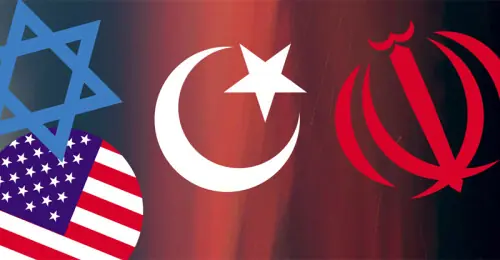
The most recent use of illegal force occurred during the 40-day war waged by the US and Israel against Iran. Resorting to proactive diplomacy, Pakistan’s leadership played a critical role in facilitating a ceasefire and then bringing to the table high-powered delegations from the US and Iran in Islamabad a couple of weeks ago.
This was no small feat: for the first time in 47 years, the US and Iran sat face to face, and, as per the Iranian foreign minister, resolved many of the differences between them.
Although disagreement persists on some issues, including America’s blockade in the Arabian Sea and Iranian blockade of the Strait of Hormuz, there are signs that both sides want to reach a peace settlement.
It is encouraging that Pakistan’s leadership, particularly the prime minister, foreign minister and the chief of defence forces, maintain close contact with both Iran and the US as well as with key countries, including China, Saudi Arabia and Turkiye, to help end the war. It is heartening to see Pakistan emerging as a net stability provider for the region.
Meanwhile, the US-China rivalry continues, raising concerns of further global polarisation. This rivalry matters to Pakistan as it has always maintained a strategic partnership with China, while enjoying transactional periods of positive engagement with the US, including the recent bonhomie.
Thus far, the government has managed its ties with both China and the US reasonably well. However, it is a delicate balancing act that requires the government’s full attention if Pakistan is to expand its relevance militarily and economically.
Pakistan is emerging as a net stability provider for the region.
Another challenge for Pakistan is the two-front situation at the borders. Under Prime Minister Narendra Modi, India is pursuing a twin-goal policy to create a Hindu rashtra internally and establish its hegemony regionally. It perceives Pakistan as an obstruction to both goals. Under the circumstances, relations between the two countries are not likely to improve so long as the Modi government is in power.
Meanwhile, there is growing criticism within India that Modi’s actions to diplomatically isolate Pakistan have completely failed. For its part, Pakistan must keep its options open to coexisting peacefully with India during or after the Modi era.
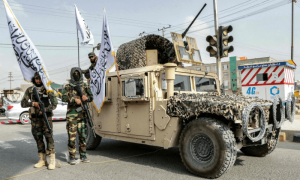
The second front is Afghanistan, which is once more turning into a safe haven for terrorist entities under the Taliban. Operating from Afghanistan, the TTP has shed blood in Pakistan for four years by attacking civilian and military targets, with possible Indian support. Having tried both bilateral and multilateral diplomacy, Pakistan has directly taken on the Afghan Taliban.
Dealing with them kinetically while keeping the doors of diplomacy open seems to be generating the right amount of pressure for the regime to refrain from terrorising Pakistani citizens via the TTP.
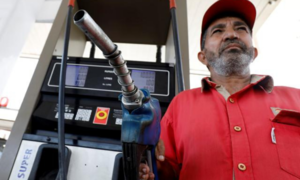
While the past one year has seen Pakistan’s military and diplomatic profile reach new heights, the country’s economic health faces serious risks. Oil prices are soaring due to the Gulf blockade. Investor confidence continues to be low due to lack of continuity of economic policies and difficulties in doing business. Industrialists complain of exorbitant input costs, which make them less competitive than their regional peers.
Bureaucratic red tape strangulates every productive activity and further depletes investor confidence. Unless good eco-nomic governance is prioritised, and we learn to live within our means, Pakistan will remain dependent on external loans with their attendant conditionalities. Rely-ing on donors for balance-of-payments support shrinks Pakistan’s foreign policy choices.
Pakistan’s higher military and diplomatic profile is a good opportunity for the government to devote its energies to better governance, focusing particularly on reviving the economy. Since resources and powers are concentrated at the centre and in the provincial capitals, the common man in far-flung areas feels left out. The answer lies in devolving resources and powers to local tiers of governance and ensuring an empowered local government system.
In terms of societal harmony, the country must focus on its youth, the largest segment of our population. Pakistan needs citizen-centric governance so that every segment of society has a stake in its stability and growth. In theory, the ‘Uraan’ vision and several visions before that offer a policy framework to address these problems. However, our Achilles heel remains ineffective implementation.
The writer is chairman, Sanober Institute and former foreign secretary of Pakistan.
Published in Dawn, April 26th, 2026