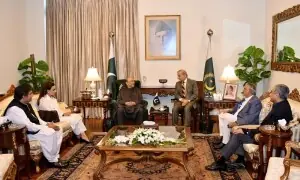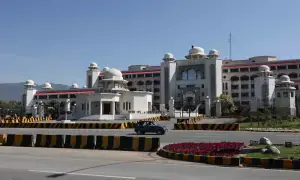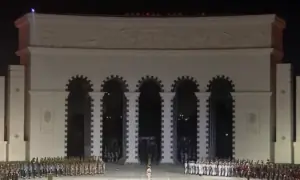


THEY came to Islamabad. The diplomats, the delegations, the foreign press. They came to broker talks between the US and Iran, and Pakistanis noticed. Not quietly. We shared the headlines. We passed them around with a particular kind of satisfaction that was almost tender. Look. They trust us. They chose us. And something in us exhaled.
I have been thinking about why that lands so hard. Pakistan is not a country that has been given much to celebrate lately. The economy, the politics, the security, the daily texture of life — none of it has been easy.
So, when the world looks at you and says, you are the ones we trust to hold this conversation, you feel it somewhere deep. We needed that. More than we may want to admit.
Hospitality, like most things, has a direction.
But need has a way of narrowing your vision. When you are hungry for the compliment, you don’t always stop to ask what it is actually describing. Or who it leaves out.
Pakistan’s hospitality is real. Anyone who has travelled here, eaten in a stranger’s home, been waved through a gate or handed tea before being asked a single question knows the instinct is genuine. It runs deep. It is one of the things we have every right to be proud of.
But hospitality, like most things, has a direction. It faces outward. It is offered to the guest, the visitor, the dignitary arriving with a delegation and a purpose. It is not, in any meaningful way, the experience of being Pakistani in Pakistan right now.
While Islamabad was being prepared for the world’s gaze, something else was happening in the same city. People were being moved on. Informal settlements were cleared — ostensibly to remove illegal encroachments, which in this country has become reliable code for something else entirely: make the land available, invite the developers, build something gleaming, and call it progress. The daily-wage workers, for example, were made less visible. Because they were inconvenient to the image, and in the way of someone else’s profit.
This is not new. It is what cities do when the cameras are coming. You tidy. You clear. You present the version of yourself you want the world to see. But in Pakistan, the gap between that version and the lived reality of most citizens is so vast that the tidying itself becomes a kind of violence. You are not just cleaning a street. You are erasing a person’s right to be in the place where they came to build a life.
And we are good at the performance. The foreign journalists covering the event were taken to see the best of us — the kababs, the halwa, the dinosaur parks. Some wrote about Pakistan the gracious host, Pakistan the indispensable partner. But the testimonials left out the citizens being detained for saying the wrong thing on the wrong platform. No curated tour included a stop at the homes just bulldozed, or a conversation with the family that had nowhere to go. Hospitality, it turns out, is also a carefully managed itinerary.
But there’s also hypocrisy. The same people who love being called hospitable — who beam at the coverage, who share the headlines — are often the ones who treat the humans in their own homes as furniture. If you want to know what hospitable people are actually like, spend 10 minutes on any Facebook group for household staff. Read how the wealthy women of this country talk about their maidservants.
The wages withheld. The days off denied. The cruelty dressed up as authority. The legal minimum wage is a suggestion most of them have never seriously entertained. This is the other face of Pakistani hospitality: warm to the world, cold to the woman who raises its children.
Hospitality is the compliment that lets a country avoid the harder question. Yes, you welcomed the important foreigners beautifully. Yes, Pakistan showed up when it was needed. But what about the citizens who have been showing up, quietly and without fanfare, for decades? What are they being offered?
A country that cannot extend dignity to its own denizens cannot truly offer it to anyone else. What it can offer is a performance of dignity, which is a different thing entirely. It looks the same from the outside. It photographs well. It generates coverage we pass around and feel good about for a few days. But inside it is the same exhausted, overlooked, pushed-aside citizen who has been waiting a very long time for the hospitality to turn around and face them for once.
We are, by all accounts, wonderful hosts. The world has said so and we have believed it, gratefully. It is just that some of us were asked to leave before the guests arrived.
The writer is a former journalism instructor.
Published in Dawn, April 26th, 2026