Data points


 0
0
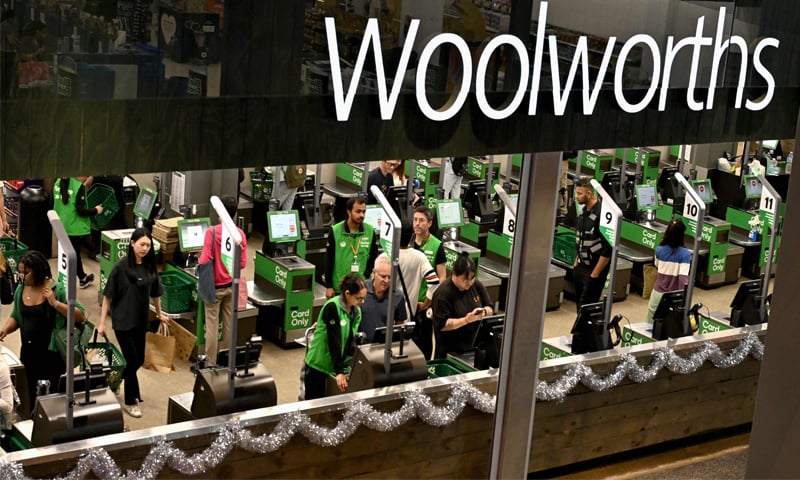
Americans focus on prices
The Trump economy in 2025 was a roller coaster, soaring and falling through tariff shocks, a cooling job market, robust AI investments and a near-record close to the US stock market. One thing remained constant, though: Americans are as laser-focused on prices as they were before President Trump took office. The high cost of living was the No. 1 economic complaint Americans cited in interviews with The Wall Street Journal. Inflation has cooled significantly from its 2022 highs. But low- and middle-income workers said 2025 offered little relief. Those with higher incomes have continued to spend, buoyed by soaring financial markets that have boosted their sense of security, a reflection of the nation’s two-speed economy. A Wall Street Journal poll found that half of voters say the economy has gotten worse in the past year, while 35pc say it has improved.
(Adapted from “Six Americans Rate The Trump Economy,” by Jeanne Whalen, published on February 8, 2026, by the Wall Street Journal)
Teaching Claude to be ‘good’
Amanda Askell knew from the age of 14 that she wanted to teach philosophy. What she didn’t know then was that her only pupil would be an artificial-intelligence chatbot named Claude. As the resident philosopher of the tech company Anthropic, Ms Askell spends her days learning Claude’s reasoning patterns and talking to the AI model, building its personality and addressing its misfires with prompts that can run longer than 100 pages. The aim is to endow Claude with a sense of morality — a digital soul that guides the millions of conversations it has with people every week. She compares her work to the efforts of a parent raising a child. She’s training Claude to detect the difference between right and wrong while imbuing it with unique personality traits. Her job, simply put, is to teach Claude how to be good.
(Adapted from “Meet the One Woman Anthropic Trusts to Teach AI Morals,” by Berber Jin and Ellen Gamerman, published on February 9, 2026, by the Wall Street Journal)
Female billionaires
Taylor Swift. The president of In-N-Out Burger. The great-granddaughters of agriculture entrepreneur William Wallace Cargill. These are some of America’s 154 female billionaires. Though they are far fewer in number than the country’s 981 male billionaires, these women have roughly the same size median net worth as the men do at just over $2bn, according to data from Altrata, a wealth-intelligence firm. There has been a striking jump in the number of women who are self-made, meaning they got at least some of their wealth from a significant enterprise they launched on their own. Far more women — about 60pc — were at least partially self-made in 2024, compared with five years earlier, when only about 40pc fell into that category. The rest owe their wealth to inheritance. Nearly all male billionaires are at least partially self-made.
(Adapted from “There Are 154 Billionaire Women in the US. Here’s How They Amassed Their Fortunes,” by Rachel Louise Ensign, published on February 20, 2026, by the Wall Street Journal)
Gen Z investments
A generation of young people locked out of homeownership in the US has found another way to build wealth: putting money into the stock market. The share of people 25 to 39 years old making annual transfers to investment accounts more than tripled between 2013 and 2023 to 14.4pc, outpacing increases for those 40 and over, according to data from the JPMorgan Chase Institute. The share of 26-year-olds who transferred funds to investment accounts since turning 22 shot up from 8pc in 2015 to 40pc as of May 2025. The numbers don’t include people investing in 401(k)s. The age range includes young millennials, and there is overlap in the numbers between investors and homeowners, but there has been a rise in young and lower-income investors at the same time that home-buying activity has fallen. The stock market’s recent record-breaking performance and easier access to trading technology is also fueling the upswing.
(Adapted from “Gen Z, Locked Out of Home Buying, Puts Its Money in the Market,” by Rachel Wolfe, published on February 15, 2026, by the Wall Street Journal)
Published in Dawn, The Business and Finance Weekly, March 2nd, 2026