TIES between Pakistan and India are perhaps at their lowest point since Partition. Bilateral interaction is close to zero, while Pakistan has strong reasons to believe that its eastern neighbour is playing a key role in fomenting terrorism within its borders. This is unsustainable in the long run, as the threat of conflict is never far away when such a massive gulf of mistrust exists.
And while India keeps harping on about the main obstacle to better ties being ‘terrorism’, which it alleges emanates from Pakistan, it is India which is bringing terrorism to this country.
Meanwhile, the main flashpoint in South Asia remains the unresolved question of Kashmir. Though New Delhi would like to believe its own fiction that the Kashmir dispute has been ‘resolved’ by the scrapping of the occupied territory’s limited autonomy in 2019, the fact remains that internationally, Kashmir remains a disputed region.
The lack of resolution of the Kashmir question results in a state of permanent insecurity in the subcontinent.
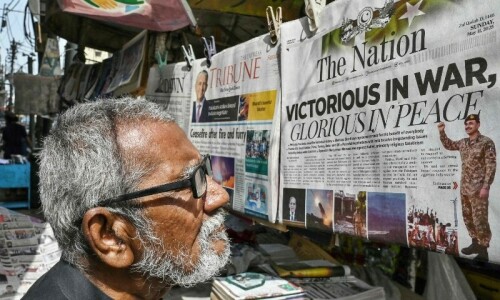
We must not forget that both states fought a limited war after the Pahalgam episode last year. The threat of fresh conflict is ever-present as long as the dispute is not judiciously settled.
Moreover, Indian repression in occupied Kashmir continues unabated. And when events such as Pahalgam occur, the plight of Kashmiris in the held region, as well as in India, becomes even more acute. They are punished doubly; because of their Kashmiri origin, as well as their Muslim faith.
Human Rights Watch has documented Hindu mob attacks in India after the Pahalgam assault in which Kashmiri students and workers were targeted in various Indian states. UN human rights experts have reached similar conclusions. Furthermore, the UN experts have condemned “arbitrary arrests and detentions, suspicious deaths in custody, torture … lynchings” of Muslims including Kashmiris. These grim facts reveal the true face of the ‘world’s largest democracy’.
Pakistan has consistently sought to bring India to the table in order to resolve the Kashmir question. Yet India, particularly under Narendra Modi, has arrogantly rejected the invitation.
While New Delhi abhors the thought of third-party meditation in Kashmir, it is time international actors paid more attention to the issue.
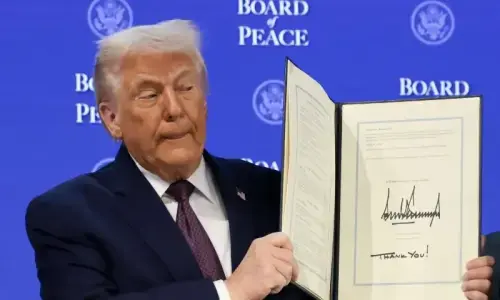
US President Donald Trump has on several occasions said he is willing to step in and help resolve the dispute. Last year, he claimed to have “stopped the war” between Pakistan and India, while adding that “I can solve anything”. He is welcome to try, perhaps using his Board of Peace as a platform to address the Kashmir issue. While the Indians talk tough, they will have a hard time resisting US pressure, as their recent ‘commitment’ to stop buying Russian oil shows.
Published in Dawn, February 8th, 2026