Grassroots power
VETERAN parliamentarian Khawaja Asif recently described the 18th Amendment as a ‘dhakosla’ — a gimmick that misleads and covers up the truth. This is an important point. The 18th Constitutional Amendment, adopted in 2010, had, inter alia, devolved several key subjects, notably health and education, to the provinces. Accordingly, the seventh National Finance Commission recommended a much higher revenue share for provinces (57.5 per cent) from the Federal Divisible Pool, leaving the centre with only 42.5pc. All cheered initially. However, the resources remained concentrated in the provincial capitals and weren’t devolved to the local governments (LGs). The quality of life for ordinary people witnessed no improvement. The spirit behind the amendment was defeated.
Why are the provinces not devolving resources to the grassroots? First, provincial governments prefer to manage the funds directly and provincial finance commissions do not ensure formula-based transfer of resources to the districts. So we see megaprojects in the bigger cities devouring all resources at the cost of basic needs in the peripheries. Second, MNAs and MPAs view strong LGs as competitors. They would rather manage development funds themselves to create their own patronage networks.
Third, provincial governments have made laws to hollow out the powers and functions of local councils, and created administrative authorities to handle functions that should be the mandate of LGs. Fourth, elections are often postponed so that LGs are managed through preferred bureaucrats and administrators. Finally, owing to lack of continuity and resources, LGs, wherever established, possess little technical or human expertise to manage complex administrative issues.
In the absence of citizen-centric governance, resources are invariably captured by the elite while the common man continues to suffer. Notably, several parliamentary democracies that have acute political instability at the centre still post enviable economic growth mainly because they have effective LG systems. In most developed countries, LGs manage police, public safety infrastructure, utilities, fire protection, education, parks and libraries.
Why are the provinces not devolving power?
What then is the way forward? One possibility is to make smaller provinces for efficient management, as is done in most well-governed countries. The Netherlands has 12 provinces for a population of only 18 million while Pakistan has four for 240m. Recently, several proposals have been mooted in this regard, one of which seeks to divide provinces geographically. However, given political sensitivities, this may be a difficult option.
The next best option to improve lives and put the country on the path of socioeconomic development is to institute effective LGs with sufficient resources at their disposal to deliver public services right at people’s doorstep. To that end, a number of recommendations, which were discussed at a national conference held recently at a prominent Lahore university, merit consideration.
One, Article 140A of the Constitution calling for empowered LG systems and devolved financial, political and administrative authority for local development and services, should be fully implemented. This article provides for strengthening grassroots democracy and making governance bottom-up rather than the other way around. Two, Article 140A should be amended to prohibit arbitrary dissolution of LGs, guarantee fiscal devolution and standardise LGs’ functions and tenure in all provinces. Three, a national framework for local governance should be in-troduced to harmonise structures while respect-ing provincial au-tonomy. Four, Article 7 should explicitly include LGs as integral to the state structure, with a due share in the divisible pool of federal taxes. Five, LG civil service cadres should be equipped with requisite skillsets and capacity to assimilate technologies. Six, core service delivery functions (water, sanitation, waste management, etc) should be transferred to LGs rather than making separate centralised authorities or companies. Seven, posting tenures of LG officers must be stabilised to ensure continuity and prevent disruption and undue influence. Eight, regular, party-based LG polls must be held. Nine, MNAs/MPAs’ development funds should be reduced, but their oversight powers increased.
In the governance chain, LG is the closest tier to citizens, but is weak, fragmented, and under-resourced because of fiscal centralisation and bureaucratic resistance. According to Pildat, nearly 70pc of citizens’ issues originate at the local level, yet LGs remain the weakest in most provinces. Ironically, LG laws are often enacted under military governments rather than democratic ones, which claim to represent the people.
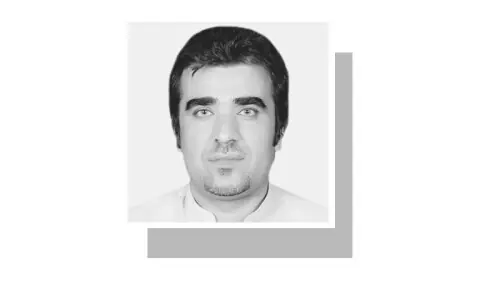
The writer is chairman of Sanober Institute and former foreign secretary of Pakistan.
Published in Dawn, February 1st, 2026