ISLAMABAD: Bangladesh’s garment sector came into focus as a renowned Japanese development economist said the industry was a window for diversification and a foundation for broader industrial development during a lecture that was co-hosted by the Sustainable Development Policy Institute (SDPI) and the Embassy of Japan on Wednesday.
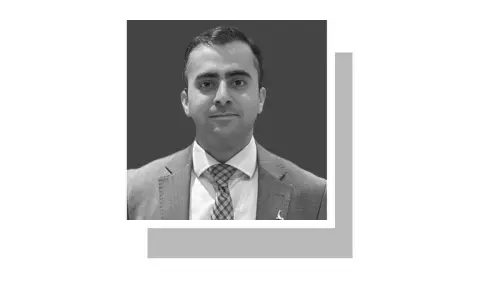
Delivering a ‘distinguished guest lecture’ titled “Bangladesh as an East Asian Country: Its Pattern of Industrial Development, Prof Yamagata Tatsufumi spoke on Bangladesh’s development trajectory, saying that Bangladesh serves as a natural reference point for Pakistan, noting historical complementarities along the textile value chain, where Pakistan has strength in upstream segments while Bangladesh has built competitiveness in downstream manufacturing.
According to Prof Yamagata, Bangladesh is comparable to Pakistan across several economic indicators and is gradually catching up with India, while also narrowing the gap with China in apparel exports to the European Union.
He also highlighted that the country has effectively transitioned into an East Asian powerhouse by adopting a high-intensity industrial development model.
Japanese expert cites Bangladesh as an East Asian powerhouse, catching up with India, China
Speaking on the occasion, Ambassador of Japan, Akamatsu Shuichi, said Bangladesh’s industrial development provides an interesting reference for Pakistan, especially given shared challenges such as labour abundance and the need for diversification. He stressed that South Asian countries must create opportunities to productively absorb their growing labour force and translate demographic trends into sustained economic growth.
Prof Yamagata also noted that garments account for nearly 80 per cent of Bangladesh’s total exports, with the country now emerging as the third-largest textile exporter to the United States after China and Vietnam. He highlighted that minimum wages in the apparel industry, after declining between 1985 and 2005, have shown a consistent upward trend since 2005, with real wages rising through 2023.
Mr Tatsufumi explained that Bangladesh’s competitiveness stems from being a labour-abundant and land-scarce economy, a characteristic closer to East Asia than South Asia. This, he said, has enabled Bangladesh to excel in labour-intensive industries and gradually move toward diversification.
He cited the growing assembly of electrical appliances, exports of refrigerator and air-conditioner compressors to Europe, and expansion into transport equipment, including bicycles, shipbuilding and drone manufacturing. Bangladesh is now the fourth-largest exporter of bicycles to Europe, he added.
He also shared data on Bangladesh’s exports to the European Union, which include garments, jute and other fibres, tea and spices, pharmaceuticals, bicycles and prepared unrecorded media such as USBs and memory cards. Emerging sectors like pharmaceuticals and electronics, he added, signal gradual industrial diversification beyond garments.
During the question-and-answer session, Prof Yamagata discussed challenges linked to Bangladesh’s upcoming graduation from Least Developed Country (LDC) status, particularly for the pharmaceutical sector, which will face changes in regulatory and trade conditions.
Earlier, SDPI Executive Director, Dr Abid Qaiyum Suleri, said that Bangladesh’s development experience is particularly relevant for Pakistan due to strong similarities in natural resource endowments and economic structure. He noted that Bangladesh’s strategic shift towards an East Asian development model helped expand its export share and significantly increase women’s participation in the workforce.
Dr Suleri observed that Pakistan and Bangladesh were once competitors in sectors such as bicycle exports, but Bangladesh has since captured a substantial share of that market.
Published in Dawn, January 29th, 2026