People are eating less


ON Jan 1, the government launched the results of the Household Integrated Economic Survey 2024–25 under the subtitle of ‘Data-driven insights for inclusive growth’ — though we are moving in a direction opposite to inclusive growth, as the HIES data itself shows.
Before moving further, we appreciate the fact that HIES 2024-25 has been done, and technically speaking, done well. It is statistically sound and representative as it covers 32,000 households across the country and across the five socioeconomic quantiles covering both urban and rural Pakistan. And, it’s for the first time that the HIES has been done digitally. The Pakistan Bureau of Statistics deserves appreciation.
The six highlights adorning the official press release of the launch as milestones are: three percentile points increase in literacy; two per cent points decrease in out-of-school children and three points increase in the use of clean fuels. Household internet access has jumped from 34pc to 70pc and individuals using the internet has increased from 17pc to 57pc. These are indeed improvements. But then, full immunisation of children improving five percentage points and moving from 68pc to 73pc actually means that 27pc of our children are still not fully immunised. We also know where most of the unvaccinated children are: some 57pc of children in the erstwhile Fata agencies (now districts) and almost two-thirds of children in Balochistan are not fully immunised. But the highlights or milestones of HIES 2024-25 are still shallow waters. Real sharks lurk in deep waters. HIES has indeed been successful in “capturing real lives through real data”.
One key revelation of this survey is that the average monthly household income in Pakistan more than doubled between 2018-19 and 2024-25 — from Rs41,545 to Rs82,179. This is a 97.81pc increase. How nice it sounds that, on average, households are now making more money. In terms of income distribution, in 2024-25, the poorest quintile was earning an average of Rs41,851, while the richest was earning Rs139,317 — nearly three times higher. Inequality is more pronounced in the urban areas, where the richest households earn well above Rs146,920, and the poorest remain below Rs42,412.
Macroeconomic repairs are being carried out by impoverishing the people.
But then, average household consumption expenditure increased by 113pc during the same period. In 2018-19, an average household in Pakistan was consuming or spending Rs37,159 per month; in 2024-25 it was consuming Rs79,150. Overall, as compared to 2018-19, the poor households in the first quintile showed an increase of 84pc, while the rich households in the fifth quintile showed an increase of 131pc, demonstrating a widening increase in consumption between the rich and poor.
The net result of the so-called increased household income and even greater increase in consumption is that in the last six years, an average Pakistani household has become poorer and lives a more difficult life. How much poorer? Let’s see.
The real story is hidden in real income values by controlling the inflation effect, i.e., comparing HIES 2024-25 income data with 2018-19 prices. This comparison shows that on average people are poorer today than they were in 2018-19. Except for the richest 20pc of rural households all others, poor and rich in both the urban and rural areas, have lost out on their incomes.
The worst affected are the poorest urban citizens who have lost 23pc of their real income. In 2018-19, the average poorest urban household earned Rs24,365 whereas in 2024-25 the same household made Rs18,820 in 2018-19 prices. The average urban citizen became 19pc poorer and the average rural citizen 7pc poorer in the intervening six years.
Even more disturbing is how this relative poverty is affecting real lives. The major share of household income in terms of percentage is being spent on basic food items — 36.72pc, which is a bit more than in 2018-19, and yet, they are consuming less food than they were six years ago. A table (37.C) in HIES 2024-25 tells this sad story. Per capita consumption has gone down in almost all main food items. For example, in 2018-19, the average urban Pakistani was consuming 6.12 kilograms of wheat but in 2024-25 s/he was consuming 5.67 kg. All per capita consumption values of essential food items — including, rice, pulses, milk, mutton, beef, chicken, eggs, potato, onion, sugar and tea — have gone down in the last six years in both the cities and the rural areas. The only exceptions to this sad trend are tomatoes and cooking oil.
In essence, Pakistanis are spending more and eating less than they were six years ago. The prevalence of food insecurity has increased from 15.9pc in 2018-19 to 24.4pc in 2024-25, according to the survey. They are also now spending less on education than they were in 2018-19. Almost 4pc of household expenditure went into education six years ago, which declined to around 2.5pc. Household health expenditure being relatively inelastic has slightly increased from 3.22pc to 3.34pc.
HIES 2024-25 shows that macroeconomics and household economics are at odds with one another. Macroeconomic repairs are being carried out by impoverishing the people through high direct and indirect taxes and extremely high and exploitative utility bills. The salaried class is worst hit. Macroeconomic stability is destabilising the people.
The current government has to shoulder the responsibility of this sad state of affairs but the reality is that our economic woes are rooted in the extractive economic system we have been pursuing, our perennial governance issues and — the mother of all issues — our chronically unstable politics.
Pakistan desperately needs deep, consistent and sustainable structural reforms in all these domains for which a national consensus needs to be established through a national dialogue among all stakeholders. The seriousness of our social, economic and political issues is such that these cannot be left to one government alone. All parties and state institutions need to sit together and develop a long-term development plan and firewall it against any change of government and any political turbulence. Unless we do this, the people will continue to suffer. The measure of national success should be how a poor household prospers in real terms rather than how successful we are in obtaining another debt tranche from the IMF.
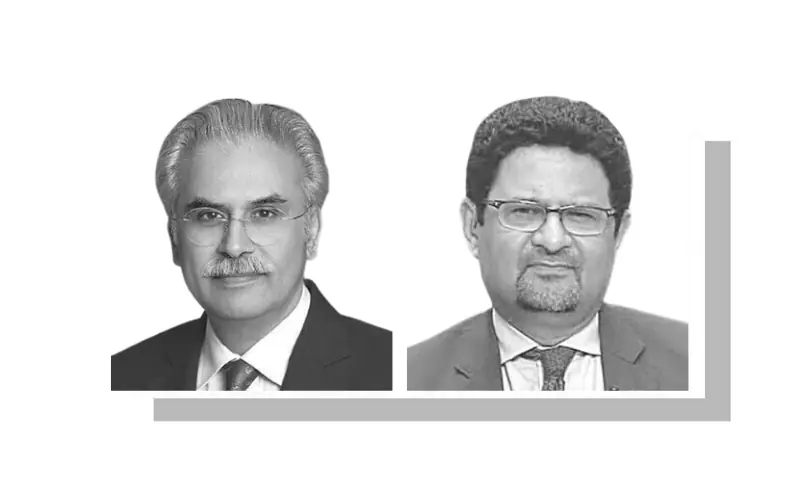
The writer is a former SAPM on health with ministerial status, adjunct professor of health systems and president of the Pakistan Association of Lifestyle Medicine.
Miftah Ismail is a former finance minister.
Published in Dawn, January 9th, 2026