US-India naval ties in focus amid Iran conflict
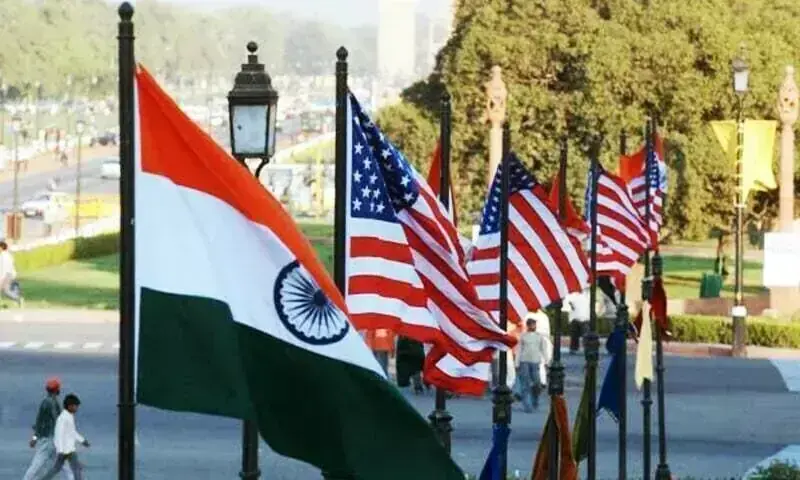


ISLAMABAD: A former senior adviser to the US Secretary of Defence, has claimed that the US Navy is increasingly relying on Indian ports for docking and unloading operations due to escalating tensions with Iran.
Former US Army Colonel Douglas Macgregor’s remarks, made in a recent interview on One America News, have sparked discussion on social media, particularly in South Asia, highlighting what some view as a potential shift in US military logistics away from traditional Persian Gulf bases, according to a media report.
He argued that threats to US installations in the Gulf had prompted this pivot towards Indian facilities, suggesting the move formed part of broader American operations potentially linked to conflicts involving Iran.
However, New Delhi has termed these reports “baseless and fabricated”. In a post on X, the MEAFactCheck account of the Indian Ministry of External Affairs said the claim that Indian ports are being used by the US Navy are fake and false.
Official US-India defence cooperation, strengthened through frameworks such as the Quadrilateral Security Dialogue (Quad), is focused on maritime security in the Indo-Pacific rather than direct involvement in Middle Eastern conflicts.
Examples of such cooperation include visits by US Navy vessels, including the USNS Charles Drew in 2022 and 2023 to facilities near Chennai, and the USS Frank Cable in August 2025. These visits were conducted under Master Ship Repair Agreements with Indian firms such as Larsen & Toubro, enabling routine maintenance and overhaul.
India’s foreign policy continues to emphasise strategic autonomy, attempting to balance relations with the US, Russia and Iran.
Notably, New Delhi maintains cooperation with Tehran on projects such as the Chabahar port, despite Western sanctions.
Indian officials have not directly responded to Macgregor’s claims, and experts distinguish between routine port calls and the establishment of forward operating bases for specific operations.
From a regional perspective, the development raises questions about stability in South Asia. Pakistan, which shares borders with both India and Iran and maintains close ties with Tehran, is closely monitoring such alignments.
Pakistani strategists stress the importance of non-alignment to avoid drawing the region into external conflicts, advocating diplomatic solutions that prioritise de-escalation and mutual interests among neighbouring states.
Analysts note that US logistical diversification, including potential use of Indian facilities, aligns with efforts to reduce risks in vulnerable areas such as the Red Sea and the Gulf of Aden, where shipping disruptions have already affected global trade routes.
Traditional US hubs, including Bahrain, Diego Garcia, Oman and the UAE, however, remain central to Middle East operations.
Published in Dawn, March 5th, 2026