SIFC feels high taxes discourage investments
ISLAMABAD: The Special Investment Facilitation Council (SIFC) on Thursday claimed that Pakistan’s high corporate taxes are discouraging foreign direct investment (FDI), while the Federal Board of Revenue (FBR) emphasised that any adjustments must be tied to improved compliance to offset a potential revenue loss of Rs1.6 trillion.
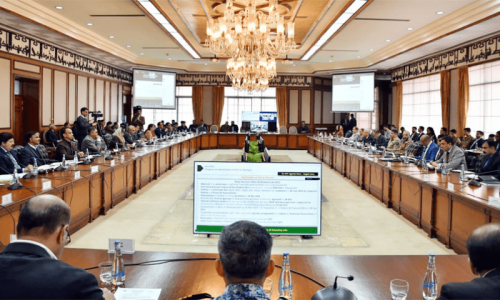
This emerged during a two-day economic dialogue hosted by the Pakistan Business Council, during which SIFC National Coordinator Lt. Gen. Sarfraz Ahmed acknowledged concerns raised by business leaders about high corporate tax rates.
In response, FBR Chairman Rashid Mahmood Langrial emphasised that any revision in tax rates would depend on improved tax compliance to mitigate potential revenue losses.
Agreeing with a questioner’s concern during the discussions, Mr Sarfraz acknowledged that the effective corporate tax rate in Pakistan can reach up to 50 per cent. “Who would invest in such an environment?” he asked, noting the challenge it poses to attracting investment.
However, he assured participants that the government is fully aware of the issue. “The government is working on ways to fix it,” he said, while refraining from making any premature announcements.
FBR chief links adjustments with improved compliance
Mr Sarfraz acknowledged that a crucial lesson learned was that the FDI will only follow once local investors are engaged. He reflected on the past three years of efforts to attract FDI, but noted a strategic shift. “Let’s bring our own sectoral tycoons to the table,” he said, emphasising the need first to pitch investment opportunities to Pakistani business leaders and build partnerships from within.
“We are now going to pitch these projects to our own businessmen first, so they can take leadership,” he stated, urging local entrepreneurs to take ownership and showcase their ventures. Offering full support, he added, “You need help, I am the person you need to work with. I will walk with you through the entire process. I will help you — and when I say ‘I,’ I mean my organisation.”
Mr Sarfraz made a direct appeal to Pakistan’s business community: “Please help us — because helping us means helping Pakistan.” Urging entrepreneurs to bring forward viable projects, he assured them of the government’s support in connecting with the right investors, capital, and countries.
“If your project is worth attracting investment, we will facilitate you,” he said, offering the SIFC’s platform as a bridge between local business and global capital. He revealed that investors — particularly from the GCC and Saudi Arabia — are ready to invest but often ask, “You have to pinpoint the exact partner we should work with. We have the money; you tell us who our partner should be.”
In a separate session, Mr Langrial, accompanied by key team members, briefed business leaders on ongoing automation efforts to enhance taxpayer facilitation and close loopholes in the current tax system.
He outlined the government’s plan to phase out the super tax and reduce various tax rates, emphasising that these reforms hinge on improved tax compliance. He highlighted a range of reform interventions designed to offset the revenue impact of tax rationalisation, particularly for the corporate sector.
The chairman also shared the government’s ambitious target of increasing the tax-to-GDP ratio to 18pc by 2028. Of this, he said, the FBR is expected to contribute 13.85pc, provinces 3pc, and the remaining share from the Petroleum Development Levy (PDL).
PBC Chairperson Dr Zeelaf Munir and CEO Javed Kureishi also spoke on the occasion and emphasised the need for collaboration and reform to secure Pakistan’s economic future.
Published in Dawn, November 28th, 2025