Regional Tension: The End Of Strategic Restraint

IN 2025, Pakistan witnessed an unprecedented and unfamiliar foreign policy landscape. Its main features were the four-day armed confrontation with India, and repeated rejection of the Afghan Taliban regime to cooperate with Pakistan on the cross-border infiltration issue, which resulted in Pakistan’s air strikes inside Afghan territory. These armed conflicts with eastern and western neighbours have brought strategic clarity in Pakistan’s neighbourhood policy. Internally, the elevation of Field Marshal Syed Asim Munir as Chief of Defence Forces (CDF) too will have profound short- and long-term impact on Islamabad’s strategic calculations and force posturing.
The India front
Since 2021, the opinion within Pakistan’s top brass regarding its approach on how to deal with an assertive India was largely divided. Views were at odds on whether to have careful limited engagement through backchannel diplomacy; resume trade and normalise diplomatic relations; or continue with the status quo in its relationship with the eastern neighbour. However, New Delhi’s decision to impose an armed conflict on Pakistan in response to the Pahalgam incident proved a ‘strategic shock’ to Islamabad. This ‘strategic shock’ has brought ‘strategic clarity’ in Islamabad’s power corridors regarding how to pursue its relationship with an aggressive eastern neighbour.
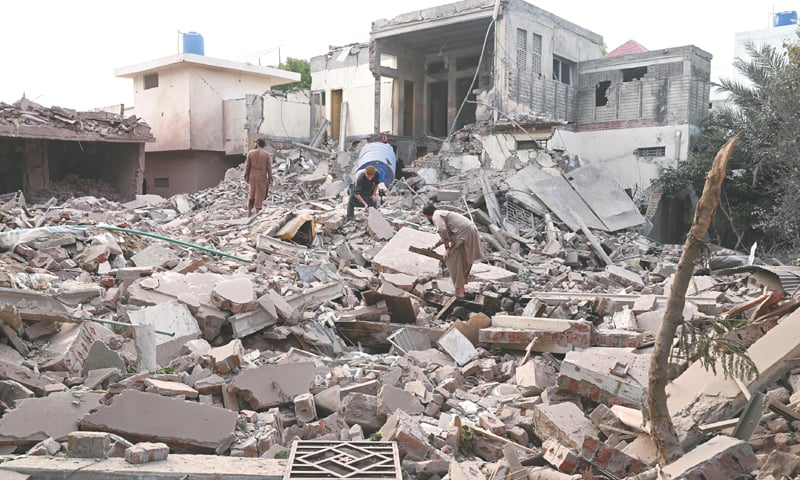
The military conflict in May equally tested Pakistan’s defence and diplomatic capabilities. On the diplomatic front, Pakistan unleashed an unprecedented campaign during and post-conflict, which bore fruit in garnering international support against Delhi’s aggression. The world in fact sympathised with the families of the victims of the Pahalgam terror attack, but didn’t buy Delhi’s justifications for Operation Sindoor. The 87 hours of armed conflict resulted in downing of seven Indian fighter jets, including three Rafales. However, Pakistan also saw strikes on some airbases. In the first-ever multi-domain conflict in the subcontinent, drones were used by both sides for various purposes including intelligence gathering and overwhelming each other’s air defences. Indian missile and drone attacks also martyred over 40 Pakistani civilians, including women and children.
Although the US-brokered ceasefire has ceased armed hostilities between the two nuclear neighbours, tensions and mistrust persist on both sides. Islamabad has a strategic question post-May conflict: how should Pakistan respond if Delhi resumes Operation Sindoor 2.0?
The Afghanistan front
Since the 2021 return of the Afghan Taliban in Kabul, Pakistan has witnessed a significant surge in terror activities in the country. The banned Tehreek-i-Taliban Pakistan (TTP) has regained organisational strengthen by convincing over 35 splinter groups to return to the terror outfit. Nato’s leftover modern weapons have also enhanced operational capabilities of the TTP. Islamabad tried several diplomatic means including bilateral negotiations, appeasement through economic and diplomatic engagement, and third-party influence to convince the Afghan Taliban to abandon their support to the TTP. However, Pakistan observed gradual increase in the TTP’s infiltration attempts from Afghanistan to Pakistan.
From Jan to Dec 15, 2025, Pakistan recorded at least 4,200 and 1,453 infiltration attempts of terrorists from Afghanistan into Khyber Pakhtunkhwa and Balochistan, respectively. Similarly, out of 2,395 terrorists killed during intelligence-based operations (IBOs), 220 were identified as Afghan nationals. During 2025, 1,338 security officials were martyred while 2,562 faced serious injuries. Officials also insist that TTP operates over 60 camps across Nuristan, Kunar, Nangarhar, Paktia, Khost and Paktika provinces of Afghanistan, serving as infiltration hubs into KP. Likewise, over 300 terrorists of violent Baloch separatist outfit BLA are concentrated in Kandahar, Nimroz, Helmand, Herat, Farah and Kabul. Pakistan has identified four training camps of BLA in Afghanistan.
Citing the gravity of the situation emanating from the aforementioned numbers coupled with several failed diplomatic attempts to convince the Afghan Taliban, Pakistan decided to carry out air strikes in Afghanistan on TTP’s hideouts. In October and November, Pakistani air strikes hit multiple locations inside Afghanistan including Kabul, Khost, Jalalabad, and Paktika, which resulted in border clashes at Pak-Afghan border points. Trade was the major victim of border tensions between the two countries. Although the armed clashes at the Pak-Afghan border and Pakistan’s air strikes have been halted due to mediatory efforts of Turkiye and Qatar, the underlying issues, mistrust, and tensions persist between the two countries.
Islamabad has a strategic question post-May conflict: how should Pakistan respond if Delhi resumes Operation Sindoor?
A new doctrine
The May conflict with India pushed Pakistan to the decision of reconfiguring its security architecture and strategic doctrine for any prospective confrontations with New Delhi. In this context, after announcing the establishment of the Strategic Forces Command, the Shehbaz Sharif government promoted chief of the army staff to the rank of field marshal and later appointed him as the first chief of defence forces. This reconfiguration of the tri-services should improve coordination through Defence Forces Headquarters. Moreover, this structural transformation will also help the armed forces to respond swiftly across multiple domains during conflicts against any external aggression.
Apart from structural reconfiguration of security architecture, the doctrinal shift in Islamabad’s strategic calculus is also visible. With consolidation of power and fighting armed conflicts with India and Afghanistan, the strategic doctrine of the military leadership is gradually unfolding. This doctrine has two primary pillars: cost-imposition strategy for India, and deterrence through punishment for Afghanistan.
Costs for India
Cost-imposition strategy refers to a deterrence posture designed to make any act of aggression prohibitively expensive for Delhi. Since 2016, India has violated Pakistan’s sovereignty on three occasions under the assumption that limited conventional operations under the nuclear overhang are feasible and politically advantageous.
Pakistan’s initial response posture was characterised by denial and strategic restraint. In 2016, Islamabad officially rejected India’s claim of surgical strikes. In 2019, Pakistan exercised extraordinary restraint. Although its forces had locked multiple targets deep inside Indian territory, the decision was made not to strike designated sites, and the captured pilot of a downed Indian jet was returned unconditionally as a de-escalatory gesture. Delhi considered these de-escalatory gestures from Islamabad as a ‘strategic weakness’.
Following the 2019 crisis, Pakistan recalibrated its crisis-response mechanisms and articulated a QPQ+ (Quid Pro Quo Plus) strategy. This represented a calibrated retaliatory posture designed to impose costs slightly above proportionality, while maintaining escalation control. There is consensus in Islamabad that Pakistan’s response to Indian aggression was befitting.
However, the dynamics of the May 2025 confrontation have reshaped the strategic calculus of Pakistan’s military leadership. The recurrent pattern of Indian cross-border strikes, ie 2016, 2019, and now 2025, has demonstrated that a strategy of unilateral restraint imposes greater strategic cost than a deliberate cost-imposition approach.
Today Pakistan’s military leadership increasingly recognises that New Delhi is unlikely to cease the limited military operations strategy; rather, India appears willing to expand the scale and lower the threshold of armed conflict to achieve both strategic and domestic political objectives after every few years.
Consequently, any future attack or potential resumption of Operation Sindoor must be rendered significantly costly for India. In Field Marshal Asim Munir’s words, the next conflict with India will lead to Pakistan’s response “beyond the expectations of its enemies”. Similarly, Islamabad appears determined not to allow Delhi to control water flows. In simple words, Islamabad will not engage in a future conflict on Indian terms; instead, it intends to introduce ‘strategic surprises’ designed to end New Delhi’s recurring pattern of surgical strikes.
Under this revised posture, Pakistan’s response options would not be confined to tactical or operational military targets alone; instead, counter-value economic hubs and critical infrastructure nodes could be designated as legitimate targets to inflict strategic-level costs on the Indian economy. Moreover, Pakistan might deem it necessary in any future conflict to strike India’s controversial dam infrastructure that is intended to divert the natural flow of rivers feeding Pakistan. In August 2025 the military leadership pointed out that Pakistan will strike deeper within India if future military escalations occur. Pakistan intends to transform India’s strategic depth into a liability, which was traditionally viewed in New Delhi as a source of military strength. The newly constituted Army Rocket Force Command is a first step in this direction. Similarly, any limited conflict scenario would be addressed through integrated tri-services operations, ensuring a joint, swift, and escalatory-dominant response to deter further adventurism.
Punishment for Afghanistan
This means that crossing certain boundaries will trigger severe consequences for the Afghan Taliban. Islamabad has calculated that any major terror attack emanating from Afghanistan, or involving Afghan nationals, will result in punitive actions such as air strikes and border closures. Pakistan will impose strategic and economic costs on Afghanistan for the killing of innocent people in Pakistan. Field Marshal Asim Munir has repeatedly offered a clear choice to the Taliban regime: it must choose between maintaining cooperative relations with Pakistan or continue to enable terrorist outfits, ie the TTP and BLA.
This strategy has evolved after repeated attempts made by Islamabad for diplomatic resolutions. Islamabad is frustrated that the Afghan Taliban have not upheld any international agreement, be it the Doha Accord (2020), the Pakistan-Afghanistan-UAE Trilateral Agreement (2024), or the repeated Pakistan-Afghanistan-China strategic dialogues.
At the bilateral level, since 2021, Pakistan has conducted four visits by the foreign minister, two defence minister and DG ISI-led missions, five special representative visits, five secretary-level meetings, one NSA visit, and conducted eight Joint Coordination Committee (JCC) sessions. It has also held 225 border flag meetings, presented 836 protest notes, and issued 13 demarches to Afghanistan’s de facto authorities. Despite these trilateral and bilateral engagements, Pakistan could not deter the Afghan Taliban from supporting the TTP.
Now, Islamabad is determined that this new strategy will effectively deter the Afghan Taliban from openly supporting the TTP or BLA. In case of non-compliance, Islamabad is prepared to expand the scale of ‘punishment’. Through this strategy, Islamabad believes it will ensure elimination of TTP and BLA’s training camps, and elimination of their leadership on Afghan soil.
In the short term, this approach has begun to pay dividends. After repeated punitive measures and closed-door negotiations brokered by Turkiye and Qatar, the number of terrorist incidents emanating from Afghanistan has declined. In the similar context, the Afghan Taliban recently organised a major gathering of over 1,000 religious scholars and issued a fatwa declaring it forbidden for Afghan nationals to participate in militant activities outside Afghanistan. These are positive strategic signals that could improve the prevailing situation between the two countries.
Strategic flexibility
Pakistan, as per Field Marshal Asim Munir’s doctrine, will now follow a 2-Ds model: dialogue and deterrence with its neighbours. Islamabad will encourage dialogue with its neighbouring countries to resolve issues. Pakistan is ready to negotiate with India and Afghanistan on all outstanding issues. This is why Islamabad has supported any prospect of bilateral dialogue, third-party mediation or facilitation. Pakistan welcomed Donald Trump’s offer for mediation between India and Pakistan, and entered into the dialogue process when Turkiye and Qatar extended mediation between Pakistan and Afghanistan. This shows that Islamabad will remain open to any kind of candid dialogue with Kabul and New Delhi.
This is ‘strategic flexibility’ that has been introduced by the field marshal for Afghanistan and India. However, he is also ensuring through military preparedness that if dialogue fails to achieve the desired outcomes, or if any country chooses military confrontation over dialogue, deterrence through punishment and cost-imposition strategy will ensure protection of Pakistan’s territorial integrity and sovereignty.
The writer is an analyst of South Asian affairs.
The views expressed are his own.