3
3

LAHORE’S smog-sodden winters encourage hibernation. It gives one a chance to indulge in reading, watching television, even writing. There are rare forays outdoors. To attend lectures, for example. On Dec 17, Dr Moeen Nizami gave a talk on the philosophy and literary legacy of Maulana Jalal Uddin Rumi.
Dr Nizami’s brilliant analysis of Rumi’s thought and works was reminiscent of that other devotee of Rumi — the late Dr Annemarie Schimmel. Those privileged to hear her speak will recall her style — she would close her eyes and then, over the next hour, release a reservoir of inimitable erudition. Dr Nizami opened his eyes and the minds of his audience to savour Rumi’s inspired poetry.
To make a new friend in one’s 80s is rare. A fresh acquaintance has been Dr Harold Bloom, one-time professor of English at Yale and New York universities. His interviews on television are pure gold, as he pours from the crucible of his mind molten wisdom on literature, religion, art and society. Each book is a portal, a Stonehenge waiting for an equinox of understanding.
Another ‘friend’ met on television was Sir Laurence Olivier. His moving portrayal of the doomed monarch King Lear reiterated Shakespeare’s timeless relevance. That drama closes with these lines: “The weight of this sad time we must obey,/ Speak what we feel, not what we ought to say.” (True then, even truer today.) Shakespeare strode ahead of his time, and, like Rumi, waits for worlds to catch up.
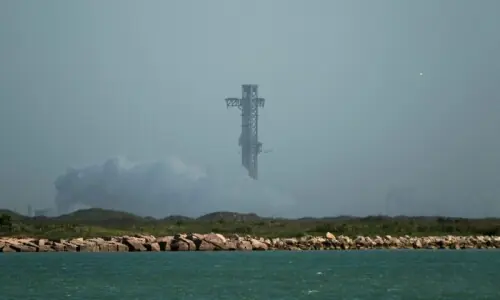
Viewers are still trying to make sense of the PIA transaction.
If Shakespeare is an addiction, Urdu serials are akin to a religion, with the same idols appearing in different avatars. In the torrent of episodes that feed the faith of devotees, one particular moment was worth them all. In one episode of the serial Meri Zindagi Hai Tu (you are my life), two young actors Hania Amir and Bilal Abbas Khan (our modern answer to Shakespeare’s star-cross’d lovers Romeo and Juliet) connect, not on a balcony but in the unlikely tryst of a squash court.
The ineffable quality of their acting, Radain Shah’s sensitive script and Mussadiq Malek’s deft direction deserve to be remembered, for as long as Romeo and Juliet and their Shakespeare will be.
A graver distraction available on television is the live-streaming of hearings of the Supreme Court. It demonstrates transparency for the right reason, but with unintended results. They expose disfiguring fissures within the honourable court.
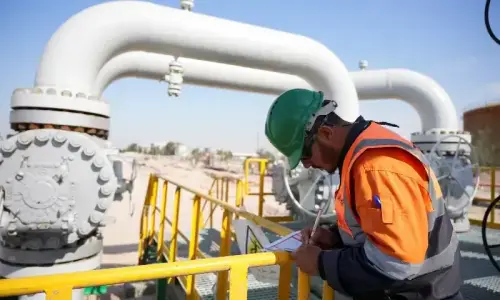
Similarly, it is the quest for transparency that guided the public auction of PIA’s shares by the Privatisation Commission on Dec 23. Some viewers are still trying to make sense of the convoluted transaction and the concessions gifted in dower to the successful bidder.
These include exemption from GST on “aircraft, engine and parts induction”; income tax exemption on dividends of 15 years”; the postponement of PIA’s dues to the Federal Board of Revenue of Rs26.6 billion, now to be settled in four annual installments.
The government has also promised that “it will not introduce another airline”. Provinces, however, may do so.
It appears that the successful Arif Habib consortium has undertaken, in addition to the Rs.135bn to acquire PIA, to invest a further Rs116bn in PIA over the next five years, beginning with Rs35.6bn in the first year, tapering to Rs8bn in year five.
Privatisation adviser Muhammad Ali has disclosed that the government will reinvest Rs125bn of the disinvestment proceeds it will receive back in PIA, to expand PIA’s fleet. This will be done in two tranches: initially of Rs83.2 bn, with the remaining Rs41.6bn within 12 months. This reinvestment will be done against a fresh issue of PIA’s shares.
Some may remember that two decades back, the government received PIA ordinary shares in return for funding of $150 million to PIA for eight new Boeing 777 aircraft.
At what price will this new reinvestment of Rs125bn occur — at par value, a premium, or at the last bid value? Ingeniously, the government, having divested itself of its majority shareholding in PIA, will again own PIA, this time as a minority partner. G. Lampedusa’s novel The Leopard says it all: “Change everything just a little, so as to keep everything the same.”
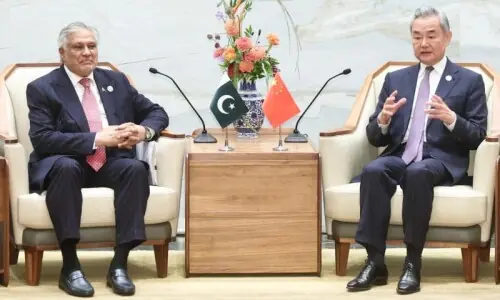
Most recently, following the high-level visit by the UAE president Shaikh Mohamed Bin Zayed, our deputy prime minister has disclosed that our government has proposed that UAE’s deposit of $1bn be converted into equity in Fauji Foundation’s companies. Our government has a shorter memory than the Gulf ruler. He has not forgotten the still unresolved dispute over $800m between his Etisalat and our PTCL.
When, Pakistanis ask, will their recurring ‘winters of discontent’ ever blossom into ‘beauteous springs’?
The writer is an author.
www.fsaijazuddin.pk
Published in Dawn, January 1st, 2026