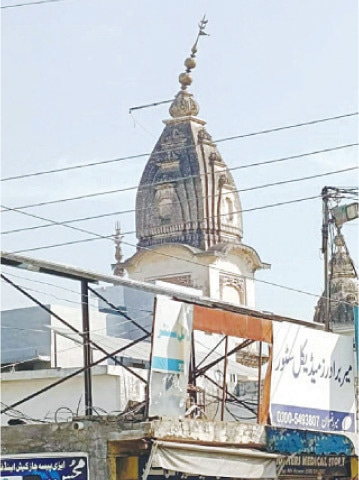
TAXILA: The historic Raghunath Temple, one of the oldest surviving Hindu places of worship in Taxila and a symbol of the region’s cultural harmony, has fallen into alarming neglect, prompting heritage experts, civil society members, and the local community to demand urgent restoration and protection efforts.
During a special session held under the banner of ‘Taxila Baithak’, the participants discussed the rapidly deteriorating condition of the temple and proposed practical measures to safeguard the site. The meeting brought together representatives from the Gandhara Resource Centre Pakistan, including Iftikharuddin Siddiqui, Riaz Ahmed, and Engineer Malik Ashtar, as well as members of Lok Chopal such as Ayaz Kayani, and journalists.
Local historians and community members, including Raja Noor Mohammad Nizami, Mir Tahir and blogger Malik Zeeshan, also contributed their insights.
The participants called upon the Punjab government to include restoration, preservation and facelift of the temple and open it for tourists under the multi-billion Taxila Heritage Development Plan.
The Punjab government has recently devised Rs4 billion for the Taxila Heritage Development Plan to preserve ancient sites and promote tourism in the culturally-rich historic city.
The participants said the Evacuee Trust Property Board (ETPB), Punjab Archaeology Department and the local administration must take immediate steps to remove illegal encroachments around the temple and begin systematic conservation work.
They warned that continued neglect could result in irreversible loss of a site that holds deep historical and cultural value for the Gandhara region.
According to available historical records, the Raghunath Temple dates back to the late 19th century and is associated with the Hindu trading communities that once flourished in Taxila before partition.
Built in traditional Hindu architectural style, the temple served as an important place of worship and community gathering.
Despite being a protected heritage site, it has long suffered from structural decay, vandalism, and encroachments, with its walls weakened and decorative features gradually disappearing due to lack of maintenance.
Speakers appreciated the efforts of Taxila Baithak organisers Tahir Suleman Malik and Engineer Asif Fareed for highlighting the urgent need to preserve the temple’s cultural significance.
The session was hosted by Qasid Shah and concluded with a collective resolve to continue advocacy efforts until concrete preservation measures are taken to protect Taxila’s historic heritage for future generations.
Published in Dawn, December 16th, 2025