0
0

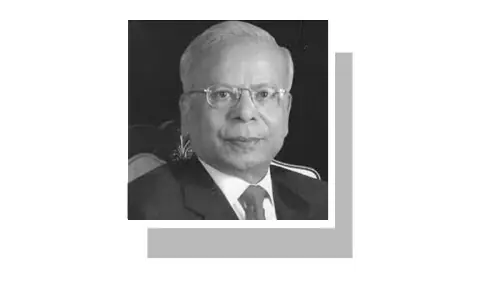
HARIPUR: For more than a century, Hazara region has been part of Khyber Pakhtunkhwa, not because of administrative logic, cultural cohesion or economic alignment but due to a “historical accident rooted in colonial expediency”, claims noted bibliophile Amjad Zaman Khan.
Mr Khan told reporters in Utman Bagh here that when the British rulers created the North-West Frontier Province (NWFP) in 1901, Hazara was included in it for two practical reasons: to monitor the “troublesome” Black Mountain region (today’s district Torghar) and to use Abbottabad as a summer headquarters for provincial administration.
He said Hazara’s inclusion in NWFP was dictated by the strategic needs of a colonial empire and not by considerations of effective governance or local development.
The bibliophile said more than a century later, those justifications had vanished.
Bibliophile insists region capable of functioning as separate province
“Torghar is now a peaceful settled district with functioning civil administration. Abbottabad’s erstwhile advantage as a summer station is no longer unique as Malakand Division, comprising Swat, Dir and Chitral, offers modern infrastructure, administrative facilities and communication networks capable of serving provincial needs, so the historical reasons for keeping Hazara part of KP have ceased to exist,” he said.
Mr Khan also said Hazara itself had evolved into a region capable of standing on its own feet as its population was significant, its economy was diverse and robust, and it contributed heavily to provincial and national revenues.
“The industrial hub of Haripur, hydropower generation from Tarbela, tourism in Khanpur, Galiyat and Kaghan and major transit routes such as the Hazara Motorway and Karakoram Highway make Hazara economically self-sufficient,” he said.
The bibliophile noted that from administrative, demographic and economic perspectives, the region was fully capable of functioning as a separate province.
He said the demand for the Hazara province was not a question of ethnicity or language.
“While Hindko is a major language, it is not spoken by the majority across all districts, and Pashto is equally prevalent in large parts of the division. This is not a cultural or linguistic issue; it is a question of governance and development,” he said.
Mr Khan said Khyber Pakhtunkhwa was a vast and diverse province, with its central administration struggling to address the unique needs of Hazara’s districts to an extent.
He said a dedicated provincial structure would bring the government closer to the people, accelerate decision-making, improve resource allocation and ensure equitable development throughout the region.
The bibliophile said Article 239(4) of the Constitution allowed the creation of new provinces to improve governance, while the spirit of the 18th Constitutional Amendment strengthened the rationale for power decentralisation.
He said establishing the Hazara province aligned perfectly with the constitutional principles as it responded to a long-standing public demand, addressed decades of administrative neglect and provided a framework for balanced, accountable and locally responsive governance.
Mr Khan said the continued retention of Hazara by KP was a relic of colonial convenience and that it’s a structural anomaly that hampered development and limited the efficiency of governance.
He said the historical rationale for Hazara’s inclusion expired long ago, while the administrative and developmental logic for its separation had only grown stronger over time.
The bibliophile said granting Hazara the provincial status was not only a logical corrective but it was also a necessary step for ensuring equitable governance, accelerated development and a more responsive administrative system.
“It is time to move beyond historical accidents and embrace a governance model that reflects contemporary realities and development priorities. Hazara deserves nothing less,” he said.
Published in Dawn, December 8th, 2025