China, Russia may not veto Gaza resolution tomorrow


 0
0
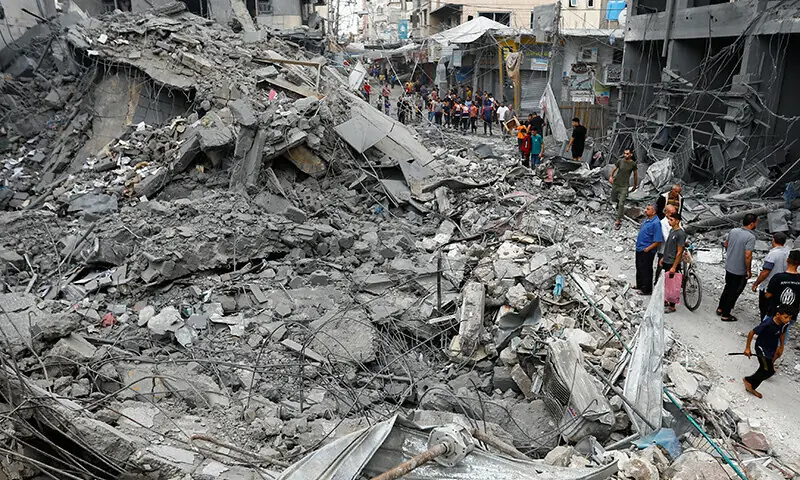

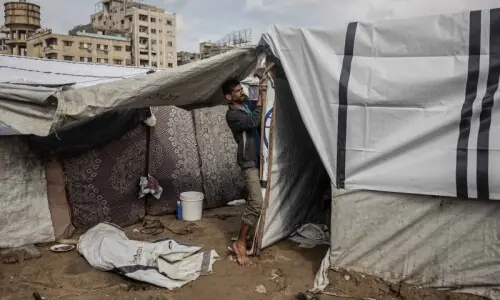
UNITED NATIONS: Senior UN diplomats are cautiously optimistic that China and Russia may abstain rather than veto a US-sponsored Security Council resolution to authorise an international stabilisation force (ISF) in Gaza — a key test of the UN’s ability to back a postceasefire vision for the enclave, according to diplomatic sources.
The draft resolution is expected to come up for vote in the UN Security Council on Monday, and would take effect if it secures at least nine affirmative votes and avoids a veto from any of the five permanent members (the US, China, Russia, Britain and France).
“China will not veto the resolution, but Russia’s position is uncertain, and key as well,” said one senior diplomat. Another added, “both China and Russia may abstain, but they will not use their veto.”
The draft resolution, formally circulated by the US, would authorise a two-year mandate for a transitional body called the Board of Peace, chaired by President Donald Trump, as proposed in his 20-point Gaza plan. It would also authorise a temporary, 20,000-strong ISF to disarm non-state armed groups, secure humanitarian corridors, protect civilians, and help rebuild governance structures. The US has clarified that no American troops will be deployed in the force.
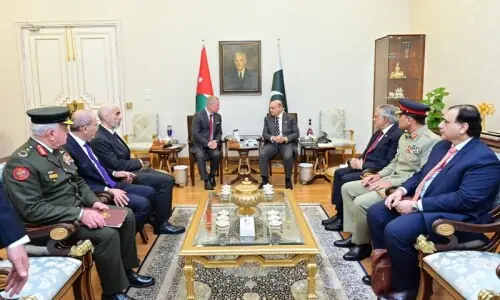
In a strong show of regional support, eight Arab and Muslim countries, including Pakistan, Qatar, Egypt, UAE, Saudi Arabia, Indonesia, Jordan and Turkey, signed a joint statement this week, endorsing the US draft and called for its swift passage. The United States also joined the statement. According to the diplomats, this backing reflects deep concern over a resurgence of violence.
Asked why Muslim states supported the US resolution, one diplomat said, “Nobody wants the Palestinian genocide to resume.”
At the UN, the Permanent Observer of the State of Palestine, Riyad Mansour, met Pakistan’s ambassador to the UN Asim Iftikhar Ahmad and concurred that “blood-letting in Gaza must stop immediately.” The Palestinian mission is believed to have endorsed the Arab-Muslim group’s support for the US text.
The draft envisions a Board of Peace to administer Gaza during the transition, but this has drawn sharp criticism. Russia and China have pressed to remove the board entirely.
The ISF would work on “permanent decommissioning of weapons” from non-state armed groups, including Hamas, a particularly sensitive point.
As the force “establishes control and stability,” the draft requires an Israeli military withdrawal from Gaza tied to agreed “standards, milestones and timeframes” negotiated among Israel, the stabilisation force, the US, and others.
In response to criticism, the US draft was modified to emphasise “a credible pathway to Palestinian self-determination and statehood,” but only conditionally, after “faithful” reforms to the Palestinian Authority and progress in Gaza redevelopment.
Some Arab and possible troop-contributing countries have also raised concerns about how the Board of Peace will be composed, who will lead it, and what role (if any) the Palestinian Authority (PA) will have.
Opposing draft from Russia
Moscow has responded by tabling a rival draft that removes the Board of Peace and instead asks the UN Secretary-General to propose options for stabilisation and governance. In its submission, Russia argues that the US draft falls short of “universally recognized international legal standards,” notably the long-standing two-state framework. The alternative text seeks a more inclusively negotiated international force under clearer UN oversight.
The Trump administration, however, is pressing Council members hard to adopt the resolution. US Secretary of State Marco Rubio has publicly defended the proposal, calling it “the best path to peace in the Middle East” and thanking the Arab and Muslim countries endorsing the resolution.
Despite optimism from US diplomats, the resolution faces serious hurdles as there is still no guarantee about veto; the UAE though in close talks publicly stated it sees “no clear framework” for the force and has not committed to sending troops; besides legitimacy concerns for the Board of Peace especially if the Palestinian Authority is sidelined; ambiguity over logistics and funding, and humanitarian urgency.
Published in Dawn, November 16th, 2025