Misfiring midway


 1
1

HOW time flies! This hybrid set-up, despite its controversial mandate, is near its midway mark. Given this anomaly, I must adjust the usual lens I use for judging all set-ups via the causal team-policies-outcomes chain.
Its standout aspect is the large gap between the immense powers it has — arguably more than any civilian dispensation’s since Zulfikar Ali Bhutto’s era — and the very poor governance results it has yielded so far. There is wisdom in the maxim that absolute power corrupts absolutely. It is clear that our current rulers have eroded the division of state power by taming the judiciary, parliament, autonomous bodies and provincial set-ups and even the media and civil society. With civilians at the centre appearing to be mere figureheads, power flows from the non-civilian core, whose influence serves only selected interests including its own.
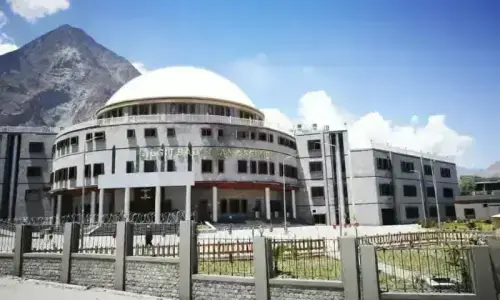
There is insecurity in many parts of the country as the TTP and BLA grow increasingly audacious and step up their attacks. Unrest in Gilgit-Baltistan and Azad Kashmir and high crime figures across Sindh are contributing to the arc of instability, perhaps leaving only Punjab stable. The focus is on the number of terrorists killed; unfortunately, what is ignored is the fact that new recruits are born when the state exceeds its authority. Force does not end terrorism unless the root causes of real grievances that unleash violence are also addressed.
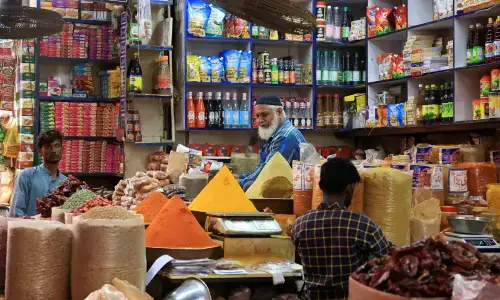
Economically, the government has managed to tame inflation but via the IMF tools that the finance ministry and State Bank apply almost robotically with the mere stroke of the administrative pen to depreciate the rupee, raise interest rates and impose import controls. This has reduced growth and led to mass public misery. The necessary analytical and managerial skills are missing to stimulate high growth in GDP, jobs and exports — needed to alleviate public suffering.
What we are witnessing is (per-capita) stagnation, not stability. Instead of industry and exports, the focus is on mining, corporate farming, remittances, crypto deals and geostrategic rents from rich states. More perversely, the fiscal deficit has been cut not by fixing the low GDP and tax revenue growth, controversial tax rebates, state unit losses and fiscal waste but reversing fiscal devolution by forcing provincial surpluses via cuts in development outlays.
What we are witnessing is stagnation, not stability.
It is paradoxical that the success of the rulers’ political objectives should cause concern; sadly, democratic processes — electoral, judicial, parliamentary, oppositional, accountability, etc — have been undermined. The fear is the damage done to the roots of democracy may take decades for us to fix. That all this was done under the nominal watch of our two oldest parties that signed a charter of democracy and vowed never to win power illegally is ironic. They now seem to have signed on to a barter of democracy to get dummy roles in this set-up.
Foreign policy is one area where the state has received much praise and has been described by some as a global peacemaker, net security provider and a shield against a third world war. At the moment though, with US-Iran tensions soaring in the region, the Islamabad MoU is all but irrelevant. Any expected geostrategic rents from this role may never arrive but the risks from it are accruing fast as we get sucked into the quagmire of Gulf conflicts. We are now dabbling in faraway Libyan conflicts and discussing a security pact with Kuwait while the Saudi one is yet to yield gains. All the while, we face threats from the TTP in the north, BLA in the south, Afghanistan in the west and India in the east. Strong foreign standing comes by working towards genuine peace and progress at home, and not by nominating a controversial individual like Donald Trump for the Nobel Peace Prize or doing questionable crypto deals with his family.
It is clear that these deficits are largely linked to the set-up’s flawed governance. One notes that many of those responsible for the growing challenges we face in the economic, political and security domains today have been recruited from outside traditional political ranks. Clearly, midway through its rule, the government through its antics has reinforced a centralised, hybrid type of governance that has been openly criticised. Will the lack of success on so many fronts introduce a rethink on the part of the decision-makers?
The writer holds a PhD in political economy from the University of California, Berkeley, and has 25 years of grassroots to senior-level experience across 50 countries.
Published in Dawn, July 21st, 2026