PAEC’s hospitals hailed for vital role in treating cancer patients


 0
0
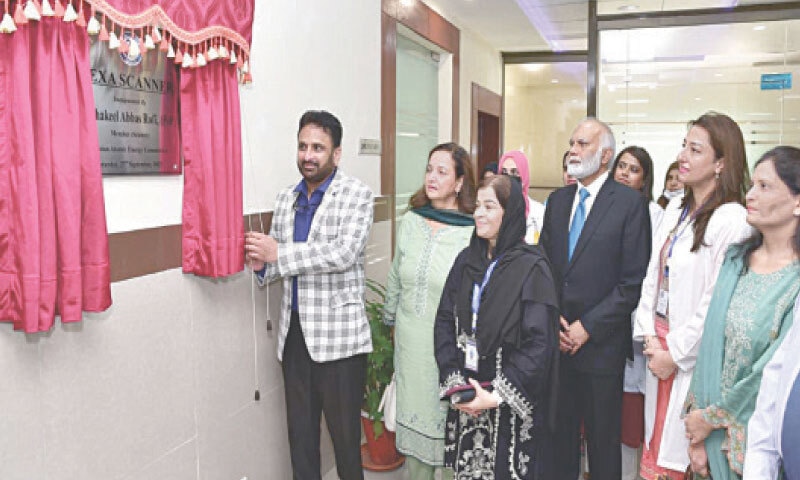
ISLAMABAD: Hospitals in the federal capital, including the Nuclear Medicine, Oncology and Radiotherapy Institute (NORI), held events in connection with various global health awareness days.
NORI, a leading cancer hospital under the Pakistan Atomic Energy Commission (PAEC), organised the first World Radiotherapy Awareness Day event in Pakistan.
Dr Shakeel Abbas Rofi, Member (Science) PAEC and chief guest at the event, paid tribute to PAEC’s 20 cancer hospitals, especially NORI, for their vital role in treating cancer patients. He highlighted the urgent need for approximately 200 Linear Accelerators (LINACs) in Pakistan, noting that each machine costs around Rs 650 million. He stressed that indigenous development of such technologies is becoming increasingly essential.
Earlier, Dr Humera Mahmood, Director and Chief Oncologist at NORI, underlined the critical role of radiotherapy as the most important non-surgical treatment for cancer. She noted that almost all cancer patients, including one-third of children, required radiotherapy at some stage.
Citing statistics from the World Health Organisation (WHO) and the International Agency for Research on Cancer (IARC), she stated: “Pakistan now faces nearly 195,000 new cancer cases annually, while globally, 70pc of cases occur in low-income countries where only 30pc of patients have access to radiotherapy.”
She also highlighted NORI’s pioneering interventions such as 4D simulation for tumour tracking, MR-based image-guided brachytherapy (the only facility of its kind in Pakistan), and other advanced services including CyberKnife, PET scan, digital mammography, PCR labs, blood bank, tumour boards, and telemedicine networks.
The event also featured a poster competition, “Radiotherapy: A Fundamental Pillar in Cancer Care,” followed by an awareness walk. The chief guest later inaugurated a Dexa scanner at NORI.
Heart Day
At an event held at Maroof International Hospital in connection with World Heart Day, Health Minister Syed Mustafa Kamal emphasised the urgent need to strengthen Pakistan’s healthcare system to address the rising burden of cardiovascular disease.
He noted that prevention, public awareness and early intervention were a key to reducing heart-related illnesses, particularly in a country that ranks fifth most populous in the world. The minister expressed strong commitment to prioritising heart health on the national agenda. Haroon Naseer, CEO of the hospital, stated that up to 80pc of heart attacks and strokes were preventable through simple lifestyle changes.
“Together, we can fight cardiovascular disease and build a future where every heart beats stronger,” he added. Dr Mir Waheed, Medical Director and Head of the Accident and Emergency Department, emphasised the preventable nature of most heart diseases. He pointed out that timely information and early action can save lives.
Lung Day
Shifa International Hospital marked World Lung Day with an awareness session under the global theme: “Healthy Lungs, Healthy Life.” The session brought together pulmonologists, healthcare professionals, and patients to discuss pressing issues in respiratory health.
Dr Murtaza Kazmi, consultant pulmonologist, noted that cancer is a leading cause of death globally with lung cancer being the second most common cancer worldwide - after breast cancer - according to GLOBOCAN and IARC data.
“As per WHO, in 2020, 1.80 million people died of lung cancer worldwide,” he said.
“Unfortunately, Pakistan lacks a national cancer registry, making it difficult to track the occurrence of different types of cancer annually.
“However, some cities do maintain cancer registries, such as the Punjab Cancer Registry (Lahore), Karachi Cancer Registry, PAEC Registry, Shifa International Hospital Cancer Registry, Armed Forces Institute of Pathology and Nishtar Medical University Cancer Registry,” he added.
Dr Kazmi mentioned that recent data from these registries were compiled into a national-level cancer report covering the years 2015 to 2019 which ranked lung cancer as the fifth most commonly occurring cancer (3.69pc) across all age groups and genders.
Dr Naghman Bashir, chest specialist, emphasised the need for comprehensive approaches that focus not only on treatment but also on improving the quality of life for patients and their families.
Published in Dawn, September 28th, 2025