0
0

AFTER World War II, globalisation flourished, with the United Nations emerging as an important advocate and driver of the process. Today, anti-globalisation sentiment has gained traction, with unilateralism and protectionism on the rise.
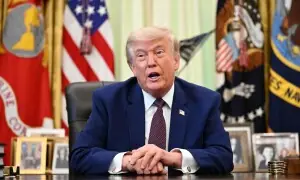
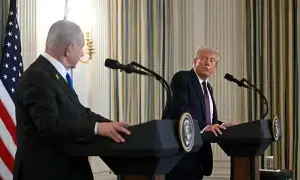
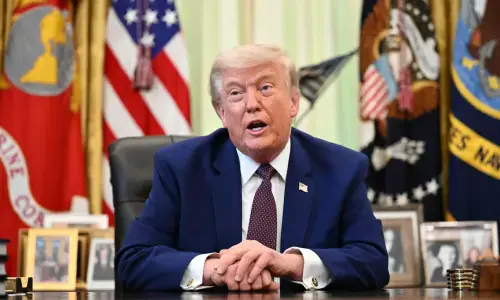
In particular, since the start of Donald Trump’s second term, the United States government has weaponised tariffs to launch a global tariff war, unleashing an anti-globalisation storm. By resorting to maximum pressure tactics for selfish gain, Washington has gravely disrupted global trade and economic cooperation, while the international system with the UN at its core and the international order underpinned by international law face severe challenges.
But globalisation remains an objective requirement of social productivity and a natural outcome of scientific and technological progress. It is also an inevitable trend and an irreversible force of the times. The direction of globalisation remains unchanged, and the UN continues to be a key force in promoting and advancing globalisation.
As globalisation has deepened, global risks have proliferated, fueling doubts about globalisation and multilateralism and placing the multilateral order under strain. As the most authoritative and representative global governance body, the UN is not only the core platform for globalisation but also a key advocate and organiser.
The United Nations, which is at the heart of the post-war system, needs to be supported so it can fulfill its role
First, the UN is the guardian of global security, committed to maintaining peace and stability. In the field of traditional security, the UN has launched more than 71 peacekeeping operations since 1948. In 2018, it initiated the Action for Peacekeeping agenda, reaffirming a shared political commitment to peacekeeping operations. In the field of nontraditional security, in response to the rapid development of information technology, the World Summit on the Information Society, beginning in 2003, marked a turning point, with all stakeholder groups focusing more closely on the processes and structures of internet governance.
The UN’s Internet Governance Forum and the document entitled “International Code of Conduct for Information Security”, developed primarily by the Shanghai Cooperation Organisation, have also gained broad acceptance.
Second, the UN is a facilitator of international cooperation, committed to inclusive multilateralism. In recent years, trade protectionism and unilateralism have surged, fragmenting global economic and financial governance. Against this backdrop, the UN system has played a stabilising role in international trade, investment, development aid and debt coordination. To counter the risks of decoupling and supply chain disruption, the UN Industrial Development Organisation has promoted the creation of regional backup supply chain networks to preserve stability. To address insufficient momentum for global development, the UN Development Programme and the World Food Programme have provided decision-making advice and financial aid in areas including development cooperation, the green transition, biodiversity and food security.
With support from China’s Global Development and South-South Cooperation Fund, the UN has also shared poverty reduction experiences and development financing with countries of the Global South, offering a model of multilateral cooperation.
Third, the UN acts as a “whistle-blower” on climate change, fostering unity and collaboration to confront the crisis. To promote effective global responses, the UN has set up multilateral cooperation platforms such as the Intergovernmental Panel on Climate Change and the UN Framework Convention on Climate Change. These mechanisms have advanced international climate negotiations and built networks of partnerships. The UN has also convened 29 climate conferences, producing landmark agreements including the Kyoto Protocol, the Copenhagen Accord and the Paris Agreement.
Fourth, the UN is a coordinator of global development, committed to the Sustainable Development Goals. In September 2000, the Millennium Summit adopted the UN Millennium Declaration, which set out eight Millennium Development Goals focusing on poverty reduction, education, gender equality and public health. In 2015, the UN Summit on Sustainable Development adopted the 2030 Agenda for Sustainable Development, comprising 17 goals, 169 targets and 232 indicators, spanning economic, social and environmental dimensions. With the UN’s support, these goals have been integrated into regional and national strategies, forming a highly participatory and interconnected global governance network.
Today, the world has entered a new period of turbulence and transformation, and globalisation faces challenges from unilateralism, protectionism and hegemonism. US-led tariff wars, trade wars and technology wars are dismantling the institutional, regulatory and order framework built under Western leadership after World War II. At the same time, globalisation is increasingly marked by international competition, zero-sum games and security dilemmas, while the UN system confronts new problems and challenges.
On the one hand, the UN system itself shows signs of fragmentation, with individual agencies acting independently and overlapping in development aid. In recent years, with the withdrawal of the US and some other Western countries from UN organisations, delayed or reduced payments have pushed the UN system into financial crisis. In the scramble for donor funding, agencies have duplicated programs in areas favored by donors, such as sustainable development and the green transition.
This not only causes overlapping functions and wasted resources but also hampers the ability of UN agencies to allocate resources strategically, undermining its multilateral character.
On the other hand, intensifying majorpower rivalry and regional conflicts have deepened international divisions and heightened antagonism, leaving the UN facing a deficit of trust. Developing countries need the UN to play a more active role in areas such as peacekeeping, development assistance and the green transition.
For years, China has served as a stable, constructive and progressive force in the international community. Guided by the vision of building a community with a shared future for humanity, China has firmly upheld the international system with the UN at its core and the international order underpinned by international law.
Published in Dawn, September 22nd, 2025